


Marshall Mg 30 Fx roundup
Marshall Mg 30 Fx: A Complete Buyer's Guide
The Marshall MG 30 FX makes a strong case as a self-contained practice and rehearsal amp — here is what you need to know before you buy.

Buying a practice or rehearsal amplifier is one of the more practical decisions a guitarist makes. You are not chasing a sound for an era-defining record — you are trying to find something that gives you good tones, works reliably and does not require a full evening of setup before you can play. The Marshall MG 30 FX is aimed squarely at that brief. This guide goes through who it is right for, what you actually get, and how it stacks up against the alternatives so you can make a straightforward decision.
What You Are Buying
The Marshall MG 30 FX is a thirty-watt solid-state combo with a ten-inch speaker, two switchable channels, and a built-in digital effects suite covering Chorus, Phaser, Flanger and Delay (selectable) plus an independent Reverb. It has an emulated line out for recording, an MP3 auxiliary input for playing along to backing tracks, and a footswitch socket for remote channel and effects switching. That is a complete, self-contained setup in one box.
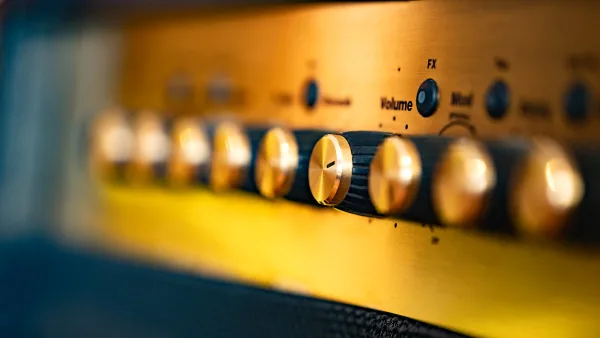
The build is solidly Marshall — the cabinet, the cosmetics and the layout will be familiar if you have spent any time around the brand's amps. The amp is not lightweight, but it is manageable for one person. The controls are laid out logically: Clean and OD sections each have their own gain and volume, a shared three-band EQ section, and the OD channel adds a Contour control that shapes the midrange from scooped to thick.
Is This the Right Wattage?
Thirty watts solid-state is a generously sized home practice amplifier. In practice, you will rarely use it above a third of the master volume in a bedroom or home studio context. The benefit of having those extra watts is clean headroom — the Clean channel stays clean at higher volumes, and there is room to push the amp a little without the tone falling apart at the top. If your use case is entirely home practice and occasional recording, a smaller wattage amp would technically suffice, but thirty watts gives you the option to take the amp to a rehearsal room or small venue without it being overwhelmed.
The Effects: What You Actually Get
The built-in FX are one of the main selling points over a stripped-down amp at the same price. You get one of four modulation effects at a time — Chorus, Phaser, Flanger or Delay — selected via a rotary switch, plus a Reverb that runs alongside whatever you have selected. For most players, this covers the useful effects territory without requiring a separate pedal at this stage. The quality is not boutique, but it is far from the muddy, unusable effects found in some practice amps at this level. The chorus is warm, the delay is clean and tappable enough for basic use, and the reverb ranges from a room touch to something more open.
The Alternatives
The main competition in this class comes from the Fender Frontman series, the Boss Katana 50 MkII, and the Blackstar ID:Core range. The Boss Katana is a step up in effects depth and modelling quality and costs more — if effects versatility and amp voicing variety matter, the Katana wins that comparison. The Blackstar ID:Core amps offer stereo speakers in the smaller models and arguably better clean tones at equivalent price. What the Marshall brings that none of these consistently replicate is Marshall brand identity and voicing: the OD channel sounds like a Marshall overdrive in a way that a modeller's "Marshall preset" does not always. For players who specifically want that character in their bedroom or practice space, the choice is clear.
New or Used?
The MG 30 FX has been on the market long enough that the used market is well-stocked and prices are stable. Buying used is sensible if the amp has been looked after — these are robust, reliable units that rarely develop faults. Buying new gives you a warranty and the certainty that nothing has been dropped or modified. Either route is reasonable; used simply makes the value proposition stronger.
For a full breakdown of what this amp sounds like across styles and situations, the complete guide has the detail. If you are just getting started with it, the beginner's guide covers first settings and tone-shaping basics.
The Short Version
Buy it if you want a reliable, complete practice and rehearsal amp with Marshall tone in a self-contained package. Look elsewhere if you need deep effects programming, modelling variety or a purer boutique clean tone. For the target player — someone who wants a dependable, versatile practice amp from a brand they trust — the case is strong.





Comments