


Keeley roundup
The Best Keeleys for the Money
Not a discount hunt — a value hunt. Which pedal in the range actually earns its keep, matched to what you'll genuinely use.
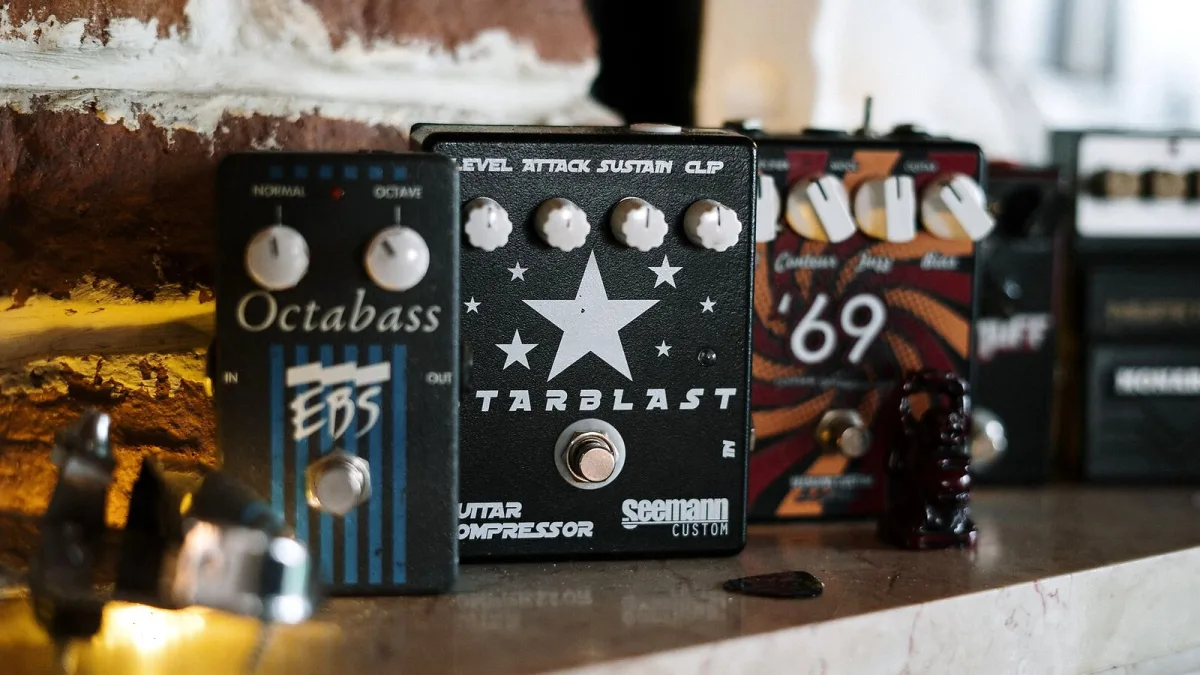
I like taking pedals apart mentally as much as sonically — working out what you're actually paying for versus what's just packaging. With a Keeley range this deep, "best for the money" isn't about hunting a discount code, it's about matching a pedal's actual feature set to what you'll genuinely use. Here's how that shakes out across the catalogue.
Best All-Round Value: The Keeley 4-in-1 Series
If you want the most tonal ground covered per pedal, the Keeley 4-in-1 Series (Blues Disorder, Angry Orange and Super Rodent among the models) is the strongest case on the whole roster. Each one packs multiple circuit voices behind a shared Drive, Level and Tone layout, with mini-switches unlocking genuinely different characters rather than subtle EQ tweaks. Instead of buying three separate drive pedals to cover overdrive, distortion and a heavier gain stage, one enclosure does the job. If your pedalboard space (or budget for multiple boxes) is limited, this is where the value case is clearest.
Best Single-Purpose Tool: The Keeley Compressor Plus
Sometimes the smartest purchase is the one that does exactly one thing exceptionally well, and that's the Compressor Plus in a nutshell. Its Blend control — mixing your dry signal back in with the compressed one — gives you parallel compression that most single-function compressors simply don't offer, and the Tone knob means you're not stuck fighting a dulled top end afterwards. If dynamics and sustain are your actual problem, this earns its place ahead of anything trying to be a jack-of-all-trades.
Best for Space and Ambience: The Keeley Halo Core
True-stereo delay, switchable trails or true bypass, all-wet/all-dry modes and an Infinite Hold function make the Halo Core a genuinely serious ambient tool rather than a basic slapback box. If you play anything post-rock, shoegaze or ambient adjacent, the stereo output alone changes how a pedal like this sits in a mix compared with a standard mono delay — provided your amp setup can actually take advantage of it.
Best Multi-Effect Value: The Keeley DDR
Drive, delay and reverb in one enclosure, with independent controls for each stage rather than a single compromised blend knob, makes the DDR a smart pick if you're building a smaller board or a simplified backup rig. You lose a little of the flexibility of running three dedicated pedals, but you gain pedalboard space and one less set of patch cables to troubleshoot at a gig.
Best for Modulation: The Keeley Phaser
A six-stage analog OTA phaser with tap tempo and Leslie-style speed ramping is a genuinely different proposition from a basic two-stage phaser, and it shows in how much movement the effect can create without turning to mush. If modulation is where you're currently underserved, this is the strongest single argument in the catalogue.
Best for Experimenting: The Keeley Synth-1
This one's a harder sell on pure value, because it comes with a real learning curve around note tracking that a straightforward drive or compressor doesn't. But if you actually want synth textures — square, sawtooth and sine waveforms, a Chaos control, an expression input for real-time filtering — nothing else in the range gets you there, and there's genuinely nothing quite like it once you've put the practice time in.
How to Actually Pick Between These Keeley Pedals
| If You Want… | Go For |
|---|---|
| Maximum tonal range per pedal | 4-in-1 Series |
| The best single compressor, full stop | Compressor Plus |
| Serious ambient and stereo textures | Halo Core |
| Pedalboard space saved without a big compromise | DDR |
| Dramatic, musical modulation | Phaser |
| Something genuinely different to explore | Synth-1 |
If you want the fuller technical picture behind any of these before deciding, our guide to how the range fits together breaks down each effect family properly.
If This Is Your First Purchase
All of the above assumes you already know roughly what you're after. If you're brand new to this and the choice feels overwhelming, our beginner's guide narrows things down further, and our complete buyer's guide covers the practical checks — power, bypass type, new versus used — that apply whichever model you land on.
The Bottom Line on the Best Keeley for the Money
The "best for the money" answer genuinely depends on what gap you're filling. Buy for versatility with the 4-in-1 Series, buy for pure single-purpose quality with the Compressor Plus, or buy for space and ambience with the Halo Core — just don't buy the one with the most hype behind it if it doesn't solve a problem you actually have.





Comments