


Melodica article
Melodica Explained: Features, Types and Tips
The melodica looks like a toy, but there's more going on inside it than most people realise. Here's what it is, how it works, and how its types differ.
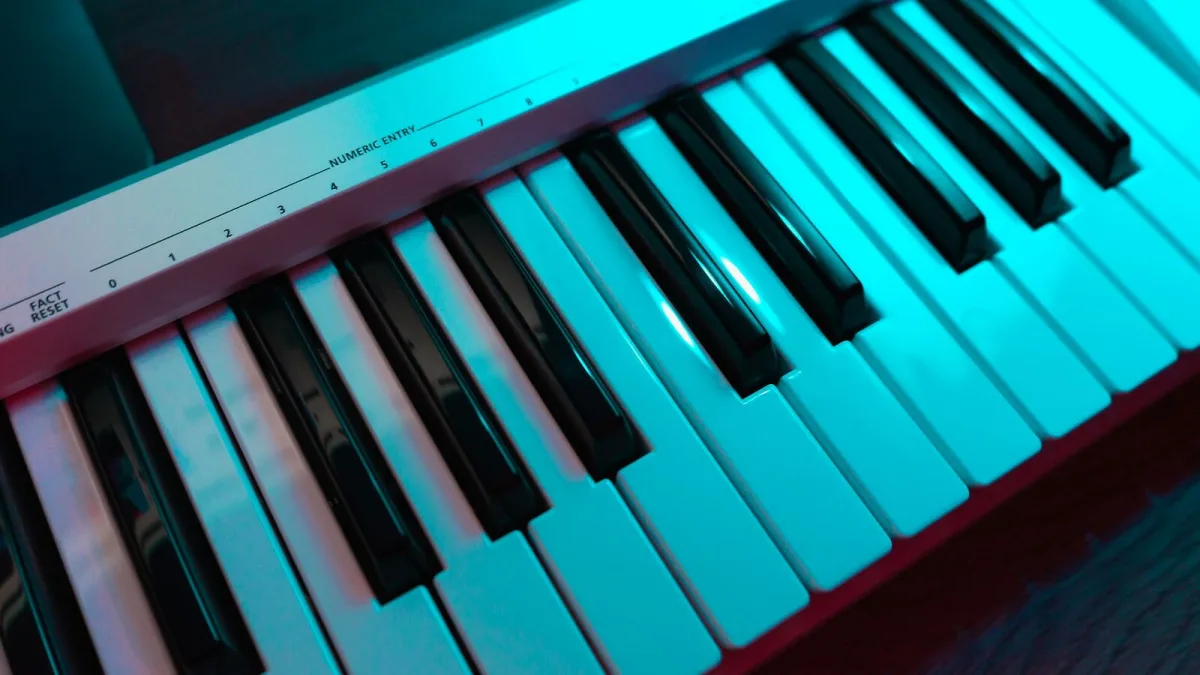
There's a particular sound that stops people in a session — reedy, breathy, somewhere between a harmonica and a tiny church organ. More often than not, it's coming from a melodica: a small keyboard instrument you play by blowing into it. It looks almost like a toy, and that's precisely why so many people underestimate it. This guide sets out what a melodica actually is, how its main types differ, and a few playing and care tips worth knowing before you go any further.
What Exactly Is a Melodica?
A melodica is a free-reed wind instrument with a piano-style keyboard built into its top. “Free reed” simply means the sound comes from a thin strip of metal that vibrates freely in a stream of air, rather than being struck or plucked — the same basic principle found in a harmonica, an accordion or a harmonium. Where those instruments differ, this one keeps things simple: one keyboard, one mouthpiece, and breath instead of bellows or hand-pumped air.
Press a key and a valve opens beneath it, letting your breath reach a matching reed. Let go, and the valve closes, cutting the note dead. That's really the whole mechanism inside a melodica — no hammers, no strings, nothing electronic required. It's an instrument you can understand completely within a minute of picking it up, which is a large part of its charm.
How the Sound Actually Gets Made
Inside the body sits a small air chamber and a row of reeds, one per key. Blow into the mouthpiece — either directly or through a flexible hose — and you build up pressure in that chamber. Each reed stays silent until its own key opens an air path to it.
- Breath pressure controls volume and attack — a gentle stream gives a soft, rounded note; a firmer one gives more bite.
- Playing is normally one note at a time. A few models can sound two or three notes together, but the reeds tend to respond unevenly under the extra air demand.
- Because tone rides on your breath, the response is far more expressive than a piano's fixed hammer strike — you can swell into a note or let one fade the way a singer would.
That breath-driven expressiveness is a big part of why the melodica never quite settled into being “just” a classroom aid, however it started out.
Soprano, Alto, Tenor, Bass and the Accordina
Manufacturers don't apply these melodica labels with total consistency, but they're a useful shorthand for the family. Most players will only ever meet the first three.
| Type | Typical character | Where you'll hear it |
|---|---|---|
| Soprano | Bright, higher-pitched, sometimes thin | Children's ensembles, high melodic lines |
| Alto | Balanced, general-purpose midrange | Schools, songwriting, pop and folk recording |
| Tenor | Warmer and fuller | Reggae, dub, solo and studio work |
| Bass | Low-pitched and uncommon | Arranging, ensemble bass lines |
| Accordina | Chromatic buttons rather than piano keys | Players wanting an accordion-style technique |
A melodica's keyboard typically runs to 32 or 37 keys, with 32-key instruments often spanning roughly F3 to C6 and 37-key models reaching a little higher — though, as with the type names, exact ranges vary by maker, so it's worth checking the specific model rather than assuming.
From Classroom Staple to Reggae Icon
Hohner, the German manufacturer, is generally credited with developing the modern instrument in the late 1950s, though related free-reed keyboard designs existed earlier — so it's fairer to say Hohner shaped the version we'd recognise today rather than inventing the underlying idea from nothing. The melodica caught on fast in schools: cheap next to a piano, small enough to store in a cupboard, and needing no electricity to work.
Its second life came from Jamaica. Augustus Pablo, born Horace Swaby, made it central to his dub and reggae recordings through the 1970s, working alongside producers including King Tubby and Lee “Scratch” Perry. That breathy, echoing tone on tracks like “Java” turned what had been a school aid into a proper lead voice in its own right. You'll also hear it, credited with varying reliability, on pop and rock records — The Kinks' “Sunny Afternoon” is a commonly cited example — though it's worth treating some of the wilder online “songs that feature it” lists with a pinch of salt until you've checked the liner notes yourself.
Alongside the Melodion and the Pianica
You'll sometimes see the same basic melodica idea sold under a different name. Suzuki calls its version the Melodion; Yamaha's is the Pianica. Functionally, both work the same way and share the same reed-and-keyboard principle — the differences tend to sit in build, tone and range rather than anything fundamental. If you're weighing one brand against another, our buyer's guide goes through the practical specifics.
A Few Care and Playing Tips
Warm, moist breath goes straight into a small enclosed chamber, so condensation is simply a fact of life. Most instruments have a moisture-release button or valve — use it after playing, and let the body air out before it goes back in its case. Steady, moderate airflow rather than forceful blowing keeps a melodica's tone and reeds happier over the years.
For melodica technique, pianists have a head start with the keyboard layout but shouldn't assume everything transfers straight across — one-handed playing and breath control take a little adjustment. If you're starting from nothing at all, our beginner's guide walks through those first sessions in more detail.
The Bottom Line
A melodica is a modest-looking instrument that rewards attention: simple enough to make sense in a classroom, expressive enough to define a genre in the right hands. Whether you're drawn to it for songwriting, for that dub-reggae colour, or simply because it looks fun to play, it's one of the few instruments that genuinely suits complete beginners and serious recording artists alike. If you're ready to compare specific options, have a look at our round-up of the best melodicas for the money.





Comments