


Beginner Ukulele roundup
Beginner Ukulele: A Complete Buyer's Guide
The ukulele market has improved considerably — the challenge now is knowing which qualities actually matter and which are marketing noise.
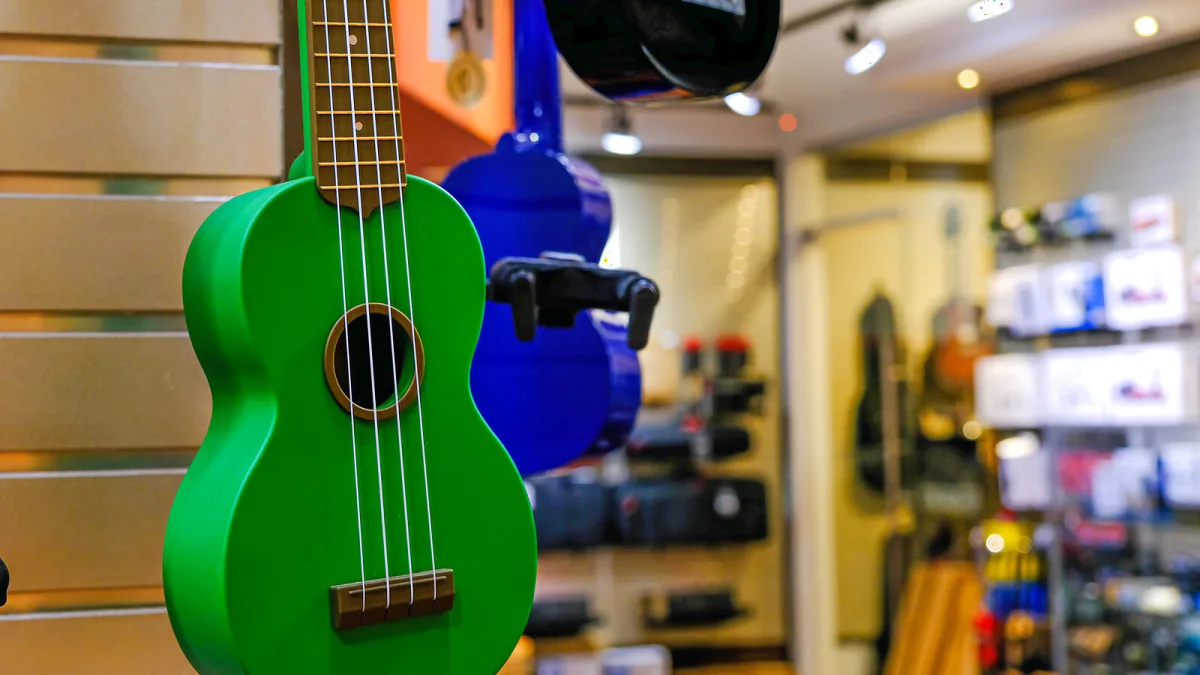
The ukulele market has never been better for newcomers — there's a genuine range of quality instruments at sensible price points, and the dominant brands have grown more reliable over the years. The difficulty isn't finding a ukulele; it's knowing which considerations actually matter and which are marketing noise. Here's what to weigh up before committing to your first beginner ukulele.
Start with Size
The first decision when buying a beginner ukulele is size, and it should be based on your hand size, how you intend to play, and whether portability matters.
- Soprano — compact, traditional, bright-sounding. The narrower neck can feel cramped for players with larger hands, though many prefer its lightness and portability.
- Concert — the most widely recommended starting point. Slightly larger neck, a few extra frets, and a warmer tone than soprano without sacrificing portability.
- Tenor — preferred by guitarists making the switch, and by players who want more volume and resonance. Wider neck spacing feels more guitar-like.
- Baritone — tuned D-G-B-E like the top four strings of a guitar. Not suitable for beginners who want the standard ukulele experience.
Concert is the default recommendation for most new players. The extra string length and slightly wider fret spacing make chord formation a little more comfortable without significantly increasing the instrument's footprint.
What to Spend
At around £50–100, you reach instruments with reliable intonation, decent build quality and playable action straight out of the box. Below that price point, the variance in quality is significant — some instruments are genuinely functional, while others have intonation problems that make them impossible to tune correctly across the neck. Spending an extra £20–30 is nearly always worth it.
At the £100–200 level, you start to see solid wood tops (as opposed to laminate), better fret work, and more refined finish quality. The improvement in tone and long-term playability is real, but laminate is perfectly adequate for a first instrument.
Key Quality Checks
Whether you're buying in a shop or online, these are the most important things to assess:
- Intonation: Tune open strings correctly, then play the 12th fret of each string. The fretted note should be exactly one octave above the open string. If it's noticeably sharp or flat, the instrument has intonation problems that can't easily be fixed.
- String action: The strings should sit close to the fretboard without buzzing. High action makes playing uncomfortable and tiring; low action that buzzes is also wrong. A setup from a luthier costs around £20–30 and solves both problems.
- Tuning peg stability: Friction pegs on soprano ukuleles slip. Geared tuners (standard on concert and tenor instruments from most reputable brands) are more stable and easier to adjust precisely.
- Fret ends: Run your hand along the edge of the neck. Sharp fret ends — where the metal protrudes from the side of the fretboard — indicate cheaper manufacturing or wood shrinkage. A luthier can file these, but it shouldn't be necessary on a quality new instrument.
Brands Worth Considering
In the UK beginner ukulele market, a few brands consistently receive positive reviews for build quality and value:
- Kala and Makala — Makala is the entry-level line from Kala. Both are widely regarded as the benchmark for value at their respective price points. Reliable intonation, solid construction, and a broad range of sizes and finishes.
- Lanikai — a long-established brand with a solid reputation. Often a good used-market find.
- Ortega — particularly strong in the European market. Good build quality relative to price.
- Donner and Joyo — among the better-value options at the very low end; more consistent than completely generic alternatives.
Avoid instruments with no brand identity or reviewable track record, particularly at very low price points. The variance in quality from unknown suppliers is too high to make it a sensible risk.
New vs Used
A used instrument from a reputable brand in good condition can be excellent value. Check the neck joint (no visible gap or cracking at the heel), the fretboard for worn frets, and the body for cracks, especially around the bridge and along the top plate. Test every fret on every string if possible. Electronics, if fitted, should be tested before purchase.
What Else to Budget For
The instrument itself is only part of what you'll need:
- A clip-on chromatic tuner — essential. Nylon strings drift, especially when new, and playing consistently out of tune reinforces bad pitch habits.
- A padded gig bag or hard case, if one isn't included.
- A spare set of quality strings (Aquila Nylgut are the standard recommendation for beginners at around £5–8 per set).
- A strap if you plan to play standing — many ukuleles don't have strap buttons fitted, so check before buying a strap.
For a fuller picture of the instrument before you buy, the beginner ukulele guide covers sizes, construction and what the instrument is capable of. And once you're up and running, avoid the common traps with common beginner ukulele mistakes to avoid.




Comments