


Guiro Music Instrument article
Guiro Music Instrument for Beginners: A Complete Guide
A guiro rewards a controlled, deliberate approach far more than raw enthusiasm — here's how to actually make a decent sound from your first session.
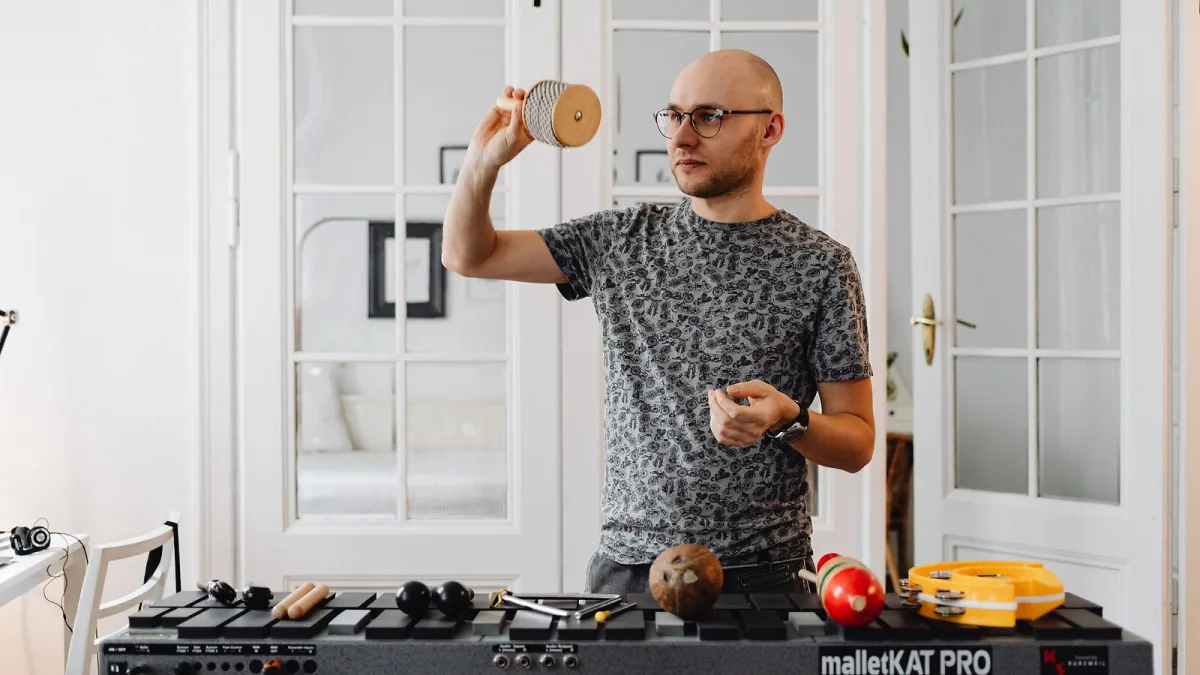
Right, let's get you actually making a decent sound rather than just scraping randomly and hoping. A guiro music instrument rewards a controlled, deliberate approach far more than raw enthusiasm, and the good news is the basics genuinely don't take long to learn properly.
How to Hold It
Grip matters more than most beginners expect. If your instrument has a handle, hold it securely but not in a death-grip — you need enough freedom in your wrist to move the scraper cleanly across the ridges. If it's a finger-hole design, slot your fingers through and let the body rest against your palm rather than gripping tightly with your fingertips. A traditional palm-held gourd needs the steadiest hand of the three; support it along your forearm if you're struggling to keep it still during faster passages.
Your First Strokes, Step by Step
- Hold the instrument steady and find a comfortable angle for the scraper against the grooves.
- Practise one long, even stroke from one end of the grooves to the other — listen for a smooth, continuous rasp.
- Try a short stroke covering only a small section of the grooves, aiming for a compact, accented sound.
- Alternate between an upstroke and a downstroke at a steady, even tempo.
- Reduce your pressure slightly and repeat — you're aiming for a clear sound without excessive scraping noise.
- Once that feels natural, try speeding up and slowing down deliberately to hear how it changes the texture.
Don't rush this stage. A guiro music instrument played with poor control just sounds like noise, while the same instrument played with a light, deliberate touch sounds genuinely musical.
Building a Steady Pulse on a Guiro Music Instrument
Once individual strokes feel controlled, work on consistency. Start with evenly spaced short strokes to establish a steady pulse, exactly like a metronome click, before adding longer strokes on specific beats within that pulse. Practise alternating your upstrokes and downstrokes without letting the underlying tempo wobble — that steadiness is what actually makes a guiro part useful to the rest of a band, far more than any flashy technique.
Common First-Session Sound Problems
- Too harsh or scratchy: almost always too much pressure. Ease off and let the grooves do the work rather than forcing it.
- Sound disappears at speed: usually a grip issue — a looser, more relaxed hold keeps the scraper in consistent contact even when you're moving quickly.
- Uneven tempo: practise with a metronome before adding any musical complexity; timing has to come before technique.
- Tired hand after a few minutes: a common early sign of gripping too tightly — check your hold matches the guidance above rather than pushing through discomfort.
Looking After Your Instrument While You Learn
A few sensible habits early on will save you trouble later. Wipe the grooves down after a sweaty practice session, keep a natural gourd away from radiators and damp bathrooms alike, and store the scraper somewhere it won't get bent or scratched against other gear. None of this needs to be fussy — it's the same low-effort care you'd give any instrument you actually want to last.
Playing Along With Real Music
Once the pulse feels solid, bring in recordings rather than practising in isolation forever. Start with son or salsa, since the guiro's role there is clear and consistent, and try to lock your strokes to what you're hearing rather than playing over the top of it. Learn the pattern that actually belongs to the style you're listening to before experimenting with your own variations — the instrument's whole job is interlocking with the rest of the rhythm section, not standing apart from it.
A Realistic Practice Schedule
Ten to fifteen focused minutes, most days, will get you further than an occasional hour-long session. Spend the first few minutes on plain long and short strokes with no music at all, move on to steady pulse work with a metronome, and only bring in a backing track once your timing feels genuinely solid on its own. Progress here is quiet and gradual rather than dramatic — which is exactly how it should feel for an instrument built on repetition and control.
Your Next Steps
Once the fundamentals feel solid, there's more worth understanding. Our full guiro music instrument overview covers construction and history in more depth, and our buyer's guide is there once you're ready to think about a second instrument. It's also worth reading our list of common mistakes to avoid once the basics feel natural.




Comments