


Frame Drum guide
How to Set Up and Use Frame Drum
A frame drum rewards systematic habit-building from the first session — correct grip, consistent tone production and slow deliberate practice build the foundation for everything that follows.
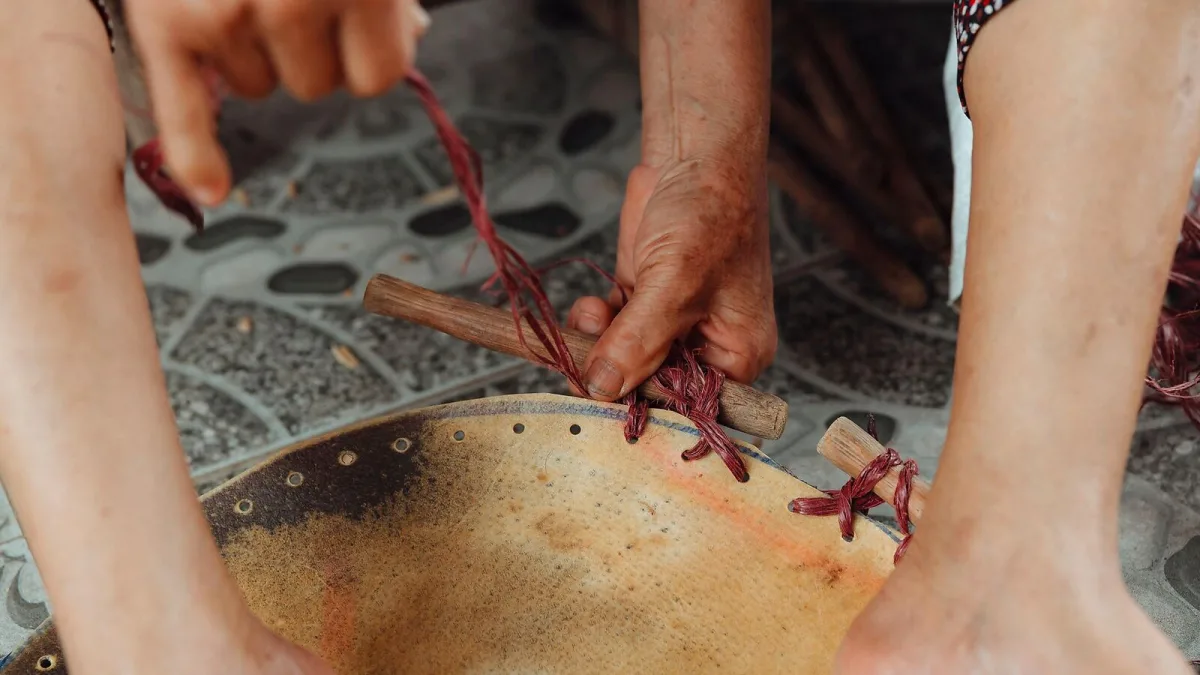
Getting started with a frame drum is a process of building good habits from the first session. The instrument looks simple — a ring and a head — but the technique involved in producing clear, distinct tones takes systematic attention to hand position, grip and posture. This guide walks through the setup and initial approach step by step, covering everything from how to hold the drum to producing your first clean tones.
How to Set Up and Begin Playing
- Prepare the drum if it has a natural skin head. Natural skin heads are sensitive to temperature and humidity. Before playing, allow the drum to acclimatise to the room for ten to fifteen minutes. If the head feels very slack (due to high humidity), gentle warmth — holding it near (not close to) a warm radiator for a few minutes — can tighten it. Never use direct heat sources; you risk damaging or cracking the skin.
- Establish your grip. For most hand-played frame drums, the grip hand (usually the non-dominant hand) supports the drum. Hold the frame between the thumb and the fingers, with the drum oriented vertically in front of you at roughly chest height. The frame should rest in the crook of your fingers, not gripped tightly. A relaxed grip allows the head to vibrate fully — a tense grip dampens the resonance.
- Find the three basic tones. The open tone: strike near the edge of the head with the tips of your dominant hand's middle and ring fingers. The sound should ring openly. The bass tone: strike near the centre of the head with the full pads of those fingers. This produces a lower, fuller sound. The muted or slap tone: strike and immediately dampen by pressing the playing fingers against the head. This gives a dry, short accent used in rhythmic articulation.
- Work on consistency before speed. Play a single tone — the open tone — slowly and repeatedly. The goal is to produce the same clear, ringing sound on every stroke. Inconsistency at this stage usually means hand position is varying between strokes or that the grip is too tight. Slow, deliberate repetition builds the muscle memory that faster playing relies on.
- Introduce a basic rhythmic pattern. A common starting pattern for frame drum players from many traditions is a two-beat structure: open tone on the first beat, bass tone on the second. Play this slowly — sixty to eighty beats per minute is plenty to begin — until the pattern is smooth and both tones are consistent. From this foundation, you can begin to add the muted tone as a third element.
- Check your posture throughout. Playing tension accumulates in the wrist, shoulder and back if posture is poor. The playing arm should hang naturally from the shoulder, not be held out at an angle. The wrist should be loose — a stiff wrist blocks the natural rebound of the hand that makes efficient technique possible. Check in with posture every five to ten minutes when starting out and take short breaks to prevent strain.
Getting a Good Tone
The most common problem for beginners is producing a dull or inconsistent tone. This is almost always a technique issue rather than an instrument issue. Check that your striking fingers are relaxed and making contact with the head at the correct point — not too far into the centre (which produces a thudding sound) and not too close to the frame (which produces a hollow, thin sound). The sweet spot for the open tone is roughly one to two centimetres inside the edge of the head.
Caring for the Drum
Store the instrument away from extremes of temperature and humidity. A soft case is sufficient for most storage situations. Natural skin heads should not be stored in a sealed hard case in a hot environment, as the heat and moisture buildup can cause the skin to deteriorate. After playing in a warm, sweaty environment, allow the drum to dry out in open air before storing it.
For a broader overview of this instrument family, the complete guide to the frame drum covers the history, types and cultural contexts. The mistakes guide addresses the most common setup and technique errors in more detail.






Comments