


Drums & Percussion Article
What Is in a Drum Kit? Every Drum and Cymbal Explained
Kick, snare, toms, hi-hats, crash and ride. What each part of a drum kit is for, how kits are counted, and which pieces you can happily do without.
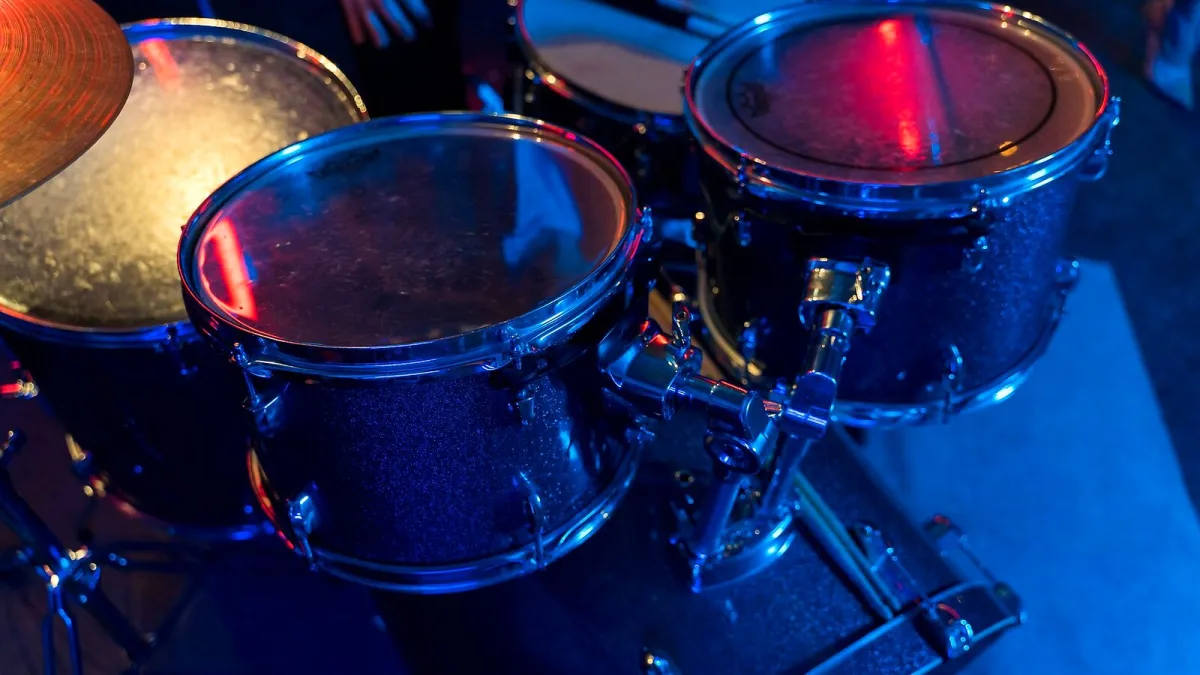
A drum kit looks like a lot of separate instruments bolted together, and in a sense that is exactly what it is. It was assembled over decades so that one player could cover the work of a whole percussion section. Knowing what each piece is called, and what job it does, makes buying a kit, reading a drum part and talking to a drummer far easier.
The drums
The bass drum
Also called the kick drum, this is the large drum lying on its side on the floor, played with a foot pedal. It provides the low end that anchors the groove, and in most popular music it locks in with the bass guitar. It is the loudest, lowest voice on the kit, and small changes to how it is tuned and muffled make an enormous difference to how the whole kit sounds.
The snare drum
The snare sits between the player's knees and is the kit's most distinctive voice: a sharp, bright crack produced by a set of metal wires, the snares, stretched across the underside of the drum. Those wires rattle against the lower head when the drum is struck. Flick the lever on the side to disengage them and the same drum sounds like a small tom.
The snare carries the backbeat, typically on beats two and four, and it is the drum most often changed out by players looking for a particular sound.
Toms
Tom-toms have no snare wires, so they produce a rounder, more melodic note. They come in two families. Rack toms, sometimes called hanging toms, are mounted above the bass drum or on a stand and are the higher-pitched ones. Floor toms stand on their own legs, are larger and deeper in pitch, and sit to the player's side. Toms are what you hear in a drum fill, and tuning them so the intervals between them are pleasing is part of the craft.
The cymbals
Hi-hats
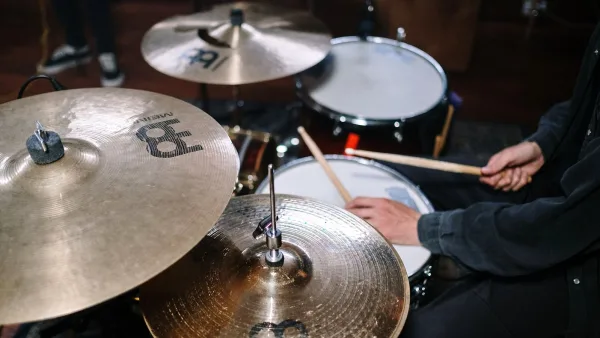
Two cymbals mounted face to face on a stand with a foot pedal that opens and closes them. Closed, they give a tight tick; opened, a wash of sound; and the pedal alone produces a clipped chick. The hi-hat usually keeps time, and the ability to vary how tightly it is closed while playing is one of the things that separates a mechanical groove from a musical one.
Crash
A crash cymbal gives a loud, fast, explosive accent, typically to mark the start of a section or the end of a fill. Thinner crashes speak faster and decay sooner; heavier ones take more effort to open up but carry further.
Ride
The ride is the largest cymbal, usually to the player's right, and it is played continuously as an alternative to the hi-hat, often in choruses or in swing. Struck on the body it produces a clear, repeating ping; struck on the raised bell in the centre it gives a bright, cutting note.
Effects cymbals
Splashes are small and short for quick accents; chinas have an upturned edge and a trashy, abrupt sound. Both are optional extras rather than part of a standard kit.
What five-piece actually means
Kits are counted by drums only. Cymbals are never included in the number, which surprises a lot of first-time buyers.
- A four-piece is bass drum, snare, one rack tom and one floor tom. Compact, quick to set up and entirely sufficient for most rock, pop and jazz.
- A five-piece adds a second tom, either a second rack tom or a second floor tom. This is the most common configuration and the one most beginner kits follow.
The hardware you cannot skip
Behind the drums sits a set of unglamorous but essential parts: the bass drum pedal, the hi-hat stand with its own pedal, a snare stand, cymbal stands and a throne to sit on. Hardware is often where budget kits save money, and a wobbling stand is more frustrating in practice than a mediocre cymbal.
Shells and heads
Drum shells are commonly made from maple, birch, poplar or mahogany, and each timber has a broad reputation for the balance of warmth and attack it produces. Far more important for a new drummer is the drum head: every drum has a batter head on top that you strike and a resonant head underneath that shapes the tone. Fitting fresh heads and learning to tune them transforms an inexpensive kit, and it costs a fraction of replacing it.
Where to start
If you are buying a first kit, prioritise a decent snare, solid hardware and cymbals you can stand listening to, then add pieces as your playing calls for them. Plenty of professional drummers have built careers on a four-piece.



Comments