


Crash Cymbal article
Crash Cymbals: A Complete Guide
A crash cymbal is the drummer's punctuation mark. Here is how they work, what the variables mean, and how to choose the right one for your playing.
What Is a Crash Cymbal?
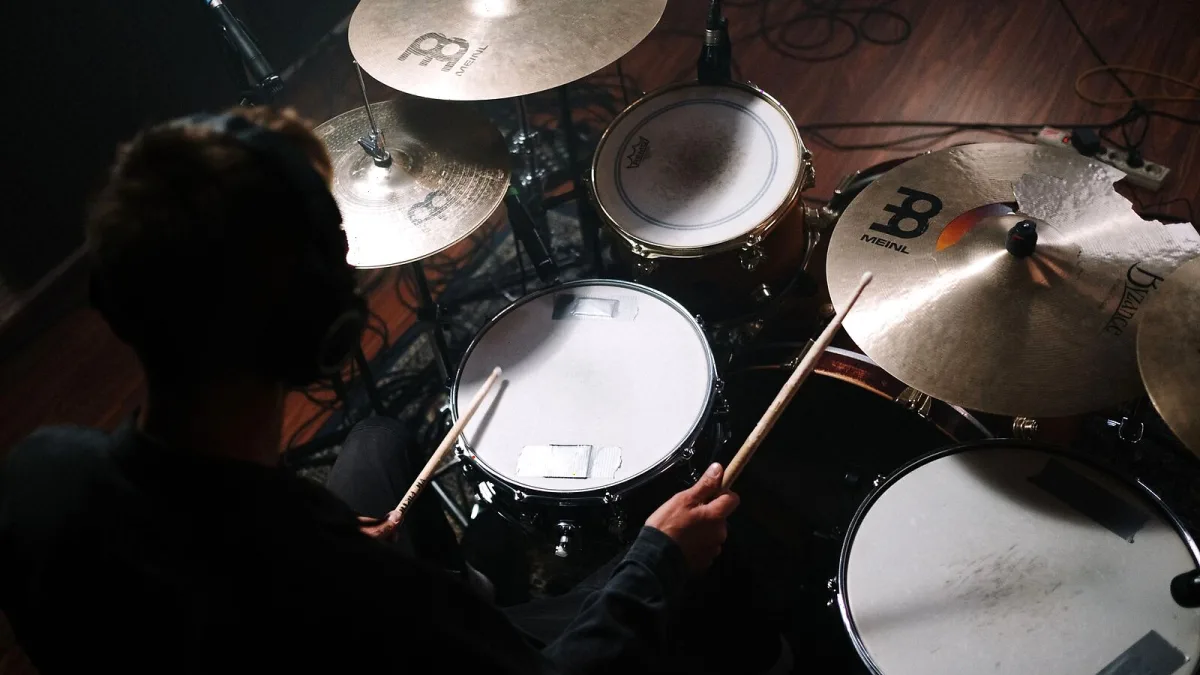
A crash cymbal is a suspended cymbal designed primarily for explosive accents, transitions and dynamic emphasis. On a drum set, it is struck with a stick at the bow or edge to produce a broad, immediate burst of sound that decays over a few seconds. It serves as the drummer's punctuation mark: a short, energetic event that draws attention within an arrangement, signals a section change or reinforces a downbeat at the start of a phrase.
The term can also refer to orchestral or concert crash cymbal pairs — matched cymbals held by straps and struck against each other. These are sometimes called clash cymbals or concert cymbals, and they operate on different playing and acoustic principles from their drum-set counterparts. This guide focuses primarily on drum-set crashes, with notes on orchestral use where relevant.
How a Crash Cymbal Is Made
Most crashes are cast or formed from bronze — an alloy of copper and tin. The two most common bronze compositions in the industry are B8 (approximately 8% tin) and B20 (approximately 20% tin). Alloy composition affects stiffness, density and tonal character, but alloy alone is not a reliable quality ranking. Manufacturing method, hammering, lathing and finishing all contribute to the final sound, often to a greater degree than the alloy label suggests.
After forming, a crash cymbal undergoes hammering — either by hand or machine — which introduces controlled irregularities that affect stiffness and tonal complexity. Lathing, the process of cutting grooves into the surface, influences brightness, response and sustain. A heavily lathed cymbal generally appears brighter and responds more quickly; an unlathed or partially lathed cymbal typically produces broader, more complex overtones.
Diameter, Weight and How They Shape the Sound
The two variables that most immediately determine a crash's character are diameter and weight.
Diameter runs from about 14 inches at the small end to 20 inches and above for large crashes and crash/ride hybrids. Smaller crashes respond faster, speak at a higher pitch and decay more quickly. Larger crashes produce more body, lower fundamental pitch and longer sustain. A 16-inch crash is often described as a useful general-purpose size for beginners and intermediate players, while 17- and 18-inch models offer more body and projection for live performance. Sizes above 19 inches are commonly used in rock, metal or crash/ride applications.
Weight is described by manufacturers with terms such as thin, medium-thin, medium and heavy. Thin crashes respond quickly, open up with less force and decay comparatively soon after the accent. They are well suited to jazz, funk, pop and any context where sensitivity and controlled dynamics matter. Medium and heavier crashes require more force to open up fully but reward that effort with greater volume, stronger stick definition and longer sustain — qualities useful in louder rock and metal settings. Heavy crashes project strongly in live rooms but can sound overly sustained or harsh in dense recordings.
These are tendencies rather than fixed rules. A large thin crash may actually decay faster than a small heavy crash. Always trust your ears over the specification sheet.
Bright, Dark and Everything Between
Manufacturers use terms such as bright, dark, warm, dry and complex to describe the tonal character of a crash. These are not precise acoustic measurements but useful approximate descriptions:
- Bright: Strong high-frequency presence, immediate attack, cutting projection. The sound cuts through a loud band mix quickly.
- Dark: Lower and midrange complexity, softer or more earthy attack, less piercing character. Dark crashes blend more easily in studio recordings and quieter contexts.
- Dry: Short decay, fewer overtones, controlled and focused sound. Often preferred for recording and studio work where sustained cymbal wash can interfere with other instruments.
- Complex: Rich overtone content, often described as having character or unpredictability. Desirable in jazz and ensemble playing but potentially difficult to control in dense rock mixes.
Room acoustics, microphone placement, playing force and the surrounding instruments all substantially affect perceived brightness. A crash that sounds dark in an isolated practice room may appear considerably brighter in a close-mic recording situation.
Profile, Bell and Bow
Beyond diameter and weight, three further physical features shape the character of a crash:
- Profile: The degree of curvature from bell to edge. A higher, more curved profile tends to increase tension and produce a brighter, more focused sound. A flatter profile often supports lower pitch and broader spread.
- Bell: The raised centre dome. A larger or more pronounced bell can increase attack, projection and ride-like definition. A smaller bell produces a more immediate crash character with less stick click.
- Bow: The main body of the cymbal between bell and edge. Its curvature affects response, pitch distribution and overtone balance.
These variables interact with diameter and weight in ways that make written descriptions approximate. Comparing cymbals in person — or studying video demonstrations under consistent conditions — is more reliable than relying on manufacturer descriptions alone.
Playing Technique
A crash rewards correct technique. Strike the bow or edge with the shoulder of the stick, not the tip, for a full accent. The stick should make contact and glance away rather than being buried into the surface. Allowing the cymbal to vibrate freely after the strike produces the full decay. Pressing the stick into the cymbal chokes the sound abruptly — a useful effect when applied deliberately, but a problem if it happens by accident through poor technique.
To produce a clean choke, grip the edge of the crash firmly with the free hand immediately after the accent. This stops the vibration quickly and is a standard technique for tight, accented passages.
Avoid striking repeatedly and forcefully on the extreme edge of the cymbal. This concentrates stress in a small area and increases the likelihood of cracking. Playing slightly further from the extreme edge, particularly for heavily repeated crash accents, reduces the risk significantly.
Mounting and Care
Always use a cymbal sleeve — a plastic or nylon tube on the stand's bolt — between the metal and the mounting hole. Tighten the wingnut only until the cymbal is secure but can still move and tilt freely. Metal-on-metal contact without a sleeve will quickly elongate the mounting hole into a keyhole, eventually making the cymbal unusable.
Inspect each crash cymbal regularly for cracks, particularly around the edge and mounting hole. Small cracks typically spread quickly under normal playing; a cracked cymbal should be retired from active use before the damage reaches the bell or becomes structural.
Transport crashes in a padded bag or hard case. Stacking wet or dirty cymbals against each other can cause surface damage. Most manufacturers do not recommend aggressive polishing; light cleaning with a dedicated cymbal cleaner or a soft cloth is generally sufficient for maintaining appearance and removing oxidation.
Choosing Your First Crash Cymbal
For a first crash, a 16-inch medium-thin model from a reputable manufacturer provides a reasonable balance of speed, body and versatility across a range of styles. It is large enough to produce usable body and sustain in most playing contexts, and thin enough to respond without requiring excessive force. From a reputable manufacturer — Zildjian, Sabian, Paiste, Meinl or similar — a mid-range model at this specification will outperform a budget heavy crash and will hold its value reasonably well if bought new.
The most important test is always a live comparison. If you have access to a music shop with cymbals available to try, bring your sticks and compare several models at your intended price point. Sound descriptions in reviews are useful starting points, but the cymbal that sounds right to your ears in your playing context is the right choice regardless of what the specification says.





Comments