


Claves article
The Ultimate Guide to Claves
Two wooden sticks that organise a whole family of music: how to hold and strike claves, the difference between son and rumba clave, and what 3–2 and 2–3 really mean.
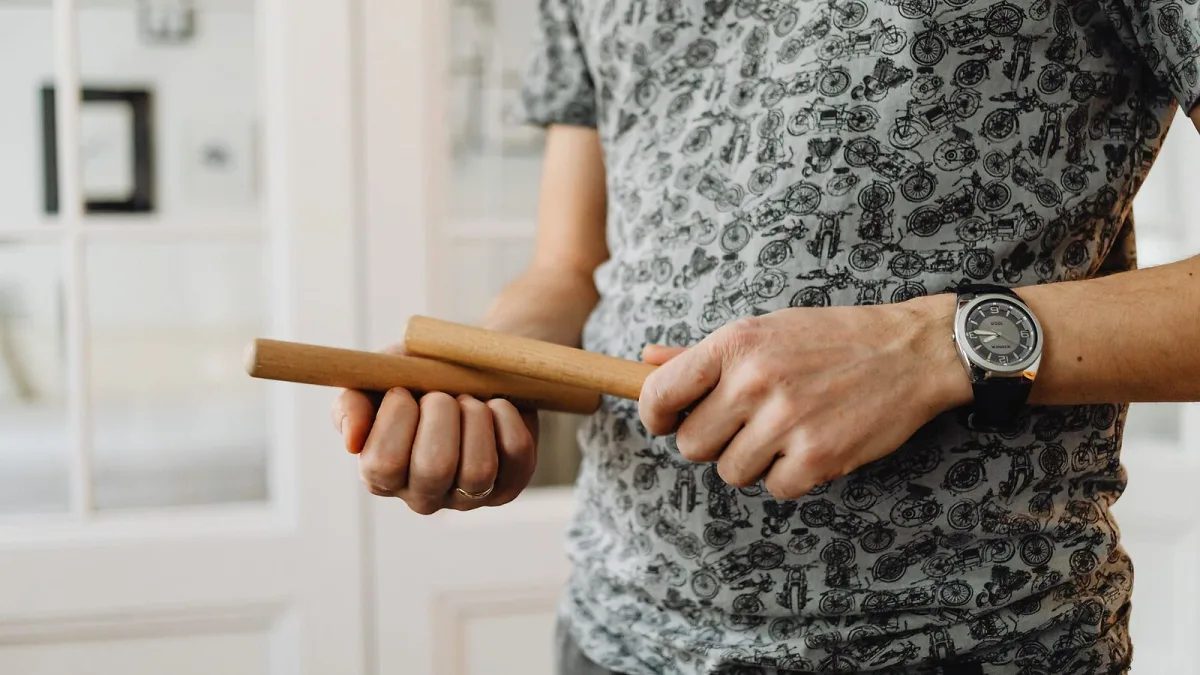
Claves are about as simple as an instrument gets — two wooden sticks, struck together — and yet they sit at the very centre of an entire family of music. That contradiction is what makes them so interesting. Understanding them means understanding not just how to hold and strike them, but the rhythmic idea they give their name to, which quietly organises much of Afro-Cuban music.
One word, two meanings
The first thing to get straight is that “clave” means two related things. There is the instrument — the pair of claves themselves — and there is the clave, a repeating two-bar rhythmic pattern that acts as the backbone of the music. The second meaning is the more powerful one: in a clave-based ensemble, players can improvise and vary their parts, but their accents stay in agreement with that underlying cycle. The pattern is less an accompaniment than a shared framework everyone locks into.
Where claves come from
The instrument's story is part of the wider history of African music in the Caribbean. The rhythmic idea is usually traced to West African bell and timeline patterns carried across the Atlantic through the African diaspora, which then met European instruments and harmony in Cuba to help shape genres such as son and rumba. You will often read that the first claves were made from wooden pegs used in Havana's shipyards; it is a charming tale, but treat it as tradition rather than settled fact — the broader African-diasporic history is far better documented than that particular origin.
The instrument itself
A set of claves is a matched pair of cylindrical sticks, traditionally hardwood. The two have names and jobs: the hembra (“female”) is the resonating stick you cradle, and the macho (“male”) is the striker. Wood choice shapes the voice — dense timbers such as rosewood or hickory give a bright, piercing, carrying tone — while size plays its part too: larger claves sound lower and fuller, smaller ones higher and sharper.
How to hold and strike them
This is where most beginners go wrong, and it is worth getting right, because your hand is genuinely part of the instrument:
- Rest the resonating clave lightly across the open palm of your non-dominant hand, supported by the thumb and fingertips.
- Cup that palm slightly so it forms a small chamber beneath the stick — that air pocket is what lets the note ring.
- Hold the striking clave in your dominant hand with a relaxed grip, like a loose drumstick.
- Strike near the centre of the resonating stick, not the end.
Grip it too tightly and you smother the vibration, leaving a dull click; hold it loosely over that cupped palm and the same pair suddenly sings.
The pattern: son clave and rumba clave
The clave pattern spans two bars of 4/4, with a three-stroke side and a two-stroke side. Which side comes first gives you the two orientations you will hear musicians call out: 3–2 (three strokes then two) or 2–3 (two then three), depending on where the phrase sits in the music.
There are two patterns to know first:
- Son clave — the pattern most associated with son, and the usual starting point for salsa.
- Rumba clave — closely related, but one stroke on the three-side lands in a different place. That small shift changes the whole feel, and mixing the two up is the classic beginner error.
Crucially, the five strokes are not evenly spaced. The characteristic lopsided, asymmetric feel is the entire point — play it as five equal taps and it stops being clave.
Learning it properly
A steady, unglamorous practice routine beats trying to rush it:
- Clap the pattern before you pick up the claves at all.
- Count two full bars continuously rather than restarting after each stroke.
- Practise both 3–2 and 2–3 so you can switch without stumbling.
- Use a metronome, start slow, and add a simple bass or percussion track.
- Record yourself — the rests are as important as the hits, and a recording exposes any that drift.
Claves in the music
You will hear claves and the clave concept across son, rumba, mambo, cha-cha-chá and salsa, in the work of artists from Arsenio Rodríguez and Machito to Tito Puente and Celia Cruz. A word of caution the tradition itself insists on: similar-sounding stick patterns appear in Brazilian and other music, but the presence of the instrument does not automatically mean the Cuban clave structure is at work. Different traditions deserve to be heard on their own terms.
Choosing a pair
For a first set, look for a matched pair with a clear, sustained ring and no cracks or soft spots — compare pitch and projection in person if you can. Hardwood gives the traditional sound and strong projection; synthetic models trade a little character for durability and consistency, which suits the classroom or a busy gig bag. If you are buying rosewood or another protected timber, it is worth checking the maker's sourcing information first.
The bottom line
Claves reward you far out of proportion to their simplicity. Hold them lightly over a cupped hand, strike the centre, learn son and rumba clave as living two-bar cycles rather than rows of taps, and listen hard to the players who built the tradition. Do that, and two little sticks will teach you more about rhythm than almost anything else in the percussion cupboard.



Comments