Skip to content

Chimes article

Chimes for Beginners: A Complete Guide

A beginner's guide to starting on orchestral tubular bells — covering the keyboard layout, basic strike mechanics, sustain pedal use and early repertoire choices.
Chimes for Beginners: A Complete Guide

Starting on chimes as a beginner requires less specialised technique than many mallet percussion instruments, but the physical and musical demands should not be underestimated. The instrument rewards patience and careful attention to basic mechanics from the start.

Understanding the Layout

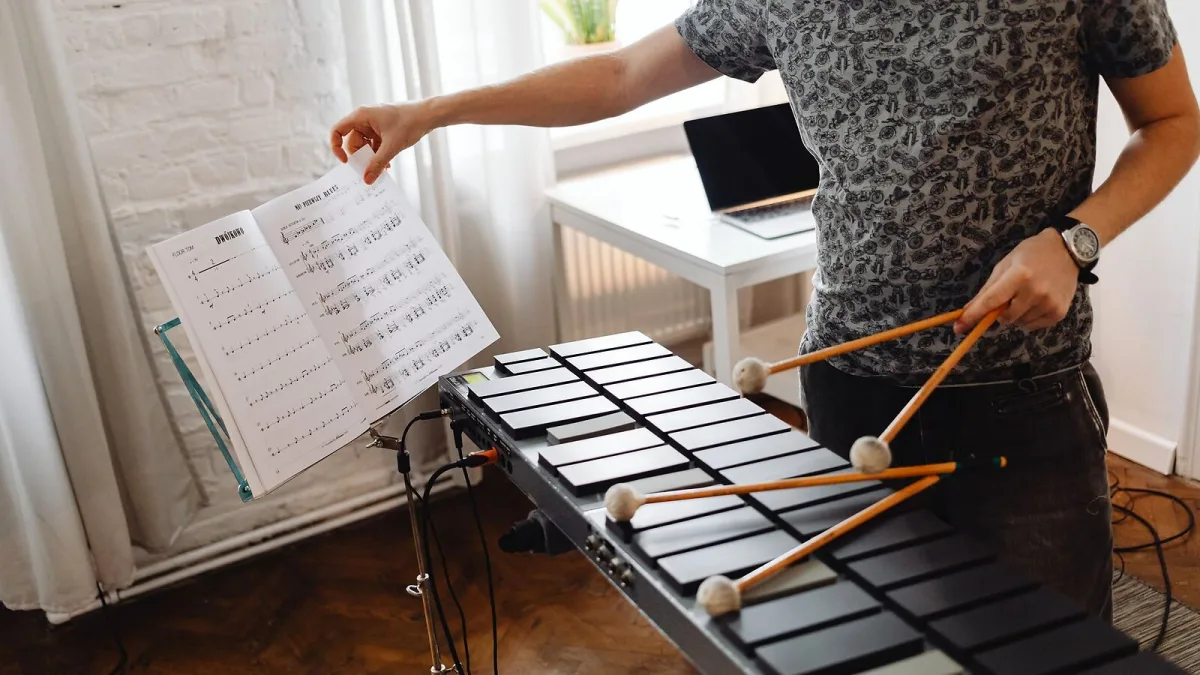
Chimes are arranged in the same pattern as a piano keyboard, with natural pitches in the front row and sharps and flats in the raised row behind. Standard orchestral chimes cover C4 to F5. Unlike a piano, the notes are labelled on the tubes — clear markings are a feature of most quality instruments — so navigation is straightforward from the start. The gaps between tubes are significant, however, and beginners often misjudge reach in fast passages until the layout is thoroughly internalised.

The Basic Strike

The mallet should strike the top of the tube — specifically, the striking cap at the crown — with a clean, direct motion. The arm provides direction; the wrist produces the sharp snap that delivers energy efficiently into the tube. Do not follow through and rest the mallet on the tube after striking — this deadens the sound immediately. Practise the rebound motion on a practice pad first, before moving to the chimes. When playing chimes in rehearsal, an imprecise strike produces a rattle that is immediately obvious to everyone in the room. A clean rebound produces a clean, sustaining tone; a pressed stroke produces a muffled, short one.

The Sustain Pedal

The pedal on a set of chimes controls the damper bar. Most beginners learn the sustain pedal's function early, as correct pedalling is essential to musical phrasing. For long, sustained notes or chord clusters, release the pedal (allow the tubes to ring). For clean, staccato passages or rapid note changes, press the pedal to stop ringing after each note. Practise both with and without the pedal before combining them in repertoire.

Starting Repertoire

Begin with single-note melodies on the chimes that require only a few strikes per bar and allow time to navigate between tubes carefully. Simple orchestral excerpts, folk arrangements and hymn-style pieces are well suited to early study. Many beginners studying chimes find it useful to mark the tubes they need for a specific piece with small removable stickers while learning. For an overview of the instrument and what distinguishes different types, the complete instrument guide is a useful reference alongside practical lessons.

Frequently Asked Questions

Frequently Asked Questions

Do I need to read music to learn this instrument?

Standard music notation is used for all formal study, so the ability to read treble clef is important. Beginners who can read basic notation will find learning the physical technique much easier, as they can focus on the mechanical aspects of playing rather than also decoding what to play. Most percussion teachers will begin with simple melodic reading alongside technique from the first lesson.

How important is posture?

Very. Standing the correct distance from the frame — close enough to reach the full range without stretching, far enough to swing the mallet freely — is something to establish early. Incorrect posture leads to restricted movement, imprecise striking and fatigue in fast passages. A teacher can correct posture quickly; it is harder to undo once internalised as a habit.

What mallets should I start with?

A pair of medium rawhide mallets is the standard starting point. Rawhide produces the classic bell-like tone that the instrument is designed around, and the medium weight gives enough attack to produce a clear note without requiring excessive force. Plastic mallets are brighter and can be added later; very soft mallets are rarely used on this instrument.

Can I practise without the actual instrument?

Some aspects of the mallet stroke can be practised on a drum practice pad. The arm and wrist motion, the rebound, and basic stroke mechanics all transfer to the real instrument. However, the specific reach, navigation between tubes, and sustain pedal coordination all require time on the actual instrument. If access is limited, focus pad practice on stroke mechanics and save instrument time for navigation and pedalling.

Is this a good instrument to start percussion on?

It can be — the layout is immediately intuitive for anyone with keyboard experience, and producing a reasonable sound is achievable quickly. However, orchestral percussion study typically begins with snare drum or mallet percussion more generally, building technical vocabulary that transfers to all percussion instruments. Starting specifically on this instrument without broader percussion context is less common but workable with the right teacher.

About Benjamin Wood

Benjamin taught himself guitar and, later, how to build and mod his own pedals in a spare room in Derby, driven more by curiosity than any grand plan. He loves the point where tone meets electronics. He writes about guitars, effects and gear.

Comments

Leave a comment

Comments are read before they appear. Links cannot be published.

Your rating (optional)