


Bongos article
The Ultimate Guide to Bongos
Two little drums, endless depth. A complete guide to how bongos are built, tuned and played — from the macho and hembra to the martillo and how to choose your first pair.
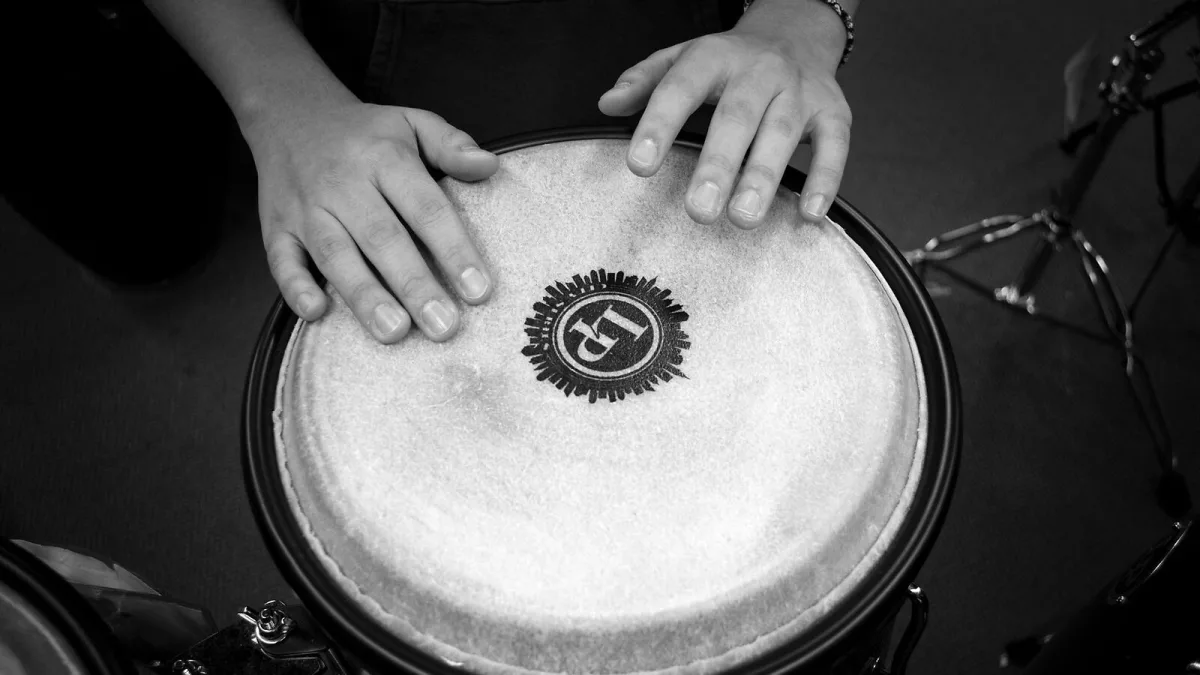
Bongos look almost too simple to be interesting — two little drums bolted together, played with your hands. But the closer you look at how they're built, tuned and played, the more there is to appreciate. The bongos are a compact, brilliantly designed instrument with a genuinely fascinating history, and understanding how it works makes it far more fun to play. Let's take it apart and see what makes it tick.
What exactly is a bongo?
A pair of bongos (from the Spanish bongó) is two small, single-headed drums joined by a central bridge. The smaller, higher-pitched drum is the macho (“male”); the larger, lower-pitched one is the hembra (“female”). Typically the macho is around 6–8 inches across and the hembra about 8–10 inches. You play them with your fingers and palms, not sticks, and that direct hand-to-head contact is exactly why they're so expressive.
A quick history worth knowing
Bongos came out of eastern Cuba — the Oriente region — in the late 19th century, shaped by Afro-Cuban culture. They became central to changüí and son cubano, the styles that later fed into salsa and Latin jazz. In the earliest son groups the bongo player was often the main percussionist, weaving a detailed rhythmic line around the tres, bass and voice. When Cuban music travelled, so did the bongos, turning up in mambo, cha-cha-chá, Latin jazz, and even soul, rock and pop records as a splash of percussive colour.
How a bongo is built
Here's where the “how and why” gets interesting. A modern bongo set has:
- Shells — traditionally wood, though fibreglass and synthetics are common. Wood tends to give a warmer, more complex tone; synthetic shells trade some of that character for consistency and durability.
- Heads — natural skin (calf or goat) or synthetic. Natural skin has that classic response but reacts to heat and humidity; synthetic heads are far more stable and low-maintenance.
- Rims, lugs and tuning nuts — these hold the head and let you adjust tension. Older bongos used tacked-on heads that you tuned by warming or dampening the skin; mechanical tuning made life a lot easier.
- The bridge — the block joining the two shells.
Setting up and holding them
For the traditional seated position, the bongos sit between your knees with the shells angled slightly outward, and the macho usually goes on your left, the hembra on your right. Left-handers or anyone who finds the reverse more comfortable can flip that — there's no rule worth injuring your groove over. If you're standing or want a repeatable setup, a stand is the sensible choice.
Tuning: small, even adjustments
There's no single “correct” pitch for bongos — it depends on the drum size, head material and what you're playing with. The practical goal is simple: tune the macho clearly above the hembra, with both drums sounding distinct and open rather than choked. When you tune mechanically:
- Seat the head and rim evenly.
- Tighten opposing lugs in a crosswise pattern.
- Make small, equal adjustments each time.
- Check the pitch around the head, not just in the centre.
- Don't over-tighten, especially with natural skin.
- Let it settle before the final tweak.
Uneven lug tension is the usual culprit behind a head that sounds different depending on where you strike it. Natural skins will also drift with the weather — synthetic heads are the reliable choice if you gig in changing conditions.
The core strokes
Most bongo playing is built from a small set of strokes:
- Open tone — a resonant stroke near the edge with the fingers.
- Muted tone — struck while other fingers rest on the head to damp it.
- Slap — a sharper, snappier, more explosive sound.
- Heel-and-toe — a rocking motion that keeps continuous patterns flowing.
- Finger rolls — rapid repeated notes for fills and accents.
Don't chase speed early on. Clean, even strokes with relaxed hands and controlled volume will get you far more musical results than a fast but messy pattern.
The martillo and playing with the clave
The foundational bongo pattern in son is the martillo (“hammer”). It's not a rigid beat — good players constantly vary the accents, open and muted notes and phrasing to fit the singer and the band. The key thing to understand is that bongos live in relation to the clave, the underlying rhythmic key of the music. A technically perfect pattern can still sound wrong if its accents fight the clave, so learn the pattern in context, not in isolation.
Bongos vs congas
People often assume a bongo is just a small conga, but they're distinct instruments:
| Bongos | Congas | |
|---|---|---|
| Form | Two small drums joined together | Usually one tall drum each |
| Register | Higher, sharply articulated | Lower, more resonant |
| Typical role | Detailed patterns and accents | Foundational tumbao |
They have different techniques, tuning relationships and histories, so it's worth treating them on their own terms.
Choosing a pair
When you're buying, weigh up:
- Shell material — wood for traditional tone, synthetic for consistency and toughness.
- Head type — natural skin for classic feel, synthetic for stability and easy upkeep.
- Bearing edge and hardware — a smooth, even edge and solid lugs, rims and bridge make tuning far easier.
- Replacement heads — check compatible heads are available before buying anything unusual; makers like Remo publish sizing guides for common models.
Reputable names include Latin Percussion (LP), Meinl, Gon Bops, Toca and Tycoon, across student to professional tiers. As always, treat “pro” and “best tone” marketing with a pinch of salt and judge by the hardware and how it sounds to you.
Looking after them
Wipe the heads and shells after playing, keep them away from extreme heat and damp, don't force the tuning, and store them in a padded bag for transport. Check the bridge, lugs and bearing edges now and then, and replace a head once it's permanently stretched, cracked or won't hold tune.
Standing on the shoulders of giants
If you want to hear the instrument at its best, dig into the players who defined it: Chano Pozo, who brought Afro-Cuban rhythm into Dizzy Gillespie's jazz; Cándido Camero; Mongo Santamaría; Ray Barretto; and Willie Bobo. Understanding how the bongo is built and tuned is one thing — hearing what these masters did with a pair of bongos is what'll make you want to keep playing.



Comments