


Acoustic Drum Kit roundup
Acoustic Drum Kit: A Complete Buyer's Guide
Room, budget and musical style are the three questions that determine the right drum kit. Here's how to answer each one before you buy.

Buying an acoustic drum kit involves more variables than most instruments. You're choosing shell sizes, shell material, hardware quality, cymbals, a throne and whether to buy a complete package or a shell pack. And you're doing it while trying to account for the room where the kit will live. This guide puts the decisions in the order that actually matters.
First Question: Where Is It Going?
An acoustic drum kit is loud — genuinely loud. Before worrying about brands or shell materials, be honest about the playing environment. A house with a garage, basement or decent room separation is a very different situation from a flat with shared walls. This doesn't necessarily mean you can't buy an acoustic kit in a city flat, but it does mean noise management, practice hours and neighbour relationships become real considerations before you spend money.
Low-volume heads (like Remo Silentstroke), low-volume cymbals and bass-drum isolation pads reduce the acoustic output significantly. But impact noise from pedals and the rack travels through floors regardless of head choice. Be realistic about this.
Complete Kit or Shell Pack?
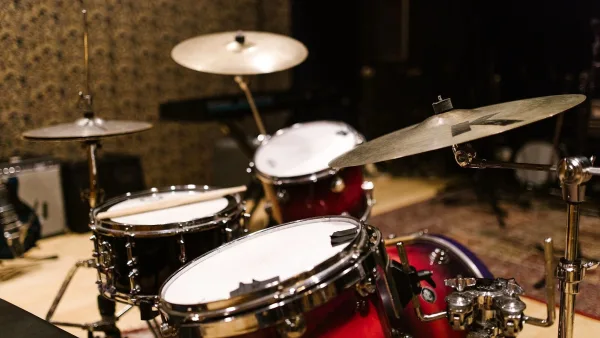
A shell pack includes only the drums. A complete kit adds cymbals, stands, a bass-drum pedal, hi-hat hardware and usually a throne. For a first-time buyer, a complete kit is almost always the more practical choice: you know exactly what you're getting, and the total cost is predictable. Shell packs are better value if you're upgrading the drums only and keeping existing hardware and cymbals.
Standard or Fusion Sizing?
The two most common size conventions are standard (typically centred on a 22-inch bass drum) and fusion (typically a 20-inch bass drum, smaller toms). Standard kits produce lower pitches and more projection, which suits heavier styles. Fusion kits are more compact, respond faster and sit in a higher pitch range. For most beginners and intermediate players, a 20-inch or 22-inch bass drum is the right starting point. Think about the style of music you primarily play.
What to Spend at Each Level
Entry Level (Under £500)
Pearl Roadshow and Export kits, the Tama Imperialstar and Mapex Venus are the most consistently recommended options in the UK market. These are complete kits with usable shells, dependable hardware and enough included accessories to get playing immediately. The hardware and cymbals in budget kits are usually the weak points — upgrading the ride cymbal and hi-hats first makes an immediate difference to the playing experience.
Mid Range (£500–£1,000)
This tier is where shell quality and hardware reliability genuinely step up. Yamaha's Stage Custom Birch kits, Ludwig's Accent and Evolution ranges, and Tama's Club-JAM and Superstar Classic kits offer meaningful improvements in tone, tuning stability and build quality over entry-level alternatives. A mid-range shell pack paired with decent cymbals and hardware is also a strong option for players who already own some equipment.
Professional Entry (£1,000 and Above)
Maple shells from Yamaha (Recording Custom), DW (Design series), Gretsch, Ludwig Classic Maple and Tama Starclassic represent a significant step in shell quality and tonal refinement. These are appropriate for players who are performing regularly, recording or who have outgrown mid-range equipment. At this level, custom configurations, shell depth, bearing-edge profile and hardware spec all become meaningful decisions rather than academic ones.
Hardware and Cymbals: Don't Underestimate Them
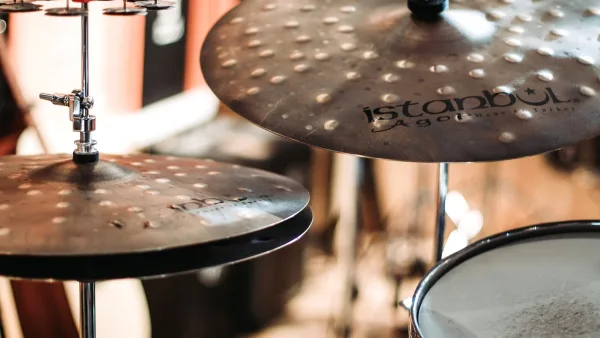
Hardware and cymbals often represent half or more of the total sound and playability of a setup. A mediocre snare and bass drum paired with quality cymbals and a solid hi-hat will often feel better to play than excellent drums with cheap cymbals. Zildjian's A Custom and ZBT ranges, Sabian's AAX and B8 Pro, and Meinl's HCS and Byzance lines cover the market from beginner to professional.
Heads Make a Bigger Difference Than Most People Expect
The heads that ship with most beginner kits are acceptable but rarely optimal. Replacing the batter (top) heads with a well-regarded aftermarket option — Remo Emperor Coated for a classic snare sound, Remo Ambassador or Evans G2 for toms — can transform the sound of a budget kit without changing a single shell. Include this in your budget from the start.
The Bottom Line
An acoustic drum kit purchase is easier to get right with a clear sense of the room, the music and the budget. For a deeper understanding of how these kits are built and what the different configurations mean, see our ultimate guide to acoustic drum kits.




Comments