


Denon DJ article
A Guide to Denon Dj
Big screens, standalone confidence and its own way of doing things — here's the full picture on Denon DJ's history, ecosystem and current range.
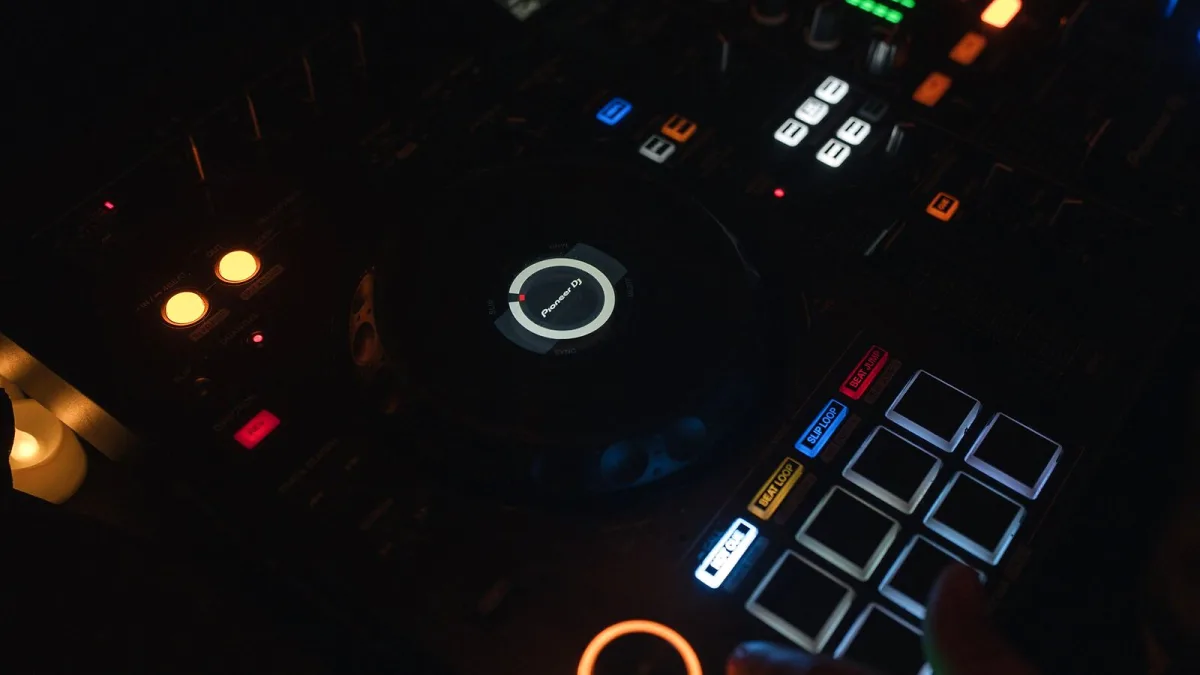
Denon DJ doesn't shout as loud as some of its rivals, but spend five minutes with its gear and you'll clock exactly why it's carved out a serious following: big screens, standalone confidence, and a genuine willingness to do things its own way. Here's the full picture — history, ecosystem and where it actually sits in the DJ world right now.
Where Denon DJ actually comes from
Denon itself dates back to 1910, originally under the name Japan Electric Sound Company, with the "Denon" name arriving in 1947 from a blend of "Denki" and "Onkyo." The brand built its reputation on hi-fi and home cinema long before DJ culture existed in its modern form. It got into DJ technology early, too — Denon is credited with releasing the world's first dual-deck CD player for DJs back in 1992, a genuinely significant moment in the shift away from vinyl and single-disc setups.
Today's Denon DJ is a distinct identity from that consumer hi-fi heritage, and since 2014 it's operated as part of inMusic — the same group behind Rane, Numark and Akai Professional. That family connection matters more than it might seem, since it's part of why Engine DJ technology now shows up across several inMusic brands, not just Denon's own hardware.
The ecosystem, not just the gear
The thing to understand about Denon DJ is that it isn't selling standalone boxes so much as a whole ecosystem built around Engine DJ — the software and operating system that underpins its hardware. That ecosystem has three main pieces:
- Engine DJ Desktop — for preparing your library: importing tracks, analysing waveforms and beat-grids, building playlists and crates.
- Engine OS — the operating system running on compatible standalone hardware, handling playback, mixing and performance functions.
- Hardware-specific firmware — kept in step with Engine DJ software updates.
That tight integration is Denon DJ's real differentiator: standalone systems that don't need a laptop connected during a set, which cuts out a whole category of on-stage failure points.
The main product families
| Family | What it is |
|---|---|
| PRIME 4 G2 / PRIME 4+ | Four-channel standalone systems — the flagship all-in-one route |
| PRIME 2 | A more compact two-channel standalone system |
| PRIME GO+ | A portable, battery-oriented standalone unit |
| SC6000 / SC6000M PRIME | Modular, club-style media players — the SC6000M adds a motorised platter |
| X1850 PRIME | A four-channel professional mixer built to pair with the SC-series players |
| LC6000 PRIME | An expansion controller for adding extra decks to a compatible Engine DJ setup |
| SC LIVE 2 / SC LIVE 4 | Compact standalone systems aimed at home, mobile and performance use |
What's new: the PRIME 4 G2
Launched in September 2026, the PRIME 4 G2 is Denon DJ's latest four-channel standalone system, and it's a genuinely substantial update rather than a cosmetic refresh. Reported headline additions include onboard Stems rendering — splitting a track into vocals, drums, bass and melody directly on the hardware, without needing a computer — alongside larger jog wheels, new MPCe performance pads, integrated DMX lighting control and an expanded effects workflow. At launch it runs standalone on Engine DJ, with support for Serato DJ Pro, Algoriddim djay and VirtualDJ described as planned for future updates rather than available immediately — worth checking directly with Denon DJ before assuming that compatibility is already live.
Standalone versus laptop-based DJing
Denon DJ's whole philosophy leans on one core trade-off. Going standalone means a cleaner setup, no laptop dependency mid-set, and direct hands-on access via touchscreens and hardware controls — genuinely appealing for mobile DJs and venue-based work. The cost is that you need to keep your library properly prepared, your media correctly synced, and your firmware and Engine DJ software versions aligned, since none of that housekeeping happens automatically once you're on stage.
Where it sits against the competition
Denon DJ competes most directly with Pioneer DJ/AlphaTheta in the club-standard media-player and mixer space, and more broadly with Rane, Numark and Native Instruments across the wider DJ hardware market. Its case for itself rests on standalone confidence, large-format touchscreens and an ecosystem that increasingly stretches across multiple inMusic brands via shared Engine DJ technology — rather than trying to out-spec any single rival feature for feature.
If you're weighing up whether to actually buy into this ecosystem, our buyer's guide breaks down which product actually fits which kind of DJ.
The bottom line
Denon DJ's real strength isn't any single box — it's the combination of standalone confidence and a software ecosystem that's genuinely trying to reduce how much can go wrong on stage. Understand Engine DJ first, and the rest of the range makes a lot more sense. New to the brand entirely? Our beginner's guide is the gentler starting point, and it's worth a read through the common mistakes people make before you commit any money.



Comments