


DJ Booth article
Everything You Need to Know About Dj Booth
What actually goes behind the decks? Here's what a DJ booth is, the main formats on the market, and how to tell one from a facade or a table.
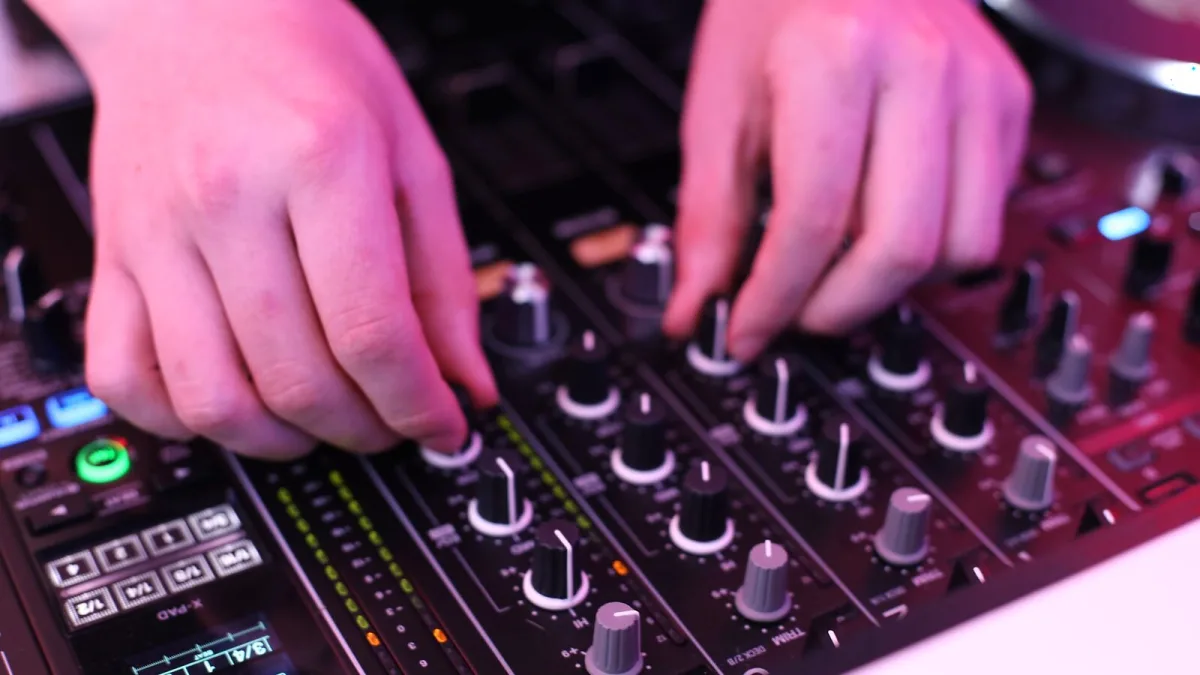
Every mobile DJ eventually asks the same question: what actually goes behind the decks? The honest answer is a surprisingly varied bit of kit, and the terminology around it is messier than you'd expect. This guide covers what a DJ booth is, the main formats you'll come across, and how to tell one from a facade, a table or a flight case before you spend a penny — because those four words don't always mean the same product twice.
What Is a DJ Booth?
At its simplest, it's the raised, stable surface a DJ performs behind — somewhere to put decks, a mixer, a controller and a laptop, at a height that's comfortable to work at for a whole set. Beyond that basic job, a good setup does several things at once: it conceals cases, cables and power supplies out of sight, creates a clear, defined performance area, and gives a mobile DJ's business a professional, branded look in front of a crowd.
The trade-off, whatever format you choose, is always the same one: portability against strength, appearance against price, and quick setup against a more polished finish.
The Main Types
There's no single industry-standard design. Here's how the main formats break down:
- Portable facade or flight-case systems — the classic mobile-DJ format: folding panels or a full case-based workstation, with handles or wheels for transport and a front that hides your gear bags from the dance floor.
- Table-top stands — a smaller, cheaper support for a controller or mixer, ideal for home use or where the venue already supplies a table, though with far less cable concealment or visual separation from the crowd.
- Fixed club or venue booths — permanent, custom-built furniture with cable ducts, power outlets and sometimes monitor-speaker positions, tailored to one specific room rather than transported anywhere.
- Illuminated or LED-fascia designs — a lit front panel, using LED strips, bars or backlit fabric, that gives a mobile-entertainment business a strong visual identity at night.
- Truss-based rigs — aluminium truss and a worktop, popular for larger events because they can also carry lighting and banners, though they're more complex and expensive than a simple folding facade.
For a proper walk-through of how to weigh these formats against each other before you buy, see our complete buyer's guide.
What They're Made Of
| Material | Typical use | Trade-off |
|---|---|---|
| MDF or wood-based panels | Facades, table-tops | Polished look, but vulnerable to moisture and edge damage |
| Moulded plastic / ABS | Lightweight facades and cases | Light and easy to clean, less premium in appearance |
| Aluminium frame or truss | Truss-based and modular rigs | Durable and versatile, but needs care at joints and connectors |
Booth, Facade or Table? The Terms People Mix Up
The vocabulary here is genuinely inconsistent between retailers, which catches a lot of first-time buyers out. A facade is usually just a front screen or folding panel that sits in front of a separate table — it isn't necessarily load-bearing on its own. A table mainly offers a work surface with little concealment. A flight case is built to protect equipment in transit, though some double as a workstation once opened. Before buying anything described loosely as a "booth", check whether it's actually a complete, load-bearing unit or simply a decorative front panel.
Getting the Basics Right
Whichever format you go for, a handful of practical points matter more than looks: cable management behind the front panel, a stable and level stand, and keeping the whole setup clear of fire exits and crowd walkways. New to all this and want the simplest possible starting point? Our beginner's guide covers exactly that, and our rundown of common mistakes to avoid is worth reading before your first gig, not after it.
Electrical safety is worth a mention here too. In the UK, the Musicians' Union's guidance is that testing frequency for mobile equipment depends on how hard it's used, with annual testing a reasonable general rule for many setups. That's not a substitute for a quick visual check of leads, plugs and extension reels before every single event — whatever you're performing behind.
The Bottom Line
A DJ booth is really a spectrum, not one product: a £40 table-top stand and a custom-branded truss rig solve the same basic problem in very different ways. Work out how often you'll transport it, how it needs to look, and how much you're realistically prepared to carry on your own, and the right format narrows down quickly. If budget is the deciding factor, our guide to the best DJ booths for the money breaks down what you get at each price tier.



Comments