


Akai Mpc article
A Guide to Akai Mpc
Since 1988 the Akai MPC has gone from a boxy 12-bit sampler to a full standalone production system. Here's the story and the technology behind it.
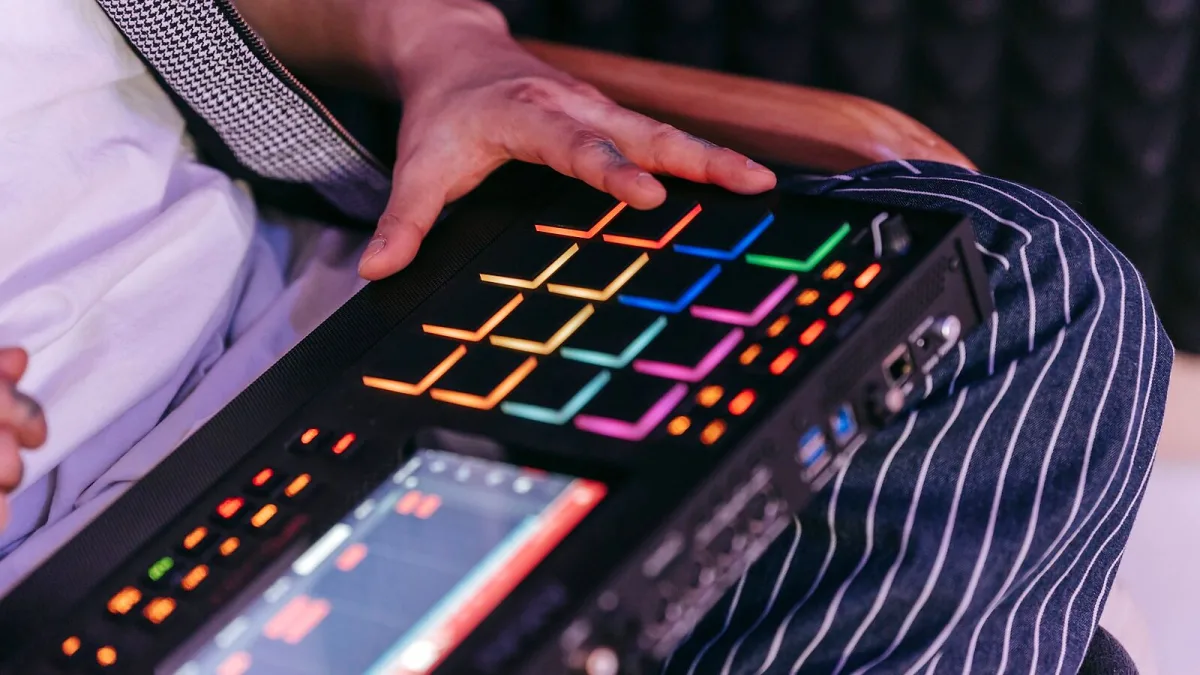
Few pieces of studio hardware carry the weight the Akai MPC does. Since 1988 it's gone from a boxy 12-bit sampler to a full standalone production system, and it's shaped entire genres along the way. Here's the story, the technology behind it, and what actually separates the different generations.
Where the Akai MPC Came From
The original MPC60 arrived in 1988, designed by Akai in collaboration with Roger Linn — the engineer behind the earlier LM-1 Drum Computer, LinnDrum and Linn 9000. Linn's earlier machines had already proven that digital samples of real drums, rather than pure synthesis, could drive a rhythm section. The MPC60 refined that idea into something more focused: a sampler, drum machine and MIDI sequencer combined with 16 velocity-sensitive pads, all in one unit.
It wasn't cheap — the MPC60 launched at around $5,000 — and its 12-bit sample processing gave it a distinctive, slightly gritty character that many producers grew to love, even though it was really a limitation of early digital sampling rather than a deliberately engineered "warmth".
Why It Mattered to Hip-Hop
The MPC gave producers a practical way to record a sample, chop it into pieces, assign those pieces to pads, and sequence them into a full arrangement, all on one instrument. That combination of sampling and sequencing, plus pads you could actually perform on, made it a natural fit for sample-based hip-hop, and its influence spread into R&B, pop and electronic production too. It wasn't the only sampler of its era — machines from E-mu, Ensoniq and Roland mattered as well — but the MPC's workflow proved unusually productive for beatmakers.
From MPC60 to MPC3000 and Beyond
| Model | What it's known for |
|---|---|
| MPC60 (1988) | The original; 12-bit sampling, Roger Linn collaboration |
| MPC3000 | Widely regarded as a high point of the classic workflow |
| MPC2000 / 2000XL | Made the format more affordable and accessible |
| MPC Renaissance | Brought the classic interface into a computer-integrated setup |
| MPC Live / One / X | Modern standalone systems, from portable to studio-scale |
Each generation kept the pads-and-sequencer identity while adding what the era demanded — more memory, hard-drive storage, effects, touchscreens, and eventually the ability to run entirely without a computer.
What a Modern Akai MPC Actually Does
- Sampler: records external audio and maps it to pads
- Drum machine: triggers one-shots and full kits
- MIDI and audio sequencer: records, edits and arranges parts
- Effects processor: EQ, compression, reverb, delay and more
- Standalone workstation: produces a finished track with no computer, on supported models
Recent models like the MPC Live III have pushed further still, adding more pads, an eight-core processor, stem separation and clip launching — features that would have been unthinkable on the original 1988 hardware.
Standalone or Controller?
The most important modern distinction is between a standalone MPC, which can finish a track without a computer, and an MPC controller, which leans on a computer running MPC software for its screen and processing power. Neither is objectively better — standalone units suit portable and live work, while controllers benefit from a bigger display and tighter DAW integration.
Explore the Rest of the Series
Thinking about buying one? Our complete buyer's guide walks through the decision properly, and the best models for the money breaks the range down by budget. New to sampling and sequencing altogether? Our beginner's guide is the gentler starting point, and it's worth reading common mistakes to avoid before you commit to a model.
The Bottom Line
The Akai MPC endured because it solved a real problem: it let producers sample, chop, sequence and perform from a single, tactile instrument. Whether you're drawn to a vintage MPC60 or a modern standalone unit, that same basic idea is still what you're buying into.



Comments