


Brass Band article
Brass Band: A Complete Guide
From industrial Britain's mills and mines to today's contesting stage, here is everything a curious listener needs to know about the brass band tradition.
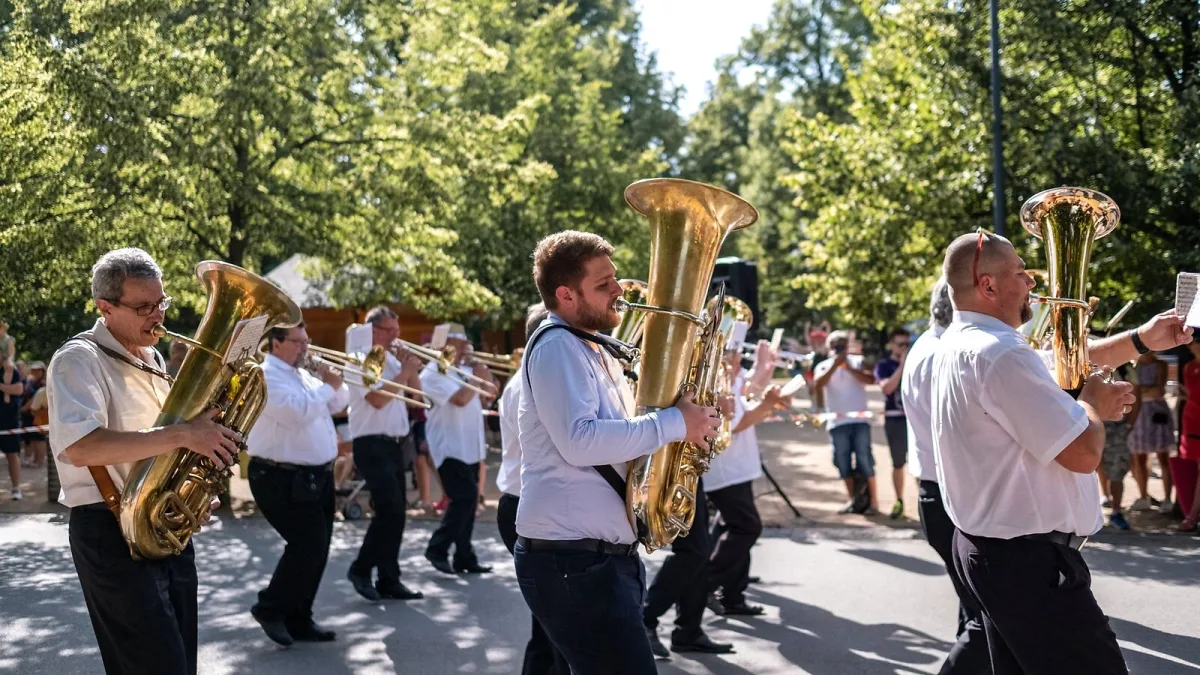
Ask most people to picture a brass band and they will imagine a bandstand on a village green, or perhaps a Yorkshire colliery on a Sunday morning. That picture is not far wrong, but the tradition is far richer than the postcard image suggests. It is a specific type of ensemble, with its own instruments, its own history and its own competitive culture, and this guide takes you through all of it.
What Exactly Is a Brass Band?
In its broadest sense, it is simply an ensemble built almost entirely from brass instruments, usually with percussion added. But that definition covers several quite different traditions: the standardised British-style ensemble, the New Orleans street band, military bands, Salvation Army bands and various community and school groups.
Of these, the British model is the most formally organised. It grew up around a fixed set of instruments, a shared notation system and a competitive circuit that still shapes the music today. When most British readers use the term, it is this tradition they mean, and it is the main focus of this guide.
Where It All Began: Industrial Britain
The brass band as we know it emerged in nineteenth-century industrial Britain. Early nineteenth-century ensembles were not always all-brass; they often mixed woodwinds, keyed bugles, trumpets, horns and even the serpent, an old and unwieldy ancestor of the tuba. As valve technology improved and cheaper saxhorn-type instruments became widely available, the woodwinds were gradually squeezed out, and the modern all-brass line-up took shape.
Crucially, this was a working-class movement. Mills, mines, factories, churches and trade unions supported bands as a form of recreation, self-improvement and civic pride, and mass-produced instruments made brass playing accessible to communities that had never had access to formal music-making before. That industrial, community-first spirit is still felt in the amateur banding world today.
Every Seat in the Band, Explained
A full contesting ensemble is a strikingly specific one: a standard line-up runs to around twenty-five brass players plus percussion, though many community bands are smaller. Unlike a concert or military band, it uses no woodwind at all — its whole identity rests on brass instruments of predominantly conical bore, which gives the sound its warm, blended character. The trombones are the exception, being cylindrical-bore instruments that add bite and clarity against the smoother tone around them.
| Instrument | Typical role in the band |
|---|---|
| Soprano cornet | The highest voice; brilliance and exposed top lines |
| Cornets (usually nine) | The main melodic section, roughly equivalent to violins in an orchestra |
| Flugelhorn | A darker, mellower cornet-family voice, often used for lyrical solos |
| Tenor horns | Warm inner harmony, sitting between cornets and trombones |
| Baritones | Link the tenor horns and trombones, often doubling countermelodies |
| Euphoniums | Rich, flexible tenor-bass voices, frequently given soloistic lines |
| Tenor and bass trombones | Clarity, attack and harmonic weight |
| E-flat and B-flat basses | The foundation of the sound, similar in role to the tuba |
| Percussion | Timpani, drum kit and auxiliary instruments as the music demands |
One quirk worth knowing: most parts, aside from the bass trombone, are written in a transposing treble clef, so a player can move between cornet, tenor horn and euphonium using broadly familiar fingering patterns. It is a very different reading system to the one used in orchestras and concert bands, and it is one reason brass banding feels like its own self-contained world.
Contesting: The Heartbeat of the Movement
Competition sits at the centre of British banding culture in a way that has no real equivalent in orchestral life. Bands prepare a set test piece and are judged on ensemble blend, intonation, balance, tone and interpretation, with contests organised into sections according to standard so that a village band is never up against a national championship outfit.
This contesting culture has done more than crown winners. It standardised the instrumentation described above, built a substantial original repertoire written specifically for brass band, and created a whole supporting ecosystem of conductors, composers, adjudicators, publishers and instrument specialists. Anyone wondering why brass banding feels so disciplined compared with a casual community choir need look no further than the contest stage.
Beyond Britain: Other Brass Traditions
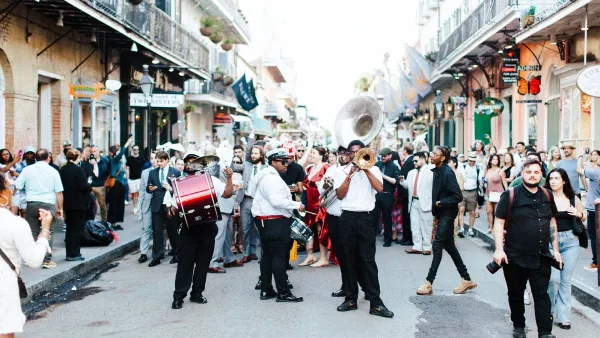
It is worth being careful with this term outside Britain, because it means something genuinely different elsewhere. New Orleans brass bands, for instance, share almost nothing with the British model beyond the word "brass". They grew from parade, funeral and street culture, use a looser line-up of trumpets, trombones, saxophones, clarinets, sousaphone and percussion, and lean on improvisation, groove and call-and-response rather than fixed instrumentation and contest discipline.
The Salvation Army has also been hugely important to brass banding, particularly in Britain, through hymn arrangements, evangelistic performance and youth education, and its bands remain a common way for young players to start out. Community and amateur bands of the British type also thrive well beyond the UK, with active scenes across continental Europe, North America, Australia and New Zealand.
From Hymns to Holst: What the Repertoire Includes
Repertoire spans an enormous range: hymns and sacred arrangements, marches, folk-song settings, transcriptions of orchestral and operatic music, film and television themes, popular-song arrangements, and a large body of original concert works and contest test pieces. Composers including Gustav Holst, Edward Elgar and Malcolm Arnold have all written or arranged significant pieces for brass band, giving the medium a more serious concert-hall pedigree than casual listeners often expect.
Hearing — and Joining — the Movement Today
Some of the most celebrated names in the movement, such as Black Dyke Band, Brighouse & Rastrick Band, Foden's Band and Besses o' th' Barn Band, remain active performers and recording ensembles, and several run their own youth development programmes. On the international stage, organisations such as the National Association of Brass Band Associations and the European Brass Band Association (which will host its championships in Birmingham in 2028) keep the contesting calendar busy on both sides of the Atlantic.
If reading about the tradition has left you curious about playing rather than just listening, our beginner's guide to joining a brass band is the natural next stop, and our buyer's guide to choosing an instrument walks through your options once you know which section appeals.
A brass band, then, is far more than a nostalgic image of a bandstand. It is a distinctive, disciplined and still thriving musical tradition, born of industrial Britain, built on a very particular set of instruments, and kept alive today by contesting bands, community groups and youth programmes the length and breadth of the country.



Comments