


English Horn article
Everything You Need to Know About English Horn
It isn't English and it isn't a horn. Here's what it actually is, how it's built, and why composers keep reaching for it.
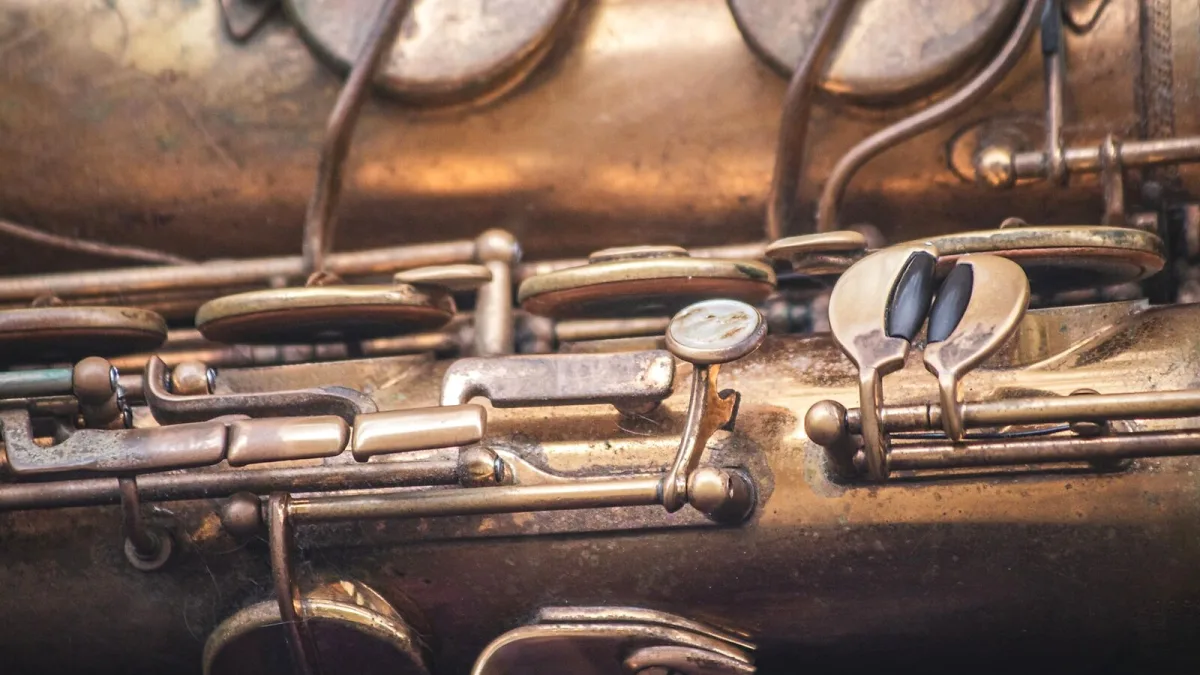
If you've ever heard a lone, plaintive melody drift out of an orchestra and wondered what on earth was playing it, there's a good chance the answer was the English horn. Despite the name, it isn't English and it isn't a horn — it's a woodwind, and one of the most quietly expressive voices in the whole orchestra. Here's what it actually is, how it's built, and why composers keep reaching for it.
What Is an English Horn?
Also known as the cor anglais, it's a large double-reed woodwind instrument in the oboe family. Think of it as the oboe's lower, mellower cousin: it's pitched in F, sounding a perfect fifth lower than written, and it's almost always played by an oboist who doubles on it rather than a dedicated specialist. Its tone is darker, warmer and more reedy than a standard oboe's, which makes it especially suited to pastoral, melancholic and ceremonial writing.
How It's Built
Structurally, it follows the same double-reed family logic as the oboe, just scaled up. You'll typically find three main sections:
- An upper joint
- A lower joint
- A distinctive bulb-shaped bell, sometimes called the liebesfuss
The reed itself doesn't sit directly in the body. Instead, it's mounted on a curved metal bocal, or crook, that channels air into the instrument. The whole assembly runs to roughly 90–95 centimetres, and the bore is conical — gradually widening from the reed toward the bell — which is exactly what gives it that focused, slightly veiled resonance rather than the oboe's brighter edge.
A Name Nobody's Fully Explained
Here's the odd bit: nobody actually knows for certain why it's called the "English" horn. It isn't English in origin, and it isn't a horn in the brass sense at all. A few theories float around — a mistranslation of a term for "angled" or "bent" instruments, a supposed resemblance to the horns held by angelic figures in old paintings, or influence from the French name cor anglais. None of them is definitively proven, so treat any confident explanation you hear with a little healthy scepticism.
Where It Came From
The modern instrument grew out of the Baroque oboe da caccia during the 18th century — a curved, lower-pitched oboe used in court and church settings. An important stage of its development is often credited to the Weigel family of Breslau, who adapted a curved oboe body with a bulbous bell. Early orchestral use appears in Niccolò Jommelli's opera Ezio, from around 1749, and straight-bodied designs became standard through the first half of the 19th century as the instrument was gradually absorbed into the symphony orchestra.
Its Place in the Orchestra Today
Composers have leaned on it for exposed, vocal melodies ever since. Beethoven and Berlioz helped establish it as a serious symphonic colour; Wagner, Dvořák, Tchaikovsky and Sibelius all exploited its lyrical, folk-like and sombre qualities; and Debussy, Ravel and Stravinsky folded it into a widening 20th-century orchestral palette. Two passages come up again and again as the instrument's calling cards: the opening solo of the second movement of Dvořák's Symphony No. 9, "From the New World," and the memorable oboe-and-English-horn dialogue in the "Scène aux champs" of Berlioz's Symphonie fantastique.
Thinking of Playing One?
If you're an oboist considering adding it to your kit, our beginner's guide walks through what actually feels different when you pick one up for the first time. When you're ready to buy, our complete buyer's guide and our look at instruments across the price tiers cover what actually matters, and our piece on common mistakes to avoid is worth reading before your first orchestral part lands on your stand.




Comments