


Bass Trombone article
Bass Trombone: A Complete Guide
Larger bore, bigger bell, one or two trigger valves — here's everything that distinguishes the bass trombone and where it sits in orchestral and jazz ensembles.
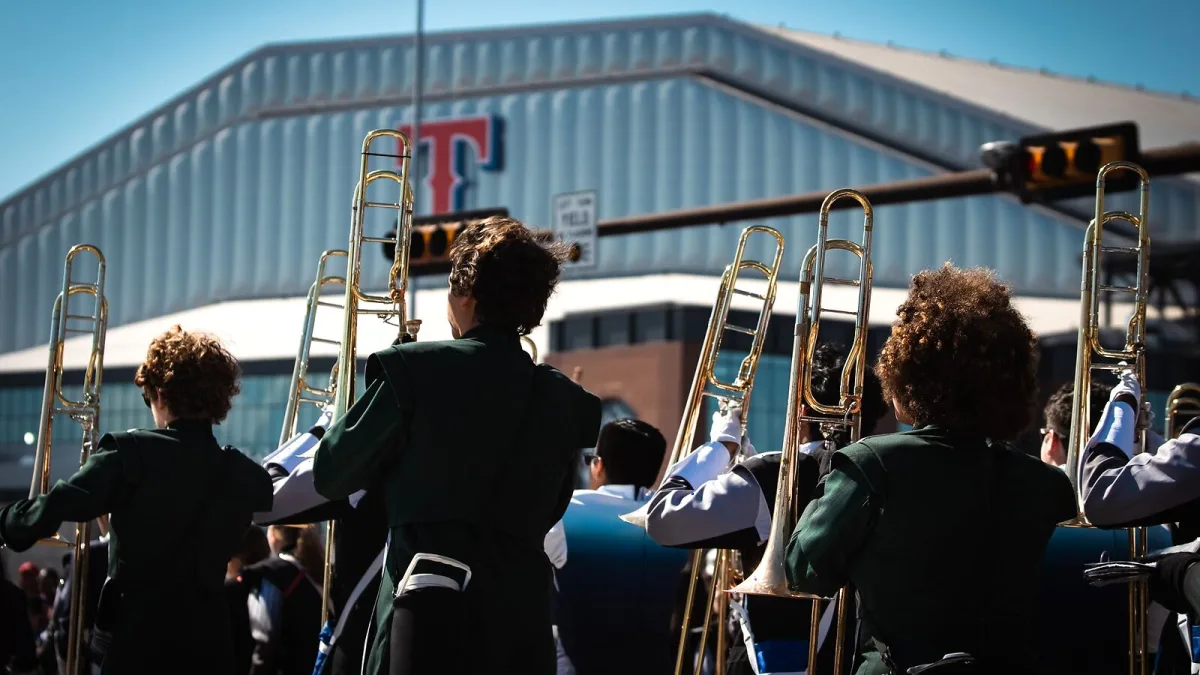
The bass trombone is the lowest-pitched member of the trombone family and a fundamental voice in orchestral brass sections, jazz big bands and brass ensembles. It is built larger than a tenor trombone in virtually every dimension — a wider bore, a larger bell, a bigger mouthpiece — and includes one or two rotary valves (commonly called triggers) that extend its range into the lowest registers of the brass spectrum.
Physical Differences from the Tenor Trombone
The most immediately apparent difference is the bore size. A tenor trombone typically has a bore of around 0.547 inches; a bass trombone runs to 0.562 or 0.580 inches. This larger bore produces a broader, fuller tone with greater projection in the low register and requires more breath support to play effectively. The bell on a bass model is also larger, typically 9.5 to 10.5 inches in diameter compared to the 8 to 8.5 inches common on tenor instruments.
The mouthpiece is correspondingly deeper and wider — a dedicated bass mouthpiece has a larger cup diameter and a deeper cup, which facilitates the production of low partials and reduces the effort required to play in the pedal register.
The Trigger System
The defining mechanical feature of a bass trombone is its valve attachments. A single-trigger instrument adds an F attachment — a loop of additional tubing activated by a thumb trigger that lowers the instrument's fundamental by a perfect fourth, filling in the range between open B-flat and the low positions. Most professional instruments add a second trigger: either a Gb attachment (dependent on the F valve) or an independent G or D valve that creates additional combinations, filling gaps in the chromatic scale in the lowest register. Double-trigger instruments give more flexibility in the pedal register and for low chromatic passages.
Role in Ensembles
In an orchestra, it typically plays the lowest trombone part alongside the tenor trombones and tuba. It reinforces the bass foundation and provides the growling low brass weight that defines the texture of a full orchestral fortissimo. In jazz big bands, the position is harmonically and melodically active — the instrument's parts frequently include featured solos and independent lines rather than simply doubling the bass register. In brass bands, the instrument typically plays alongside euphoniums and tubas in the lower parts.
Sound Character
The bass trombone's large bore and bell produce a round, powerful low end with notably more depth than a tenor instrument. The tone is projecting and dark in the middle and low registers, with a natural authority in loud passages. At softer dynamic levels, the instrument responds with surprising warmth and flexibility. Players familiar only with the tenor instrument should expect a significant adjustment period: the larger bore demands more air and a slightly different embouchure approach in the extreme low register.
For purchasing guidance, the buyer's guide covers bore sizes, trigger configurations and key brands. For beginners, the beginner's guide covers technique and first steps.



Comments