


Beat Pad article
Beat Pad Explained: Features, Types and Tips
Velocity-sensitive pads, MIDI connectivity and a built-in or software-driven sound engine — here's how a beat pad works and what distinguishes the main formats.

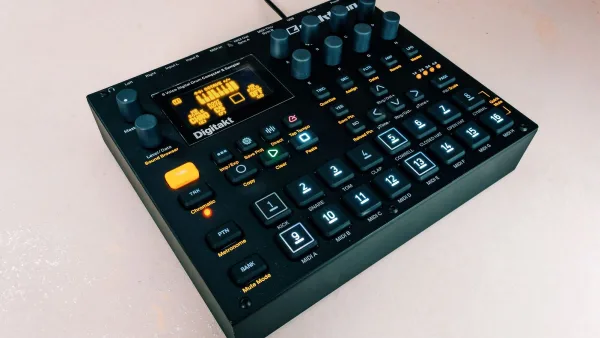
A beat pad is a performance controller that lets producers and beatmakers trigger samples, drum sounds and musical phrases in real time. The format ranges from compact standalone units to full workstations with built-in sequencers, screens and audio engines — but the core function is always the same: velocity-sensitive pads that respond to how hard you strike them, translating physical input into musical output.
What These Controllers Do
The pads themselves are pressure-sensitive rubber or silicone surfaces that send MIDI note data when struck. Velocity sensitivity means a lighter tap produces a quieter hit and a harder strike produces a louder one — the same dynamic behaviour as a real drum kit, which is what makes pad performance expressive rather than mechanical. Many controllers also support aftertouch, which lets you sustain pressure after the initial strike to trigger additional modulation.
Beyond triggering sounds, the pads on modern units can be mapped to virtually any MIDI function: launching clips in Ableton Live, sending control change messages to synthesisers, or playing melodic phrases chromatically across a single pad bank.
Types and Formats
There are three main formats:
- Standalone beat pad workstations — units like the Akai MPC series have their own processor, built-in sounds, sequencer and often a touchscreen. They do not require a computer to function and are fully self-contained production environments.
- MIDI pad controllers — units like the Native Instruments Maschine Mikro or the Arturia BeatStep connect to a computer via USB and rely on software for their sound engine. They are generally more affordable and benefit from the full processing power of a DAW.
- Hybrid controllers — devices that function both as a standalone sampler and as a MIDI controller, offering flexibility between computer-based and standalone workflows.
Connectivity
Most beat pad controllers connect via USB and are class-compliant, meaning they work without additional drivers on macOS and most current Windows systems. Higher-end standalone units add audio outputs (stereo or multi-channel), MIDI DIN ports for connecting older synthesisers, and CV/gate outputs for patching into modular synthesisers.
Pad Size and Feel
Pad size varies significantly between units. Larger pads — 40mm and above — are easier to hit accurately at speed and feel closer to the drumming experience. Smaller pads work well for finger drumming at slower tempos but require precision under fast patterns. The rubber compound also affects playability: firm pads respond more predictably but can fatigue the fingers over long sessions, while softer pads are more forgiving but occasionally produce unwanted ghost triggers.
Software Integration
A MIDI beat pad integrates with any software that receives MIDI input. Most units ship with bundled software or a licence for a DAW or sound library — Maschine controllers come with the Maschine software, MPC units include a version of MPC Beats, and Ableton-optimised controllers like the Push series come with Ableton Live Intro. The bundled software usually provides a low-cost or free entry point to the full ecosystem.
For buying decisions, see the buyer's guide. For recommendations at each price point, the best for the money guide covers specific models.



Comments