


Piccolo Flute article
Piccolo Flute Explained: Features, Types and Tips
Half the length of a concert flute yet capable of cutting through a full orchestra, the piccolo flute is one of woodwind's most remarkable instruments — here is everything you need to know about it.
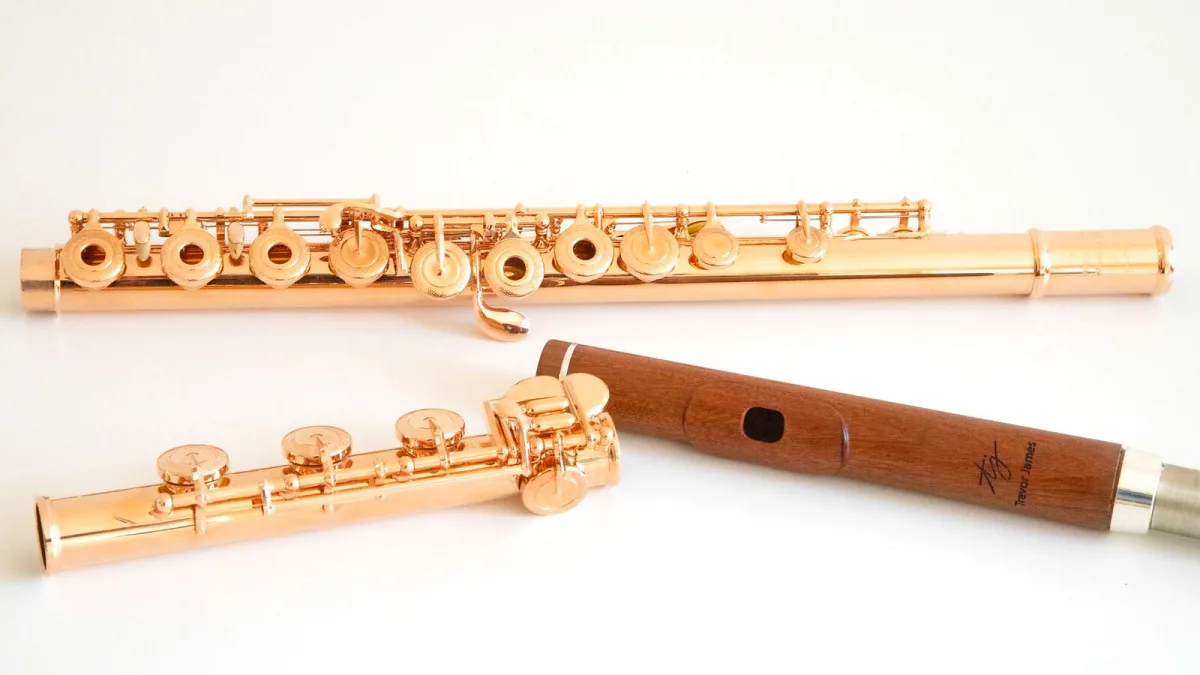
There is something quietly remarkable about the piccolo flute. At barely thirty centimetres long, it is the smallest member of the Western concert-flute family, yet its voice cuts through a full orchestra with an ease that leaves much larger instruments labouring to be heard. If you have ever winced at a particularly piercing moment in a Sousa march, or found yourself tracing a shimmering line above the strings in a Beethoven symphony, the chances are you were hearing a piccolo at work.
What the Piccolo Flute Actually Is
The piccolo flute is a transverse, edge-blown woodwind instrument — meaning the player holds it horizontally and directs a stream of air across an embouchure hole rather than blowing into a mouthpiece or reed. It is, in essence, a concert flute halved in length. That halving has a precise acoustic consequence: the piccolo sounds one octave higher than the written notation, and one octave higher than its larger sibling.
Most modern piccolos are pitched in C. Their written range runs from approximately D5 to C8, although exactly how far a player can push the top of that range depends heavily on technique, the instrument and the acoustic. Unlike the concert flute, a piccolo normally lacks a footjoint — the short extension at the bottom of the flute that adds a few lower notes — which is why its written range begins on D rather than C.
How the Piccolo Flute Is Built
A standard piccolo flute consists of just two sections: the headjoint and the body. The headjoint contains the embouchure hole, and the body carries the keywork. This two-part construction differs from the three-part concert flute, which has a headjoint, a body and a footjoint.
One notable feature is the embouchure hole itself. On many piccolo flutes, the raised metal lip plate found on concert flutes is absent or reduced. Players often position the instrument slightly higher on the lower lip than they would a concert flute, directing the air stream more into the bore to achieve a centred, resonant tone.
Conical and Cylindrical Bores
The internal shape of a piccolo's body — its bore — has a significant influence on response and tone colour. Most professional instruments use a conical bore, which tapers along the length of the body. The headjoint, however, is commonly cylindrical. This mixed arrangement gives professional wooden instruments much of their flexibility and warmth. Many student-level metal models use a cylindrical bore throughout, which provides a more immediate and durable response, though with less tonal variety.
Materials: Wood, Metal and Composite
Walk into any professional woodwind shop and you will find piccolo flutes built from three broad categories of material, each with a different character.
- Grenadilla and other dense hardwoods — favoured for orchestral and solo playing, grenadilla (African blackwood) is prized for its warmth, dynamic range and the complexity of colour it can offer in skilled hands. Its chief drawback is sensitivity to changes in temperature and humidity, which can cause cracking if the instrument is not carefully acclimatised.
- Metal — silver-plated or nickel-silver bodies are common in student and marching-band instruments. Metal piccolos are durable, straightforward to maintain and respond quickly. Manufacturers such as Jupiter and Emerson make reliable cylindrical metal models that are well-suited to school ensembles.
- Composite and resin — materials like grenaditte (a wood-resin blend used by Pearl, among others) aim to offer some of the warmth associated with wood alongside the dimensional stability of plastic. Composite instruments are particularly practical for outdoor playing and for players who move between different climatic conditions.
Yamaha, Pearl, Gemeinhardt and Jupiter are among the more widely available makers at student and intermediate levels; P. Haynes, Powell, Burkart, Nagahara and Miyazawa feature among the names associated with professional and custom-level instruments. For a deeper look at what to prioritise when shopping, the piccolo flute buyer's guide covers each tier in detail.
Range, Notation and Transposition
The piccolo is a transposing instrument: the player reads and fingers written pitch, but what comes out is one octave higher. A written C in the third space of the treble clef sounds as the C an octave above. This transposition means a flutist moving between flute and piccolo does not need to relearn fingerings, which makes the piccolo a standard doubling instrument in orchestral, band and pit settings.
The written range of approximately D5 to C8 translates to a sounding range roughly D6 to C9 — territory that few other orchestral instruments reach in their normal playing register. That extreme upper pitch is why a single piccolo can be heard clearly over a full symphony orchestra in fortissimo passages.
The Piccolo Flute in Ensemble and Orchestral Music
In a symphonic orchestra, the piccolo is typically played by a flutist who doubles on the part as needed. The instrument appears as a specialist voice rather than a continuous one: Beethoven used it to dramatic effect in the finale of his Fifth Symphony, Shostakovich deployed it with biting irony, and it dominates the military-band marches that formed much of its early repertoire. In concert and wind bands, the piccolo holds a permanent chair, doubling melody lines at the octave or adding brightness to ensemble climaxes.
Beyond the concert hall and bandstand, the piccolo appears in film scoring, television soundtracks, and — more rarely — jazz and commercial recording. Its ability to project above any texture makes it useful whenever a composer needs a colour that sits right at the top of the audible frequency range.
Tone, Projection and Some Honest Caveats
Players and teachers often speak of "bright" and "dark" piccolo tones, which are useful shorthand. A bright tone projects assertively and sits easily in a large hall; a dark or centred tone blends more readily and carries more dynamic flexibility. These tendencies are associated with different materials, bore designs and headjoint geometries — but they are tendencies, not guarantees. Technique, air direction and embouchure shape have at least as much influence as any material choice.
Intonation is the other honest caveat. Because the piccolo's air column is short, it reacts sharply to even small changes in air speed, angle and temperature. Players describe the instrument as unforgiving: an error that might go unnoticed on a concert flute can be exposed and uncomfortable on a piccolo. That sensitivity is one reason orchestral flutists typically develop their piccolo playing alongside, rather than instead of, their concert-flute technique.
Mechanisms and Special Features
Most modern piccolo flutes use a Boehm-derived keywork system closely related to that of the concert flute, which means fingerings are broadly familiar to any flutist. Some instruments offer additional mechanism options:
- Split-E mechanism — assists the response and intonation of the high E, a note that can be problematic on standard instruments.
- Brossa (or F-sharp) mechanism — an alternative key arrangement that can improve the facility of the F-sharp and certain trill combinations.
These features add to cost and maintenance complexity. Many experienced players find they prefer a well-set-up standard mechanism to a specialist one that is poorly adjusted, so they are worth trying — not just reading about — before committing to a purchase.
Maintenance Essentials
The piccolo flute rewards simple, consistent care. Swab the instrument after every playing session to remove moisture. Keep wooden and composite instruments away from sudden changes in temperature and humidity — direct sunlight, car boots in summer, cold outdoor venues and hot storage rooms are all hazards. Never force the headjoint. Have pad adjustment and key regulation checked periodically by a qualified technician.
For a full walkthrough of assembly and daily setup, the piccolo flute setup guide covers every stage, from assembling the headjoint and body to aligning the embouchure hole and finding your first centred tones.
A Final Note
The piccolo is, in the end, an instrument that rewards patience and ear-training more than raw effort. Its voice is narrow in dynamic range, easily pushed sharp, and quick to expose a wavering air stream — but in return, it offers something few other instruments can: an uncanny ability to cut through texture, to lift a line above an entire ensemble and make it sing with an almost unearthly brightness. Whether you are approaching it for the first time or returning after years on the concert flute, it has a character entirely its own. If you are just starting out, the beginner's guide to piccolo flute is a good next step.






Comments