


Flute roundup
Flute: A Complete Buyer's Guide
Buying the right instrument at the right stage avoids costly upgrades. Here is what closed and open holes mean, why headjoint quality matters more than body, and which brands are worth the price.
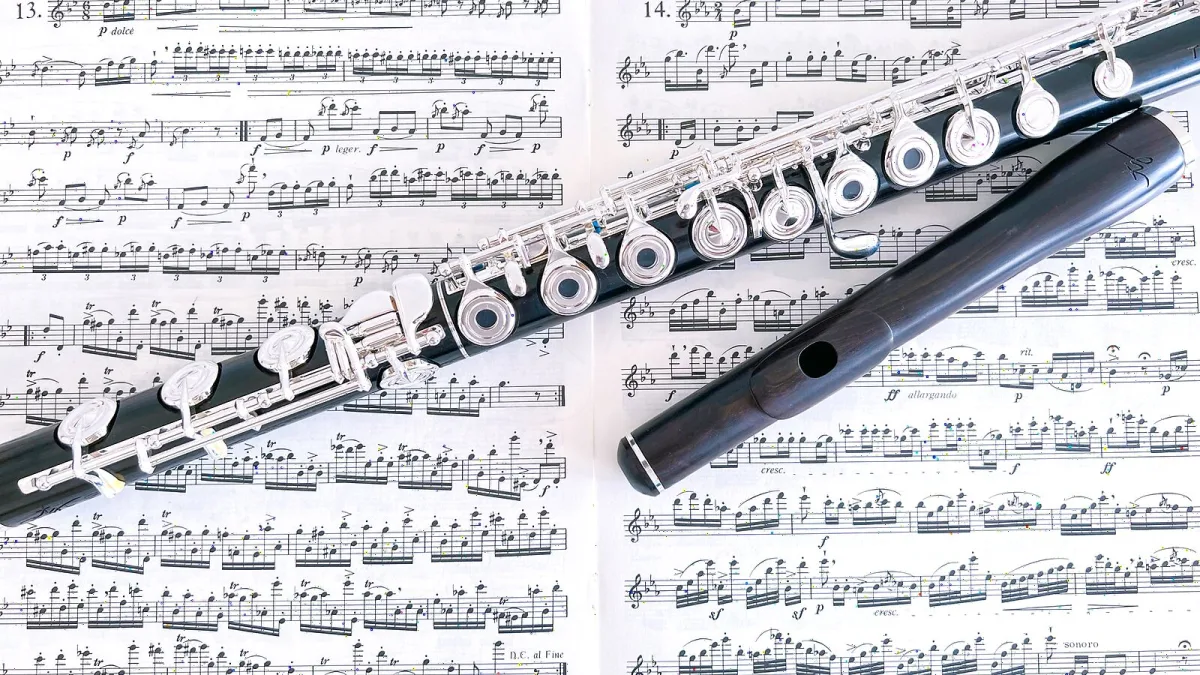
Buying a flute requires balancing mechanism type, material, brand reputation, and budget against the player's current level and realistic trajectory. The wrong choice at the wrong stage often means buying twice — once too cheaply and once to upgrade — which costs more in total than spending correctly from the start. Here is what each variable means in practice.
Plateau vs Open Hole
A student flute uses closed-hole (plateau) keys, which are the right choice for beginners. Step-up and professional instruments typically use open-hole (French model) keys. Open-hole is the standard for classical flute playing beyond early levels and enables extended techniques unavailable on closed-hole models. There is no tonal advantage to open-hole at the beginner stage — choose plateau until the player is consistently producing a good sound and ready to progress.
Headjoint Material and Quality
The headjoint is the most acoustically important part of the flute. Entry-level models have nickel silver or silver-plated headjoints. Step-up models use solid silver headjoints, which significantly improve responsiveness and tone compared to silver-plated options. Buying a better headjoint for a student flute body is a common and cost-effective upgrade path once the player has outgrown beginner level.
Brand and Price Tiers
Yamaha and Pearl dominate the reliable student flute tier (£200–£500). Their manufacturing consistency means fewer mechanical issues and more predictable tone. In the step-up tier (£500–£1,500), Yamaha, Pearl, and Trevor James are widely used. Professional instruments — Muramatsu, Miyazawa, Sankyo, Altus — begin above £2,000 and are built to more exacting tolerances with better materials throughout. Avoid unbranded instruments from unknown manufacturers; they are rarely playable to a useful standard and often require expensive repair immediately after purchase.
Inline vs Offset G
Most teachers recommend offset G for new flute players, as it is more comfortable for the majority of hand sizes. Inline G is available on higher-end models and is preferred by some players on ergonomic grounds, but offers no acoustic advantage. Beginners should default to offset G unless specifically advised otherwise by a teacher.
B Foot vs C Foot
Student models have a C foot, ending at middle C. Step-up and professional models often include a B foot, which adds a low B key and extends the range down one semitone. The B foot is slightly heavier and affects the instrument's acoustics in the lower register. Most teachers consider the C foot appropriate for students through to grade 8 level.
Related Guides
For a technical explanation of how the flute works and the differences between variants, see the complete overview. For common purchasing mistakes and what they cost players, see common mistakes to avoid.





Comments