


Yamaha Hs5 article
Yamaha Hs5 for Beginners: A Complete Guide
Your first pair of studio monitors doesn't need to be complicated. Here's a calm, step-by-step guide to buying and setting up the Yamaha HS5.

Buying your first proper set of studio monitors is a genuine milestone, and the Yamaha HS5 is a very common first choice. If the spec sheet and rear-panel switches feel like a lot right now, don't worry — you only need a handful of things to get this right, and we'll work through them one step at a time.
Step 1: Understand What You're Actually Buying
The Yamaha HS5 is a powered studio monitor: a small speaker with its own built-in amplifier, designed to sit close to you at a desk rather than fill a room. Unlike a home hi-fi speaker, it's built to sound as neutral and honest as possible, so you hear your mix accurately rather than flattered. That honesty is exactly the point, even if it takes some getting used to.
Step 2: Buy Two, Not One
This trips up more first-time buyers than you'd expect. The HS5 is sold individually, so make sure you're ordering two identical units, not one. You need a matched pair for proper stereo listening; one HS5 alongside a different speaker will give you an unreliable, lopsided picture of your mix.
Step 3: Make Sure You Can Actually Connect It
The Yamaha HS5 needs a balanced XLR or ¼-inch TRS connection — it won't plug into a phone, a laptop headphone jack or a consumer hi-fi input. You'll need an audio interface with proper line outputs. If you don't already have one, treat it as part of the same purchase, not something to sort out later.
Step 4: Set Up the Basics Correctly
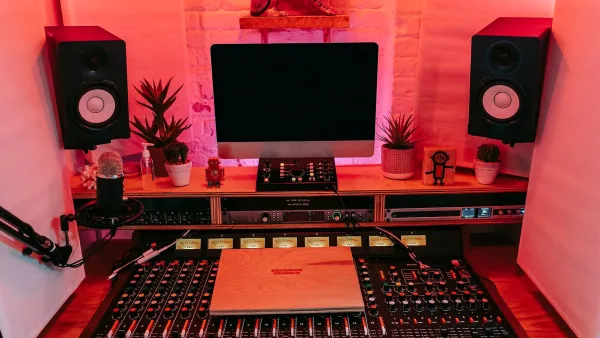
- Place the monitors symmetrically, one on each side of where you'll be sitting.
- Raise them so the tweeters sit roughly at your ear height when seated.
- Angle both speakers in towards your listening position, forming a rough triangle between the two monitors and your head.
- Leave the rear-panel switches flat — ROOM CONTROL and HIGH TRIM at their default positions — until you've actually spent time listening.
- Set a comfortable listening volume using the rear-panel LEVEL control, rather than relying only on your interface or software volume.
Step 5: Leave the Switches Alone (For Now)
The ROOM CONTROL and HIGH TRIM switches on the back of the Yamaha HS5 exist to fix specific placement problems — a monitor pushed close to a wall, for instance — not to be tweaked because a mix "sounds a bit off." As a beginner, resist the urge to fiddle. Get comfortable with the flat setting first, and only reach for the switches once you understand exactly what problem you're trying to solve.
What "Sounding Honest" Actually Means Day to Day
Your first week or two with proper monitors can feel a little uncomfortable, and that's completely normal. Mixes that sounded exciting on headphones or laptop speakers can suddenly reveal muddy low mids, a harsh top end, or a vocal that's not sitting where you thought. This isn't the monitors being unkind — it's them doing exactly their job. Give yourself time, and resist the urge to immediately compensate for everything you're newly hearing; some of it is simply your ear recalibrating, not a genuine problem with the mix.
A Few Things That Will Genuinely Trip You Up
- The HS5 doesn't reproduce very deep bass fully — that's normal, not a fault. Check low end on headphones or another system too.
- A small room can still create big bass problems, even with a compact monitor like this one.
- Mixing loudly for long stretches will tire your ears and quietly wreck your judgement. Keep sessions at a comfortable, moderate volume.
- Don't judge the monitor in the first hour. Give your ears time to adjust to a more honest, less flattering sound than you might be used to.
A Simple Way to Build Confidence
A genuinely useful early exercise is to play a commercial track you know extremely well through your new setup, at a sensible volume, and just listen without touching anything. Notice how the vocal sits, how wide the mix feels, and how the bass behaves. Do this with two or three familiar tracks across different genres, and you'll start building a mental reference point far faster than by second-guessing your own new mixes straight away.
When You're Ready to Learn More
Once you're settled in, our full HS5 overview explains the specifications properly, and our buyer's guide is there if you're still deciding what to purchase. Curious how to spend wisely as you grow into the setup? Our guide to getting the best value from an HS5 setup is a sensible next read.
The Bottom Line
Buy a genuine pair, connect them properly, set them up symmetrically, and leave the switches flat until you know what you're solving for. That's genuinely most of what matters in your first weeks with the Yamaha HS5 — everything else is refinement you can learn gradually, at your own pace.





Comments