


JBL Studio Monitors article
Everything You Need to Know About Jbl Professional Studio Monitor
JBL studio monitors deliver accurate sound for professional mixing. Discover which models suit your studio size and how proper room treatment maximises monitoring accuracy.

JBL represents a professional-grade monitoring solution trusted by recording engineers, mixing professionals, and producers worldwide. Near-field monitors from this maker deliver accurate, honest sound reproduction essential for critical audio work. Whether you're setting up a modest home studio, upgrading professional facilities, or seeking reliable tools for mixing and mastering, understanding how these systems work and what distinguishes different models helps you choose the right tool for your acoustic environment and professional needs.
JBL's Legacy in Professional Audio
JBL has maintained a commanding presence in professional audio for decades. The company's studio monitors are engineered to reveal truth rather than flatter—their primary function is accurate reproduction allowing engineers to make informed decisions. This philosophy differentiates professional monitors from consumer speakers designed for enjoyable listening.
JBL studio monitors employ rigorous design standards ensuring transient response, flat frequency response, and controlled dispersion patterns. These technical achievements create monitoring solutions that reveal issues rather than masking them, essential for professional-quality audio production.
Key Monitor Series
The LSR (Linear Sound Reinforcement) series represents contemporary offerings:
- LSR308: Compact powered monitor ideal for small studios, project rooms, and personal workspaces. Excellent near-field performance despite modest size.
- LSR309: Three-way option offering expanded low-frequency response and greater dynamic capability. Suits medium-sized rooms requiring fuller spectrum coverage.
- LSR310S: Dedicated subwoofer complementing monitor pairs, providing low-frequency extension beyond monitor capabilities for mixing bass-heavy music.
- LSR305: Compact system offering balanced characteristics in tight spaces where larger monitors won't fit.
- One Series: Budget-conscious option delivering quality at entry-level pricing, perfect for emerging studios and educators.
Technical Design Excellence
JBL studio monitors employ several design innovations ensuring accurate monitoring. Waveguide technology controls directional response, minimising room reflections that colour sound. High-frequency drivers deliver clarity and detail essential for critical listening. Rigid cabinets prevent resonance from colouring output.
Most contemporary models include acoustic correction controls—adjustable response curves compensating for mounting location and room characteristics. These controls let you optimise performance even in less-than-ideal acoustic environments.
Choosing the Right Monitor
Selection depends on room size, mixing work type, and acoustic treatment quality. Small studios benefit from compact models like the LSR308. Medium spaces accommodate the LSR309's expanded capabilities. Poorly treated rooms benefit from subwoofer augmentation, allowing monitor selection without relying on extended bass reproduction.
Consider your monitoring workflow. Mixing contemporary music with heavy bass requires monitors revealing low-frequency details. Classical recording prioritises midrange clarity and transient response. Film mixing requires full-spectrum monitoring for dialogue, effects, and music reproduction.
Room Acoustics and Placement
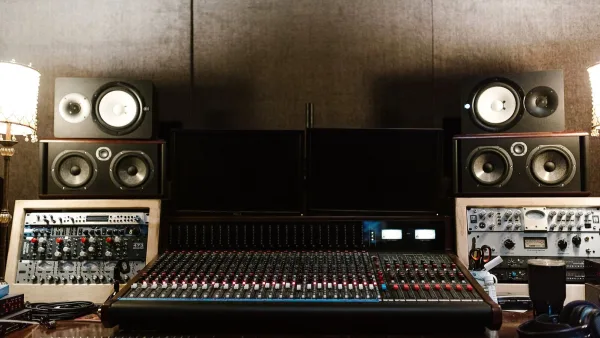
JBL studio monitors perform optimally in properly treated acoustic spaces. Reflective hard surfaces cause comb filtering and frequency response anomalies that no monitor can overcome. Acoustic treatment—absorption panels, bass traps, diffusion—remains essential regardless of monitor quality.
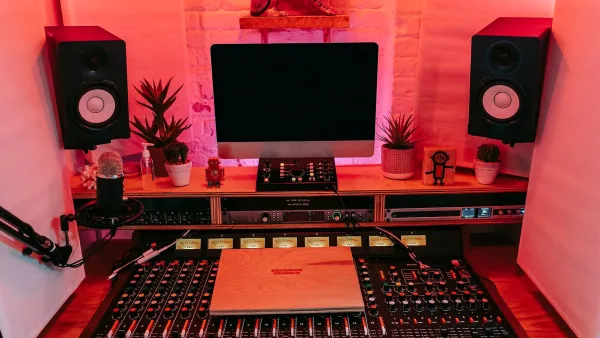
Positioning matters equally. Near-field monitoring (monitors placed close to the listening position) minimises room reflections' impact. Most professionals position monitors at ear level forming an equilateral triangle with the listening position.
Practical Applications
Professional studios rely on these systems for mixing and mastering critical recordings. Broadcast facilities use them for content monitoring. Educational institutions employ these monitors for audio engineering instruction. The versatility and reliability make them industry-standard choices.
Budget Considerations
Prices range from £200–£2,000+ per pair depending on model and capabilities. The entry-level One series provides genuine quality at accessible pricing. Mid-range LSR models offer professional performance without premium pricing. Top-tier options suit facilities requiring maximum accuracy and durability.
Remember that monitors represent only part of monitoring chain. Quality audio interface, properly treated acoustic space, and excellent room acoustics remain equally important for successful mixing.
Reliability and Support
JBL studio monitors are built for professional longevity. Many studios operate the same monitors for 10+ years without issue. Parts availability and repair services support long-term investment. This reliability justifies premium pricing versus cheaper alternatives.
Conclusion
JBL studio monitors deliver accurate, professional-grade monitoring essential for serious audio work. Whether you're mixing records, mastering critically, or teaching audio engineering, selecting appropriate monitors and treating your acoustic space properly creates the foundation for excellent mixing decisions and professional-quality audio production.



Comments