


Ribbon Microphone article
Everything You Need to Know About Ribbon Microphone
A ribbon microphone uses a thin strip of aluminium suspended in a magnetic field — the ribbon itself is both the diaphragm and the conductor. One elegant idea, a century of studio use.
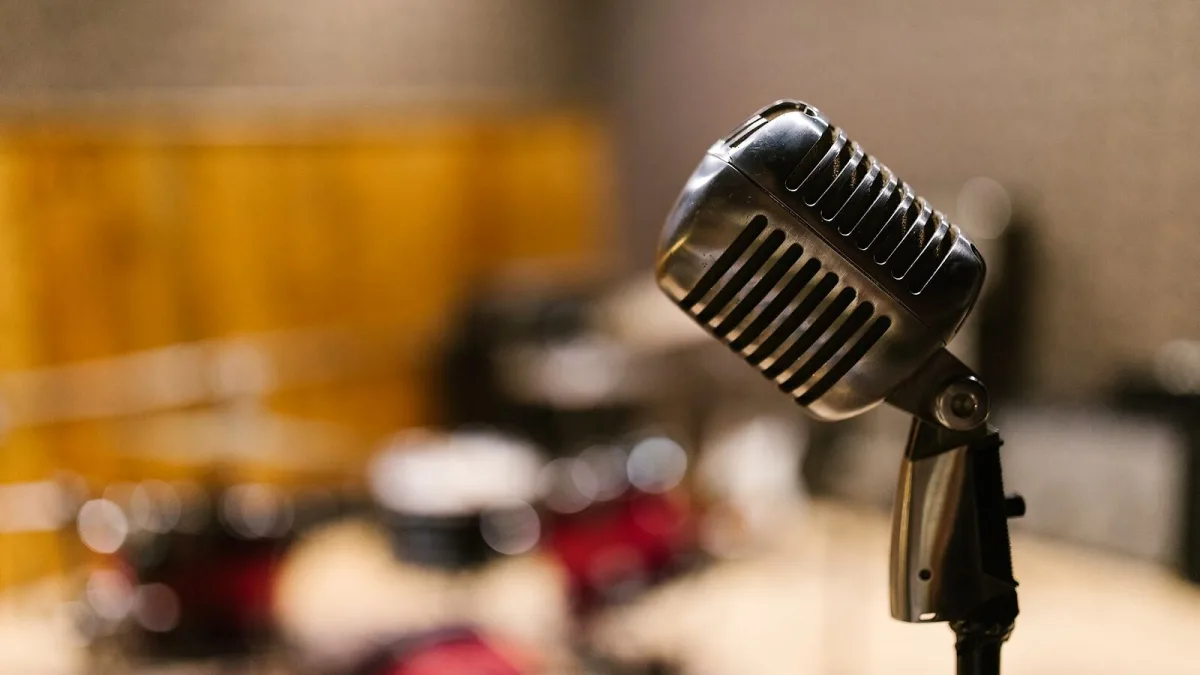
A ribbon microphone does something elegantly straightforward: a thin strip of corrugated aluminium suspended between two magnetic poles moves when sound hits it, and that movement generates an electrical signal by electromagnetic induction. No battery required, no capsule membrane, no separate voice coil — the ribbon is the diaphragm and the conductor all at once. That simplicity is part of why engineers keep reaching for them after a century of development.
How a Ribbon Microphone Actually Works
Sound waves create pressure differences in the air. When those waves reach a ribbon microphone, the ribbon — typically an aluminium foil a few microns thick — is displaced back and forth. Because the ribbon sits inside a permanent magnetic field, its movement induces a tiny alternating voltage. That voltage is the audio signal.
This makes the ribbon microphone a type of dynamic microphone — it generates its signal through electromagnetic induction rather than through changes in capacitance, as a condenser microphone does. The distinction from a conventional moving-coil dynamic is that a moving-coil mic has a diaphragm attached to a separate voice coil that moves through the field; a ribbon microphone uses the ribbon itself as both elements.
The Figure-Eight Polar Pattern
Most ribbon microphones have a figure-eight (bidirectional) polar pattern. This is a direct consequence of the ribbon's physical arrangement: sound can reach both faces of the ribbon, so the microphone is equally sensitive at the front (0°) and rear (180°). Sound arriving from the side (90° and 270°) hits both faces simultaneously, creating no differential pressure — and therefore a very deep rejection null at those angles.
In practice, this means:
- The room behind the microphone matters almost as much as the source in front. Aim the rear null toward anything you do not want to pick up.
- Bleed rejection is excellent in the side null, making ribbons useful for recording two sources facing each other.
- The front and rear outputs are often opposite in polarity — this is by design, and it matters when combining with other microphones.
A notable exception is the Beyerdynamic M 160, a double-ribbon design that uses a hypercardioid polar pattern rather than figure-eight. Not every ribbon mic is bidirectional — it is worth checking the datasheet.
The Sound: What to Expect
Ribbon microphones are frequently described as smooth, warm and natural-sounding. In technical terms, this often comes down to a relatively gentle high-frequency character compared with many condenser microphones, which can emphasise the upper midrange and treble more aggressively. The result is that bright, harsh or aggressive sources — overdriven guitar speakers, loud brass, sharp hi-hats — can sound more controlled and pleasant through a ribbon.
It is worth correcting the common oversimplification that ribbons are all "dark". Modern designs vary enormously. Some are extended and open in the top end; others have the vintage rolled-off character more often associated with RCA-era microphones. The ribbon element, the magnet design, the transformer and the housing all affect the sound.
Passive and Active Ribbon Microphones
Traditional ribbon microphones are passive — the signal chain contains only the ribbon, the magnets, the transformer and the output wiring. They require no power to operate and tend to have very low output levels, which is their main practical limitation.
Modern manufacturers increasingly offer active designs. An internal preamplifier circuit boosts the signal before it leaves the microphone, making the output level more compatible with standard preamps, audio interfaces and longer cable runs. Active ribbons typically require phantom power (+48V) to power the internal electronics.
| Type | Output level | Phantom power | Preamp requirement |
|---|---|---|---|
| Passive ribbon | Low | Not required (see safety note) | Quiet, high-gain preamp essential |
| Active ribbon | Higher | Required for internal circuit | Standard preamp or interface sufficient |
Phantom Power: The Critical Safety Note
One of the most repeated pieces of advice around ribbon microphones concerns phantom power: turn it off before connecting a passive ribbon. The concern is legitimate but sometimes overstated. A correctly wired balanced cable carrying standard phantom power (+48V equally on pins 2 and 3 with return on pin 1) will not necessarily damage a passive ribbon, because no net DC voltage appears across the ribbon element itself. The risk arises from:
- Faulty or unbalanced cables
- Miswired patch bays or connectors
- Hot-plugging (inserting while phantom is active)
- Connectors with momentary unbalanced contacts during insertion
The safe approach is to check the manufacturer's instructions, use properly wired balanced cables, switch phantom power off before connecting any unknown passive ribbon, and wait for any residual voltage to discharge before disconnecting. Active ribbons require phantom power and are designed to accept it.
Key Manufacturers and Models
The ribbon microphone market has a well-defined landscape:
- RCA — historically central; the 44-BX and 77 series are among the most recognisable microphones ever made. Now highly sought as vintage instruments.
- Coles — the 4038 is a British classic, long used in BBC broadcast and professional recording.
- Royer Labs — a modern ribbon specialist; the R-121 is particularly associated with guitar-amplifier recording.
- AEA — founded by Wes Dooley, a major advocate for ribbon recording; produces large-format recreations and modern active designs including the N8, N22 and N28 stereo ribbon.
- Beyerdynamic — produces both classic and modern ribbon designs, including the M 160 hypercardioid.
- sE Electronics, Cascade Microphones, Golden Age Project — modern manufacturers offering designs across a broader range of price points.
Common Applications in the Studio
Electric Guitar
Ribbon microphones are a studio staple on guitar cabinets. Placed close to the speaker cone, they deliver body, low-mid weight and a controlled high end that can tame harsh-sounding amplifiers. Many engineers blend a ribbon with a dynamic microphone — the dynamic provides attack and presence, the ribbon provides weight and smoothness.
Brass and Woodwinds
On trumpet, trombone and saxophone, a ribbon microphone's natural top-end response can reduce the harshness that bright condensers sometimes emphasise. The placement needs care: ribbons can be sensitive to strong blasts of air from bell-directed instruments.
Drum Overheads and Room Microphones
A pair of figure-eight ribbon microphones is well suited to stereo techniques such as Blumlein — two coincident bidirectional microphones at 90° to each other — and mid-side (M/S). Room microphones for rock and jazz recordings often benefit from the natural, controlled quality ribbons can bring to a reverberant space.
Vocals
Ribbons can produce intimate, smooth vocal recordings in a well-treated room. Their proximity effect — increased bass response at close distances — can add warmth, but requires careful distance management to avoid muddiness.
Proximity Effect
As a pressure-gradient microphone, a ribbon exhibits proximity effect: low-frequency response increases as the source moves closer to the microphone. Close placement produces a thick, powerful low-mid sound; moving back produces a more balanced frequency response. Working distance matters more with ribbons than with many other microphone types.
Handling and Longevity
Ribbon elements — particularly those in vintage or large-format passive microphones — are delicate. Good habits include: mounting on a suitable shock mount, never blowing into the microphone, using a pop filter for close vocal work, and storing the microphone according to the manufacturer's guidance. Modern ribbons are generally more robust than the reputation of the format might suggest, and some are designed specifically for high-sound-pressure-level use. As always, the manufacturer's datasheet is the reliable reference rather than generalised advice.
The Bottom Line
The ribbon microphone is one of the most characterful and practically versatile tools in a recording studio. Its figure-eight pattern, its natural high-frequency behaviour and its proximity effect combine to make it genuinely useful on a wide range of sources — not as a substitute for other microphone types, but as a complement to them. For guidance on choosing the right ribbon for your setup, see our complete buyer's guide; if you're just starting out, our beginner's guide to ribbon microphones is the place to start.




Comments