


Mics roundup
What to Look for When Buying Mics
Start with the job, not the brand. An engineer's practical guide to choosing a microphone — type, polar pattern, connection and the specs that actually matter for your source and room.
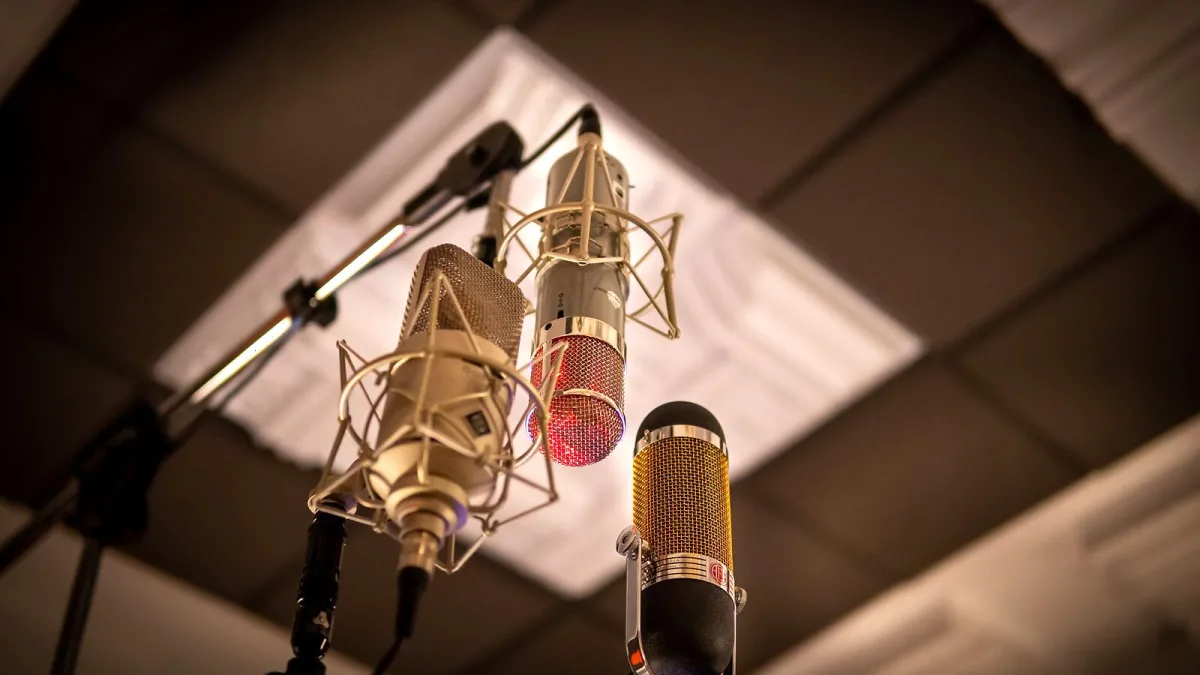
After years behind a mixing desk, here's the first thing I'll tell anyone about to buy a microphone: start with the job, not the brand. A microphone with a glittering spec sheet can still be the wrong tool if it exaggerates the source, drags in the whole room or needs gear you don't own. So before you spend a penny, be clear about four things — the source, the room, the connection and the use. Get those straight and the shortlist writes itself.
The three types, and when to use them
- Dynamic — rugged, handles very loud sources, needs no phantom power. My go-to for live vocals, snares, guitar and bass amps, and untreated or noisy rooms. Lower sensitivity isn't a weakness here; it helps reject the room and fight feedback, though you'll need a bit more preamp gain.
- Condenser — more sensitive, more high-end detail, and it needs +48V phantom power. Brilliant for studio vocals, acoustic guitar, piano, strings and drum overheads — in a quiet, treated room. In a bad room it'll faithfully record every reflection and the fridge next door, so it isn't automatically the “better” choice.
- Ribbon — smooth and natural, lovely on bright or aggressive sources like brass and guitar amps. Many are delicate and hungry for clean gain, so check whether it's passive or active and follow the maker's rules on phantom power to the letter.
Polar pattern: where the mic listens
The polar pattern is just the directions a mic accepts and rejects sound — and it matters as much as the type:
- Cardioid — picks up the front, rejects the rear. The workhorse for solo vocals, speech and close-miking.
- Supercardioid/hypercardioid — tighter rejection for loud stages, but you have to aim the rear null correctly.
- Omnidirectional — hears everything, natural low end, great in a good room, a liability in a noisy one.
- Figure-eight — front and back, sides rejected; handy for duets, mid-side and room work.
USB or XLR?
A USB microphone plugs straight into a computer — simple and cheap for one person recording at a desk. An XLR microphone needs an interface, mixer or preamp, but it's the route into a proper, expandable setup with multiple mics and real signal routing. If you think you'll grow beyond a single microphone, buy XLR.
Don't get caught out by phantom power
Most condensers need +48V phantom power from your interface or mixer. Most dynamics don't. Ribbons need care — some are damaged by phantom power patched incorrectly. Always check before you plug in.
Read the frequency response, not just the range
Two mics can both say “20 Hz–20 kHz” and sound nothing alike. What matters is the shape of the response — the presence boosts, the high-end peaks, the low-end roll-off and the proximity effect. Look at the graph and picture it on your source: a bright presence lift adds air to a dull voice but can make a sibilant singer harsh.
The specs that actually earn their place
- Maximum SPL — how loud a source it takes before it distorts. Crucial for guitar cabs, drums, brass and close percussion. A microphone can distort even when your interface isn't clipping.
- Self-noise — matters most on quiet, distant or heavily compressed sources. Largely irrelevant on a loud, close-miked snare.
- Sensitivity — the microphone's output for a given input. Low-output dynamics and passive ribbons can need more clean gain than a cheap interface can give; an inline booster or a better preamp fixes that.
A quick source-to-mic cheat sheet
| Source | Sensible starting point |
|---|---|
| Live lead vocal | Cardioid/supercardioid dynamic |
| Podcast in an untreated room | Close-positioned dynamic |
| Studio vocal (treated room) | Large-diaphragm condenser (or dynamic/ribbon to suit the voice) |
| Acoustic guitar | Small- or large-diaphragm condenser |
| Electric guitar cabinet | Dynamic or ribbon (often blended) |
| Snare / kick | Dedicated dynamics |
| Piano / ensemble | Matched condenser pair |
Budget for the whole chain
The microphone is only part of the bill. Factor in a stand or boom arm, an interface or preamp, an XLR cable, a pop filter, a shock mount, headphones and — the one everyone skips — a bit of acoustic treatment. A modest microphone in a treated room beats an expensive one in a boxy, reflective bedroom every time.
The mistakes I see most often
- Buying on frequency range alone.
- Assuming a condenser is always more “professional” than a dynamic.
- Ignoring the room entirely.
- Choosing omnidirectional in a noisy space.
- Forgetting to check phantom-power and preamp needs.
- Expecting a microphone to rescue poor placement or a bad-sounding room.
The bottom line
There's no single “best” microphone — only the right one for your source, your room and your setup. Define the job, match the type and pattern to it, check it'll work with the gear you own, and, if you possibly can, hear it on your own voice or instrument before you buy. Do that and you'll spend less, and get a usable signal that needs far less fixing later.



Comments