


Aston Microphone roundup
Aston Microphone: A Complete Buyer's Guide
The Origin suits general studio work; the Spirit adds polar pattern flexibility; the Orbit delivers ribbon warmth; the Stealth handles loud sources. This guide explains which model fits your situation.
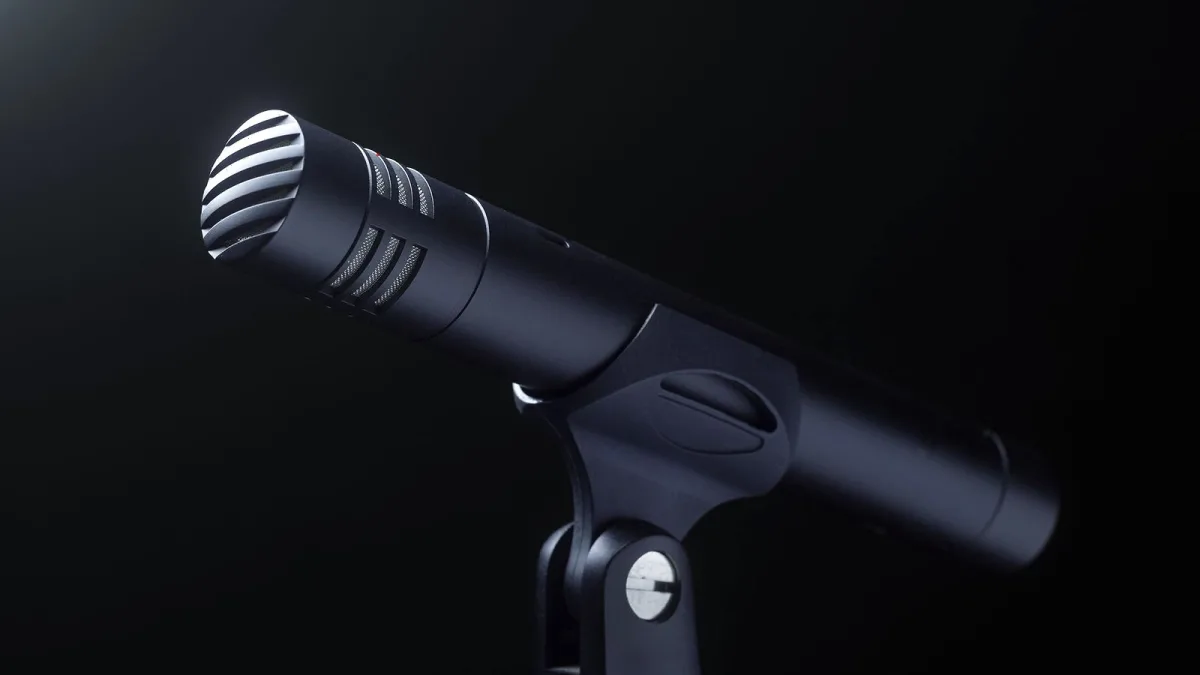
Choosing which aston microphone to buy is straightforward once you are clear about your primary recording application. The brand offers four distinct products — Origin, Spirit, Orbit and Stealth — each designed for a different signal type, technique or use case. They do not compete with one another within the range; they complement it.
The Origin: The Default Starting Point
For anyone building a first studio or looking for their first aston microphone, the Origin is the most versatile choice. It is a cardioid condenser with a distinctive spring-steel headbasket, phantom power requirement and a clean, detailed response across voices and acoustic instruments. Its fixed cardioid pattern means no switching decisions — plug in, set gain, record. It performs well on vocals, acoustic guitar, piano and as an overhead on drums. It is the model most engineers reach for first when choosing an aston microphone for general-purpose studio work.
The Spirit: When You Need Pattern Flexibility
The Spirit shares the large-diaphragm condenser format with the Origin but adds a pattern selector: cardioid, figure-8 and omnidirectional. This matters when your recording technique requires it. Figure-8 is necessary for mid-side recording when paired with a cardioid front mic. Omni captures a more ambient room sound and works for round-table recordings or any situation where equal pickup from all directions is preferable. If you only ever record in cardioid, the Origin is the better value. If you need flexibility, the Spirit justifies its higher price immediately.
The Orbit: Ribbon Performance at a Competitive Price
Ribbon microphones have a naturally warm, dark character with a smooth high-frequency rolloff that works well on bright sources. The Orbit is the aston microphone model in a figure-8 ribbon design. It suits electric guitar cabinets, brass, strings and any source that benefits from a less edgy, less analytical presentation. It requires a clean preamp with enough gain — ribbons produce low output levels — and the preamp's output impedance affects the tone. Verify compatibility with your interface's preamp before buying if you are starting from scratch.
The Stealth: An Active Dynamic for Loud Sources
The Stealth addresses a specific gap in most studio setups: a high-output, extended-response dynamic that tolerates loud sources without the sensitivity problems of a condenser. Electric guitar cabinets, snare drums and brass that would cause a condenser to overload or capture excessive bleed are natural candidates. The Stealth uses active electronics requiring phantom power, which produces higher output and a more extended frequency range than a standard passive dynamic. It is the right choice when you want dynamic-style ruggedness with closer-to-condenser performance characteristics.
Preamp and Interface Matching
Every aston microphone except the Orbit works from any competent interface with phantom power — entry-level Focusrite, Audient and Universal Audio interfaces are all appropriate. The Orbit requires a preamp with at least 60 dB of clean gain available and low output impedance. Preamps marketed for ribbon use or high-gain applications such as the Cloudlifter can extend interface compatibility. The Stealth's active design means it has a higher output than a passive ribbon and is easier to drive from standard interfaces.
Which to Buy First
Which aston microphone to buy first: if you have no large-diaphragm condenser, the Origin. If you record in multiple polar patterns or use mid-side technique: the Spirit. If you record loud sources where condensers cause problems: the Stealth. If you record bright acoustic sources and want ribbon warmth: the Orbit. For a beginner's perspective on getting started, the beginner guide covers first steps with each model.




Comments