


Instrument Cable article
Instrument Cable Explained: Features, Types and Tips
Understanding instrument cable specs prevents buying mistakes and makes signal chain problems much easier to troubleshoot.
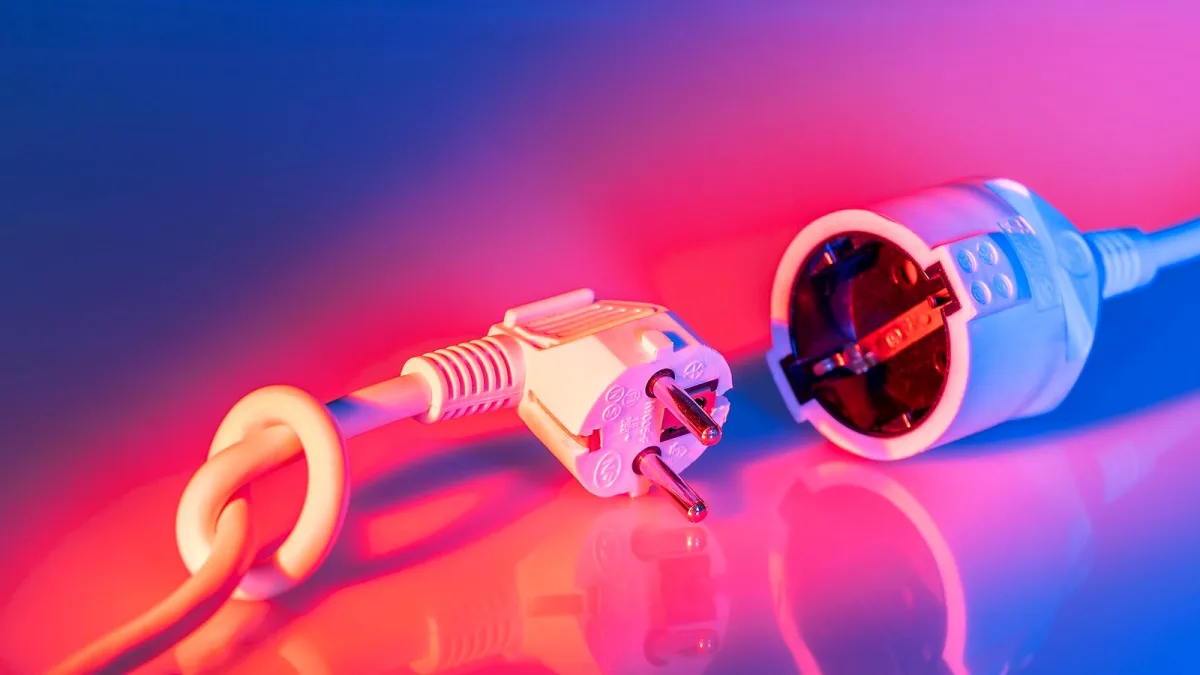
The instrument cable is the simplest link in your signal chain — one end into the guitar or bass, the other into the amp or interface. It's also the link that causes the most intermittent problems: hum, signal loss, crackle and complete drop-outs. Understanding how cables work and what the specifications actually mean makes buying and troubleshooting straightforward.
How It Works
A standard guitar cable uses an unbalanced TS (tip-sleeve) connection. The tip carries the signal; the sleeve acts as both the ground and the shield. Because the signal travels on a single conductor with the shield doing double duty, unbalanced cables pick up interference more readily than balanced cables (which use a separate ground, allowing noise cancellation). For short cable runs — guitar to amp in a rehearsal room — this rarely matters. For longer runs or electrically noisy environments, the limitation becomes audible.
Key Specifications
Capacitance is the most important spec for instrument cables. Higher capacitance rolls off high frequencies — the effect is subtle on a 3-metre cable, more pronounced on a 10-metre run. Lower capacitance cable preserves more of the full-range signal. Most quality cables are rated at 30–100 pF per metre; cables below 50 pF/m are considered low-capacitance.
Shielding protects the signal conductor from electromagnetic interference. Braided shields are more durable; spiral (serve) shields are more flexible and common in cheaper cables. Foil shields offer excellent coverage but are more fragile. For most live and studio use, braided or spiral shielding is adequate.
Connector quality matters more than conductor quality in most failures. Cheap connectors lose contact over time; the tip makes intermittent contact with the jack socket, causing crackle or dropout. Neutrik, Switchcraft and G&H connectors are the professional standards and last significantly longer than no-name alternatives.
Cable Length and Signal Loss
Keep instrument cable runs as short as practical. For most players, 3–5 metres covers the distance from guitar to amp. On a pedalboard, use short patch cables (30–60 cm) between pedals. Every additional metre adds capacitance and increases the potential for signal degradation. If you regularly use runs over 10 metres, consider a buffer pedal at the start of your chain to reduce the effect.
TS vs TRS Cables
A standard instrument cable uses a TS (mono, unbalanced) connector. TRS (tip-ring-sleeve) connectors carry either balanced mono or stereo signals. Don't use a TRS cable where a TS connection is expected — some devices won't care, but some will. Equally, don't use a TS cable where a balanced TRS connection is expected. Check what your equipment requires before buying.
Brands Worth Knowing
At the professional end, Mogami (Gold and Platinum series) and Van Damme are widely used in studios and live sound. For the working musician who wants reliability without the cost, D'Addario Planet Waves and Roland Black Series offer consistent quality. At the budget end, Hosa cables are serviceable for practice use but not for demanding touring use. Custom-built cables using Mogami or Van Damme cable with Neutrik connectors are the most cost-effective professional solution if you're comfortable making them yourself.
For a buying breakdown by price tier and use case, the instrument cable buyer's guide covers the decision clearly.



Comments