

Yamaha Keyboard roundup
Yamaha Keyboard: A Complete Buyer's Guide
Yamaha keyboards span every budget and purpose, but picking the wrong type is easily done. This buyer's guide walks you through each decision in the right order.
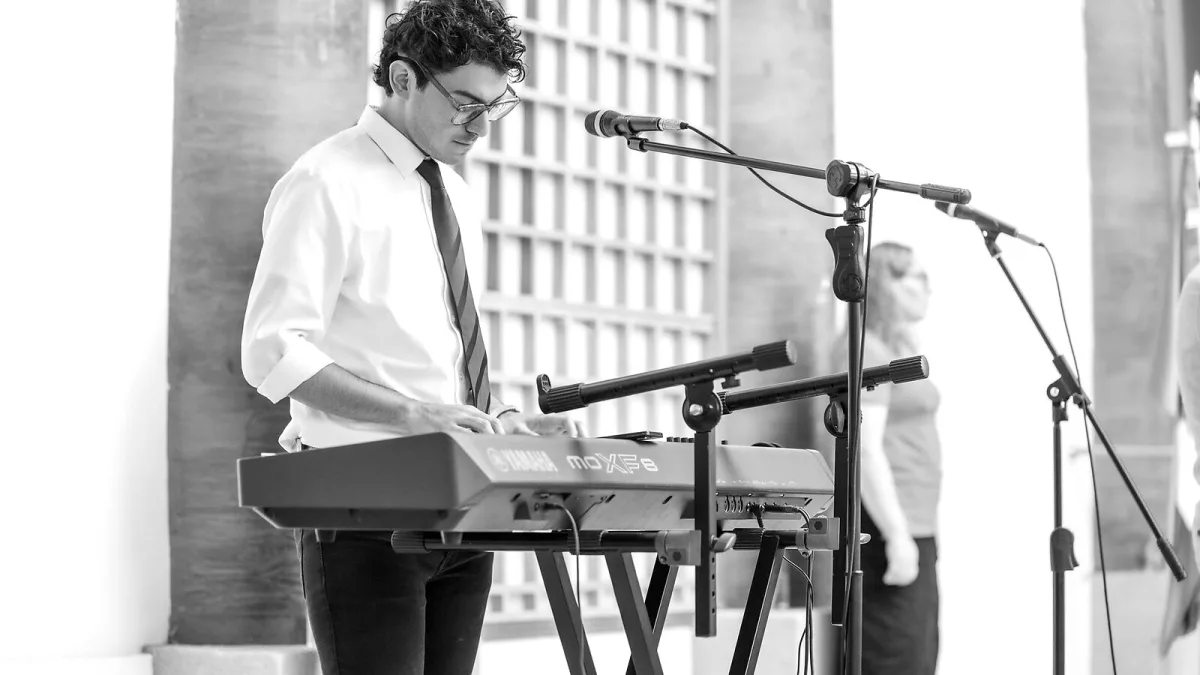
Buying a Yamaha keyboard is a sensible decision — the brand's reputation for reliability and quality is well earned, and the range covers every playing level and budget. But the catalogue is large, and without a clear framework it's easy to pick the wrong type and spend months wishing you'd chosen differently. This guide walks you through every decision in the right order, so you arrive at the model that genuinely suits you.
Step One: Be Honest About Why You're Buying
Before you look at a single spec sheet, answer one question: what do you actually want to do? The answer shapes every decision that follows.
- Learn piano properly — you need weighted, graded keys and a piano-focused model (P series or Clavinova).
- Play and sing along for fun — an arranger keyboard with auto-accompaniment (PSR series) suits this well.
- Produce or compose — a workstation or MIDI controller may serve you better than a standard arranger model.
- For a child — age and commitment level matter; a starter model at £150–£200 avoids expensive regret.
Most people want either to learn piano or to enjoy playing at home. Once you've settled on that distinction, the right family for you becomes clear.
Step Two: Understand the Main Product Families
Yamaha's range divides into distinct families, each designed for a different purpose. Buying outside the right family — however good the individual model — usually leads to disappointment.
| Family | Typical Models | Keys | Best For |
|---|---|---|---|
| PSR (arranger) | PSR-E373, PSR-SX700 | 61 (unweighted) | Home entertainment, accompaniment |
| P series (digital piano) | P-45, P-125, P-515 | 88 (weighted) | Learning piano, practice |
| DGX series | DGX-670, DGX-670BK | 88 (weighted) | Piano learning with arranger features |
| Clavinova | CLP-735, CLP-785 | 88 (premium action) | Serious students, home grands |
| CP / Stage | CP73, CP88 | 73 or 88 (weighted) | Gigging pianists |
Step Three: Key Count and Action — What Actually Matters
The number of keys and how they feel underfoot are the two specifications that affect your playing every single day.
Key count: A full acoustic piano has 88 keys. If you're learning piano properly, a model with 88 weighted keys is strongly advisable — you'll need the full range as you progress. For casual or arranger-style playing, 61 keys is generally adequate. Avoid 49-key and smaller models for anything other than production or very young children.
Key action: This is where the different instrument families separate themselves clearly. Unweighted (synth-action) keys are light and springy — fine for arranger keyboards but poor for building piano technique. GHS (Graded Hammer Standard) gives you proper resistance that varies across the range, approximating an acoustic grand. GH3X adds a third sensor per key for faster repetition, useful for faster passages. The Clavinova range's actions are the most realistic of all, incorporating real escapement mechanisms. As a general rule: if you're learning piano, pay for at least GHS.
Step Four: Sound Quality — What to Listen For
All Yamaha keyboards use AWM (Advanced Wave Memory) sampling to recreate acoustic instrument sounds. The difference between a budget and a mid-range model comes down to the number of sample layers and the quality of the source recording.
Entry-level models use basic, single-layer samples that sound acceptable through headphones but thin through speakers. Mid-range and above use multi-layer AWM2 samples captured at different velocities — so playing softly produces a genuinely different timbre from playing firmly, just as on an acoustic piano. The flagship P-515 and the Clavinova range use recordings of the Yamaha CFX concert grand and the Bösendorfer Imperial for exceptional authenticity.
When evaluating an instrument in a shop: play pianissimo passages and fortissimo ones, and listen for natural variation. Play the same note repeatedly at speed and check for convincing repetition. These quick tests reveal more than spec sheets.
Step Five: Budget — Getting the Right Balance
Models are available across a very wide price range. Here's a rough guide to what each tier offers:
- Under £200: PSS and entry-level PSR models. Lightweight, unweighted, good for younger beginners or casual exploration.
- £200–£450: The P-45 digital piano sits here — excellent GHS action, decent sound quality, 88 keys. The right choice for many first-time learners.
- £450–£700: The P-125 and DGX-670. Better speakers, improved samples, and additional voices and features that make daily practice more enjoyable.
- £700–£1,200: The P-515 and lower-end Clavinova (CLP-735). Substantially more realistic action and significantly richer tone.
- £1,200 and above: Upper Clavinova models and professional stage instruments. Acoustic-piano-level action, flagship sounds, professional build quality.
The advice that nearly every teacher gives: spend as much as your budget allows on key action and sound quality, and economise on features you don't need (auto-accompaniment styles, voices you'll never use).
Step Six: Practical Considerations Before You Finalise
A few final questions before you commit:
- Pedals: Does the model include a sustain pedal, or is it sold separately? Most entry-level models come with a simple on/off sustain pedal; a proper piano-style three-pedal unit is available as an accessory on most digital piano models.
- Connectivity: USB-to-host is standard on most current models. Bluetooth MIDI is available on several models (P-225, P-515, DGX-670) and makes connecting to the Smart Pianist app entirely cable-free.
- Stand and bench: Budget separately for a stand if the keyboard doesn't include one. A wobbling keyboard on a dining table is a genuine barrier to consistent practice.
- Headphones: Any decent pair of closed-back headphones will do. They're essential for evening practice and for hearing the subtleties in higher-quality instrument sounds.
The Bottom Line
Choosing the right Yamaha keyboard is mostly a question of matching the instrument's family to your actual purpose, and spending appropriately on the action and sound quality that will support your playing for years. Decide your goal, choose the right family, then pick the highest-spec model your budget allows within that family. If you'd like more detail on specific recommendations, see our guide to the best Yamaha keyboards for the money. And if you're buying for someone just starting out, our beginner's guide to Yamaha keyboards covers the first steps in detail.




Comments