


Roland Synthesizer roundup
The Best Roland Synthesizers for the Money
Roland's range can be overwhelming — here is an honest guide to the instruments that are actually worth your money.
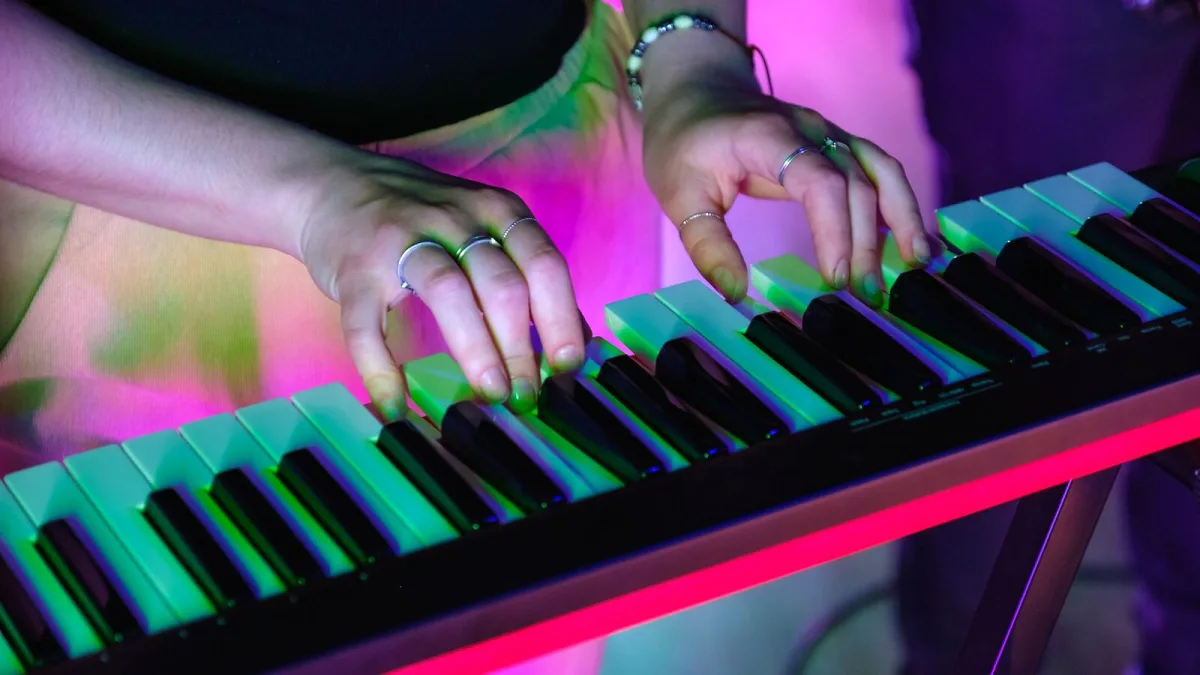
The Roland synthesizer range covers a wide span of prices and purposes, and “best value” means something different depending on whether you are a beginner, a working producer or a collector of vintage hardware. This guide identifies the instruments that genuinely deliver at each level, without the marketing spin.
Best for Beginners: Roland JU-06A (Boutique series)
For a first Roland synthesizer, the JU-06A in the Boutique series offers a sensible combination of Juno-106-inspired ACB sound, compact hardware, a manageable control layout and a price that will not cause distress if you are still working out whether synthesis is for you. The Juno character — warm pads, lush chorus, reliable polyphony — is well suited to beginners because it rewards basic patch programming quickly. USB connectivity makes integration with a computer straightforward.
Best for Leads and Bass: Roland SH-01A (Boutique series)
For monophonic and paraphonic work, the SH-01A is the Roland synthesizer to consider at accessible prices. Based on the SH-101, it provides the aggressive analog-style lead and bass sounds that made the original a studio and live standard. It is paraphonic (able to play up to four notes simultaneously in a particular mode, though the filter is shared), has a built-in sequencer and arpeggiator, and integrates well with modern setups. It is particularly useful in techno, electro and electronic music production.
Best Workstation: Roland Fantom series
For players who need a Roland synthesizer that also serves as a live performance workstation — built-in sequencer, multi-part arrangements, extensive sample libraries, broad synthesis options — the Fantom range is Roland’s premium offering. It combines multiple synthesis methods, high-quality samples, a touchscreen interface and extensive connectivity. At a higher price point than the Boutique series, but it covers a far wider range of applications.
Best Vintage: Juno-106 (with caveats)
Among vintage Roland instruments, the Juno-106 remains the most widely recommended for players who want a true analog polyphonic synthesizer at a price below the Jupiter-8. It is not cheap secondhand, and it has well-documented hardware vulnerabilities (the 80017A voice chips), but a properly serviced unit is a remarkable instrument for pads, chords, bass and classic electronic textures. Budget for a service from a Roland-experienced technician at the point of purchase.
The Jupiter-8 is more capable and more expensive. The SH-101 is more affordable and excellent for lead and bass work. Both are legitimate Roland synthesizer classics; the Juno-106 is simply the most accessible all-rounder in the vintage analog range for most players.
Best for Acid Sounds: TB-03 (Boutique series)
The TB-03 is the Boutique-series ACB version of the TB-303 Bass Line, one of the most culturally significant instruments in dance music history. For producers who want the acid squelch and slide behaviour of the 303 in a reliable, affordable format without hunting for an original (which is expensive and temperamental), the TB-03 is a practical, well-made option. It is not identical to the original, but it captures the essential behaviour at a fraction of the cost.
Best for Digital LA Synthesis: D-50 or JD-800 (Vintage)
For the specific digital synthesis character of the late 1980s — metallic transients, lush digital pads, complex layered sounds — the D-50 and JD-800 remain hard to beat. Both are Roland synthesizer designs with distinctive voices that have not been fully replicated in modern instruments. The JD-800’s hands-on slider interface makes it particularly accessible for editing. Both are available secondhand at reasonable prices compared with vintage analog equivalents. Check battery-backed memory on the D-50 before buying.
Best Software Option: Roland Cloud
For studio producers who work primarily in a DAW, Roland Cloud provides access to software versions of Roland instruments including ZENOLOGY. This is significantly cheaper than hardware and covers a broad range of Roland sound palettes. An iPad version was announced in January 2026. The software option is not for everyone, but for DAW-first producers it is the most cost-effective way to access Roland sounds.
Matching the Instrument to the Player
No single Roland synthesizer is the best across all contexts. A beginner does not need a Juno-106; a working producer in a live techno context does not need a Fantom workstation. The most useful question is: what music am I making, and what does my playing setup actually require? Start there and let the answer guide the choice.
For the full history and technical context, our Roland synthesizer overview has everything you need. Our buyer’s guide covers how to choose. New? Our beginner’s guide is a useful companion. And our mistakes guide is worth reading first.





Comments