


Fm Synthesizer roundup
Fm Synthesizer: A Complete Buyer's Guide
FM synthesis is back in fashion — and the range of hardware and software instruments available has never been broader. Here is how to choose the right one for your budget and workflow.
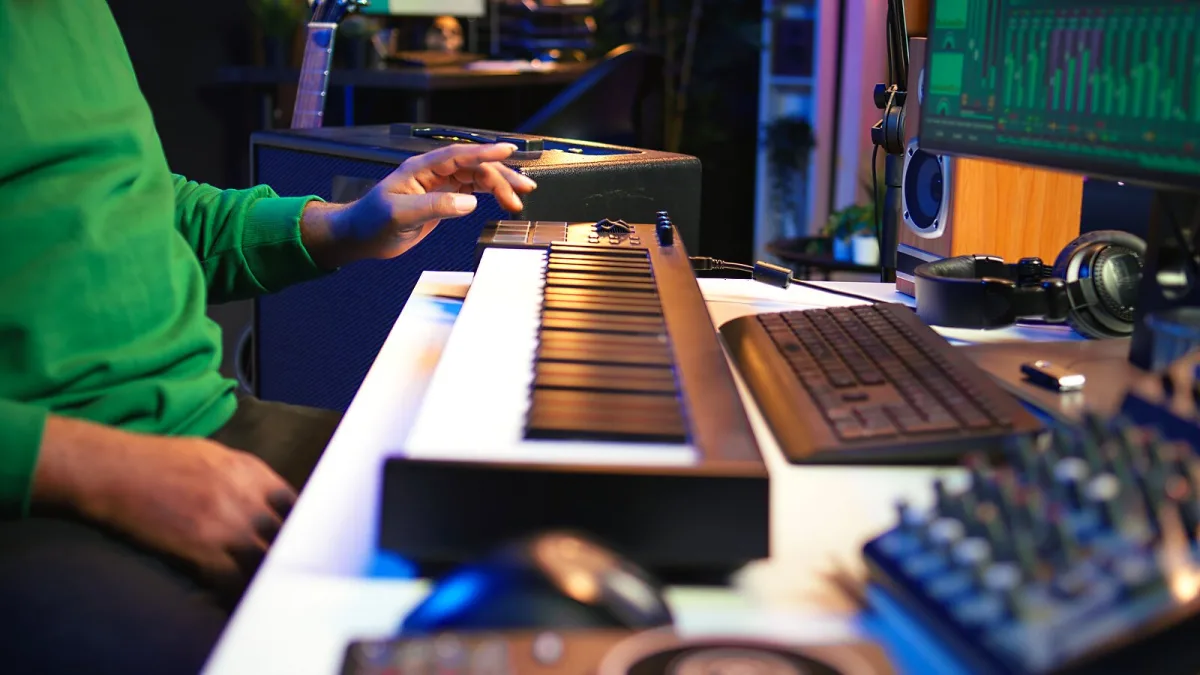
FM synthesis is having a proper moment. Those glassy, precise sounds that defined the 1980s have crossed back into contemporary production — hip-hop, lo-fi, electronic pop, ambient — and the market has grown to match. Whether you are after a tactile hardware experience, a portable travel synth or a deep software instrument, there is a lot to choose from. Here is how to cut through it.
What to Know Before You Shop
Before spending anything, it is worth understanding that FM synthesis has a steeper learning curve than most analogue keyboards. The sounds are built from operators (oscillators), algorithms (the configurations of how they connect) and ratios — not the familiar filter-envelope-oscillator chain of a Juno or a Minimoog. The payoff is a genuinely different palette. But if you buy one expecting to dial in warm analogue pads intuitively, you may find yourself frustrated.
That said, many modern FM instruments include presets that are immediately usable, and some add hybrid features — filters, effects, sample layers — that make them accessible without deep FM knowledge. Know what you are getting into.
Hardware Versus Software
The choice between hardware and software FM comes down to workflow and budget. A software FM synthesizer — Native Instruments FM8, Arturia DX7 V, or Ableton's Operator — typically costs far less than equivalent hardware and offers deep programmability via a computer interface. The visual representation of algorithms and modulation matrices makes software particularly good for learning FM principles.
Hardware has the edge in tactile feel and immediacy. Turning physical knobs and pressing real keys is a different creative experience to clicking in a DAW. Several modern hardware options sit in the mid-range bracket and are genuinely excellent for the money.
Price Tiers
Budget Options (Under £200)
The Korg Volca FM is a compact, affordable FM synthesizer based on the Yamaha DX7's architecture — three operators, six DX7-compatible algorithms. It is polyphonic (three voices), has a built-in sequencer, and accepts DX7 patch data via SYSEX. For the price, it is remarkable. The Teenage Engineering Pocket Operator series includes FM-flavoured options at very low cost, though these are more toys than instruments in a professional sense.
At this tier, software is the stronger option. FM8 in particular is a deep, well-documented instrument that can be found at significant discount during sales.
Mid-Range (£200–£600)
This is where the most interesting hardware lives. The Yamaha Reface DX is a compact, 37-mini-key FM synthesizer with four operators and its own charming approach to the FM architecture. It is highly portable and genuinely fun to programme. The Elektron Digitone is a different proposition entirely — an eight-voice instrument with Elektron's sequencer, analogue-style filters added after the FM engine, and a sound that sits beautifully in electronic music contexts. It is one of the best-designed instruments in its price bracket.
Software at this tier: Arturia DX7 V is a faithful and comprehensive emulation of the original DX7, with improved interface and expanded features. It is the standard recommendation for producers who want authentic 1983 DX7 sounds with modern convenience.
High End (£600 and Above)
The Yamaha Montage and MODX series include FM-X synthesis engines (alongside analogue-modelled AWM2) in flagship keyboard packages. These are professional instruments with the weight to match. Native Instruments Komplete bundles including FM8 sit in this bracket too as part of a larger toolkit purchase.
Boutique and semi-modular FM options exist in the Eurorack format — modules like the Mutable Instruments Braids or dedicated FM operator modules allow FM synthesis to be integrated into a modular rig, though this is specialist territory.
Key Features to Compare
- Operator count: more operators (6 versus 4 versus 3) allows more complex timbres. Six-operator instruments are closest to the classic DX7.
- Algorithm count: more algorithms = more routing options = greater timbral variety.
- Polyphony: FM synthesis is computationally intensive. Early hardware had limited voices; modern instruments manage this better, but check the voice count for your intended use.
- DX7 patch compatibility: if you want access to the enormous library of existing DX7 patches, look for instruments that explicitly support DX7 SYSEX data import.
- Added features: some instruments add analogue-style filters, effects chains, arpeggiators or sequencers. These expand usability significantly but also add cost.
Second-Hand Buying
The original DX7 is the obvious second-hand target — and it is still widely available at prices well below its 1983 launch price in real terms. The DX7II added extra features (velocity on each layer, expanded memory) and is worth looking for. Condition is important: check that all keys are working, the display is legible, and the battery (which maintains memory) has been replaced. A failed battery just means the preset bank resets, which is fixable — but worth negotiating on price for.
If you want to understand how FM synthesis works at a deeper level before buying, the complete guide to FM synthesizers covers the principles clearly. For a practical first steps guide, the beginner's FM synthesizer guide is the place to start.
The Bottom Line
The best FM synthesizer for you depends on how deep you want to go and how you want to work. A software instrument is the fastest, cheapest way to learn FM and make it part of your sound. A hardware instrument adds presence and tactility. The Elektron Digitone and the Yamaha Reface DX are both genuinely excellent mid-range hardware choices. And if you want the real thing for the history alone, a DX7 in good working order is still one of the best-value keyboards on the second-hand market.





Comments