


Hammond Keyboards article
Hammond Keyboards: A Complete Guide
Tonewheels, drawbars and a spinning speaker: here's everything that goes into that unmistakable Hammond sound, explained simply.
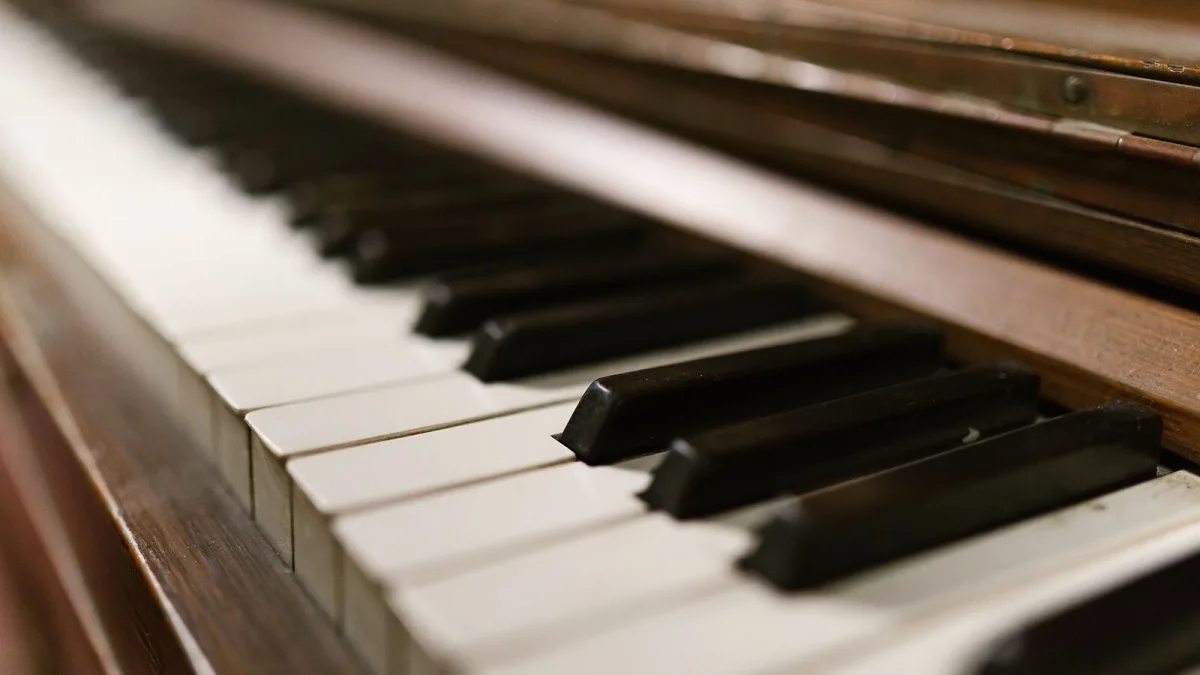
If you've ever heard that warm, swirling organ sound on an old soul record and wondered what on earth was making it, this guide is for you. Hammond keyboards have a genuinely fascinating story behind them, and once you understand a few basics — tonewheels, drawbars, that famous spinning speaker — the whole instrument starts to make a lot more sense. Let's take it step by step.
What Is a Hammond Keyboard?
The name covers a family of instruments that trace back to the original Hammond organ, invented by American engineer Laurens Hammond and first sold commercially as the Model A in 1935. Hammond wasn't a musician by training — he borrowed engineering ideas from electric clocks and rotating machinery to build an organ that was cheaper and easier to install than a pipe organ.
Today, "Hammond keyboard" also covers modern portable instruments, like the current XK-5 and the newly announced XK-7 and XK-7D, which use digital modelling rather than the original mechanical parts. Whether vintage or modern, the goal is the same: recreate that distinctive, richly harmonic organ tone.
How the Sound Is Actually Made
A classic Hammond keyboard doesn't use pipes or samples. Inside a vintage instrument, small toothed metal discs called tonewheels spin near magnetic pickups, generating a continuous electrical signal at a musical pitch. You then shape that raw sound using a set of controls:
- Drawbars — nine sliding controls per manual that blend different harmonics together, a bit like mixing several organ pipes of different pitches at once.
- Percussion — adds a short, plucky attack to the start of a note.
- Chorus and vibrato — adds subtle pitch movement, from gentle to fairly dramatic depending on the setting.
- Expression pedal — controls volume and tonal emphasis as you play, similar in spirit to a sustain pedal on a piano but doing quite a different job.
Small mechanical quirks — a faint click as a key is pressed, a touch of "leakage" between neighbouring tonewheels — are actually part of the charm. Modern digital Hammonds go out of their way to recreate these imperfections rather than smooth them out.
Meet the B-3 (and Its Relatives)
Ask any organ player to name one classic Hammond keyboard model and they'll almost certainly say the B-3, manufactured from 1955 to 1974. It has two 61-note manuals (keyboards), nine drawbars per manual, and a 25-note pedalboard for bass notes. The C-3 uses essentially the same internals in a different cabinet built for churches, while the A-100 adds a built-in amplifier and speakers. Hammond stopped making the original B-3 in 1974 as the industry moved toward transistor and solid-state instruments.
Why the Leslie Speaker Matters So Much
Plug a Hammond into an ordinary amplifier and you'll get a decent organ sound. Plug it into a Leslie speaker — developed by Donald Leslie in the early 1940s — and you get something else entirely. A rotating horn and a rotating bass rotor spin at different speeds, creating shifting pitch, volume and stereo movement that feels almost alive. Many players treat the organ and the Leslie as one combined instrument rather than two separate pieces of gear.
Hammond Keyboards Today
You don't need a heavy vintage console to get the sound anymore. Hammond's own current range, including the XK-5 and the newer XK-7/XK-7D announced in 2026, uses digital modelling to reproduce tonewheel behaviour in a portable, single-manual format, often with built-in rotary-speaker simulation. Other manufacturers — Nord, Viscount, Crumar and Roland among them — make what the industry nicknames "clonewheel" organs: instruments designed specifically to emulate that tonewheel character.
Who Made This Sound Famous
A handful of players turned the Hammond from a church-hall novelty into a genuine musical force. Jimmy Smith established it as a lead, improvising instrument in jazz; Booker T. Jones brought it to soul and R&B; Jon Lord and Keith Emerson pushed it into hard rock and progressive rock, often with heavy amplification and distortion; and Cory Henry continues that tradition today in gospel, soul and pop.
Ready to Go Further?
If you're thinking about buying one, our complete buyer's guide walks through what actually matters when choosing between vintage, modern and clonewheel options. If you're brand new to playing one, our beginner's guide takes things at a gentler pace, and our common mistakes guide is worth a read before you spend any money.
The Bottom Line
A Hammond keyboard is really two ideas working together: a clever piece of 1930s engineering that generates a genuinely distinctive tone, and nearly a century of players who found endless new ways to use it. Understand the tonewheels, the drawbars and the Leslie, and the rest of any Hammond keyboard's story falls into place.




Comments