


Behringer Synth article
Common Behringer Synth Mistakes to Avoid
Most Behringer synth frustrations trace back to the same handful of avoidable mistakes. Here's the list, so you can skip straight past them.
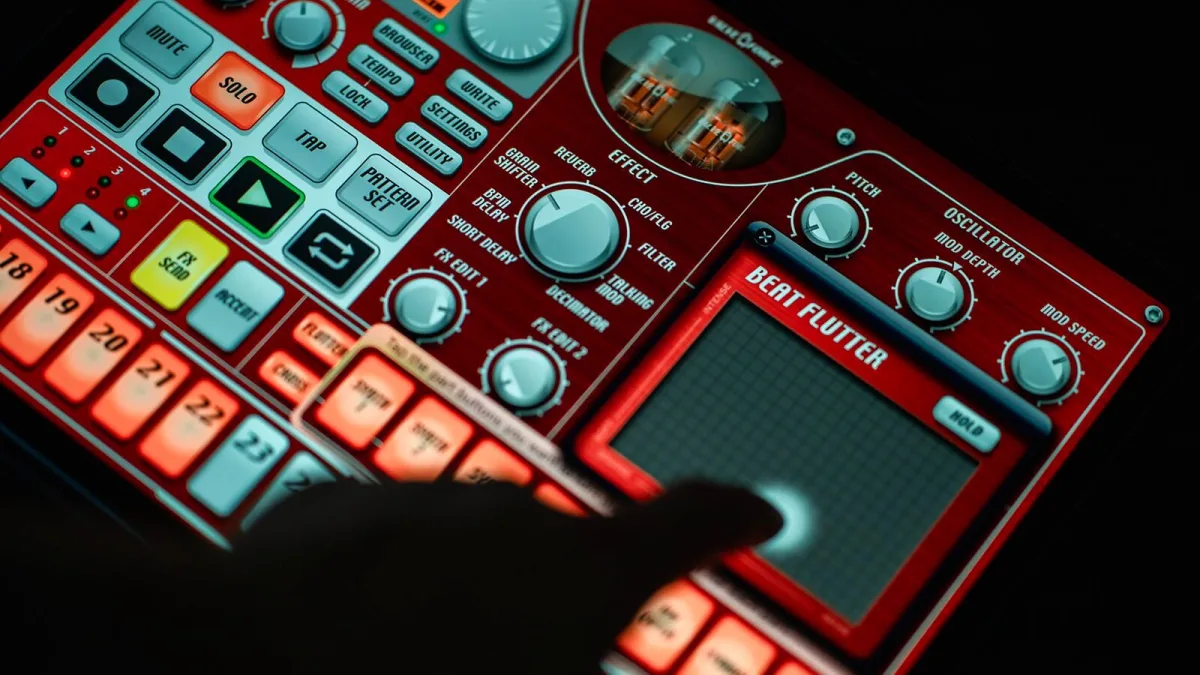
Plenty of people buy a Behringer synth, get frustrated within a week, and blame the instrument. Nine times out of ten it's one of the same handful of avoidable mistakes. Here's the list, so you can skip straight past them.
Mistake 1: Assuming Oscillator Count Equals Polyphony
Three oscillators does not mean three-note chords. Some designs, like the paraphonic Poly D, share circuitry between notes rather than giving each one an independent voice the way a true polyphonic instrument such as the DeepMind does. Buy on voice count, not oscillator count, or you'll be disappointed the first time you try to play a chord.
Mistake 2: Judging the Whole Range by One Model
The catalogue spans faithful vintage recreations, original semi-modular designs and full digital wavetable instruments. Writing off an entire Behringer synth line because one model didn't suit you is like judging every guitar by a single cheap starter pack — the range is simply too wide for that to be fair.
Mistake 3: Skipping Calibration and Warm-Up
Analogue circuits drift with temperature. Skip the manual's calibration steps or play cold gear straight out of a cold room, and you'll hear tuning wander mid-session and wrongly assume the unit is faulty. Give it a few minutes to settle and follow the manual's tuning procedure — it's a five-minute fix for a problem people often blame on build quality.
Mistake 4: Ignoring MIDI, USB and Firmware Details
Connectivity is model-specific, not universal. Assuming every instrument in the range supports USB MIDI, or that firmware updates aren't necessary, is a fast way to end up with a synth that won't sync properly with the rest of your setup. Check the manual for MIDI channel settings and update firmware before you assume something's broken.
Mistake 5: Forgetting the "Hidden" Extras Budget
People consistently under-budget for a Behringer synth purchase by ignoring what comes after the checkout: a MIDI interface, a proper stand, patch cables for anything semi-modular, and monitors good enough to actually hear what you're shaping. Add £50–£100 to whatever number you had in your head.
Mistake 6: Treating Announcements as Confirmed Releases
Behringer regularly shows instruments well before they ship. The AKS Mini was presented in July 2026 as a forthcoming analogue polyphonic design, but that doesn't guarantee its final specification, price or release date. Buying decisions based on an announcement rather than an actual retail listing is asking for disappointment.
Mistake 7: Comparing Spec Sheets Instead of Reviews
A spec sheet can't tell you how a keyboard feels under your fingers, how noisy a unit is in a quiet room, or how quickly support responds when something goes wrong. Read independent reviews before you buy, not just the marketing page — specs and lived experience are two very different things.
Getting It Right
Every mistake here comes down to the same root cause: treating one instrument, one spec, or one announcement as if it represents the whole picture. Avoid that, and a Behringer synth purchase becomes a genuinely low-risk way into hardware synthesis. For the fuller picture, our guide to the whole range and our buyer's guide cover the decisions properly, and if this is your first one, start with our beginner's guide instead.





Comments