


Violin article
Violin Explained: Features, Types and Tips
The highest-pitched member of the string family — from its Stradivari-era form to its role in the orchestral repertoire, this guide explains the essentials.
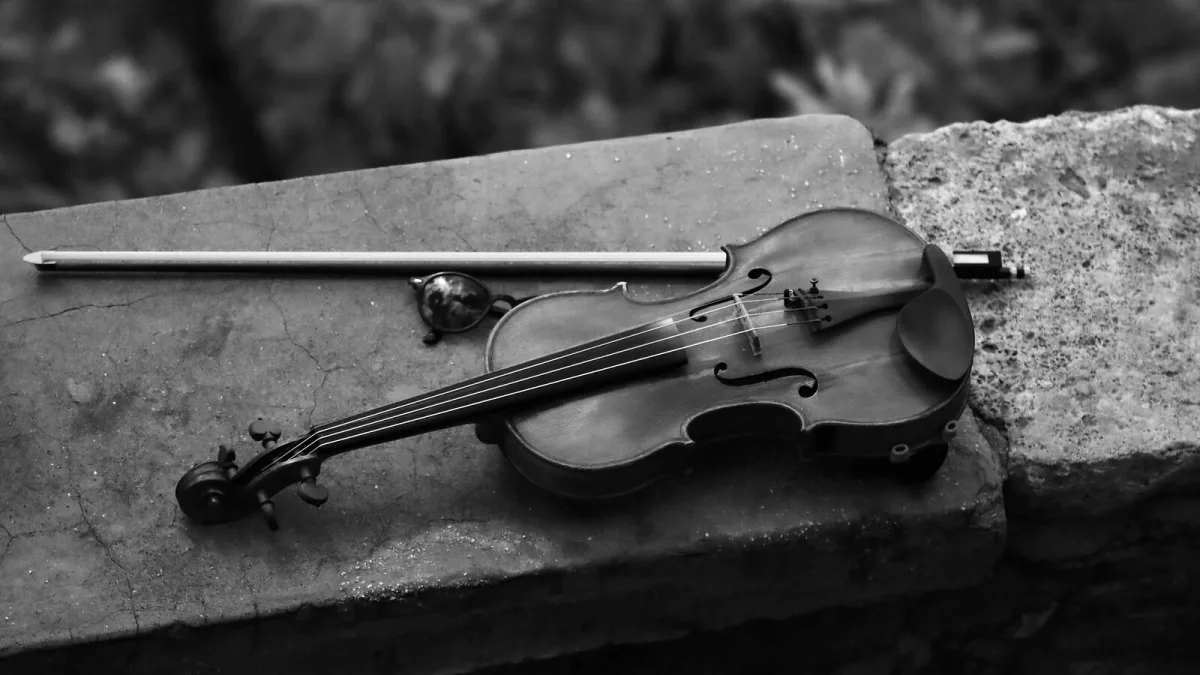
The violin is the highest-pitched and most agile member of the string family — a four-stringed instrument bowed with a horsehair bow, tuned in fifths from G below middle C through D, A and E. It sits at the top of the orchestral string section, carrying the principal melodic lines in most of the orchestral repertoire. It is also the most widely taught instrument in the classical tradition, with a continuous pedagogical lineage stretching from the Baroque violin schools of Corelli and Tartini through the nineteenth-century Franco-Belgian and German schools to the contemporary teaching methods of Shinichi Suzuki.
A modern violin is a refined instrument — the basic form has remained largely stable since the work of the Italian luthiers Antonio Stradivari and Giuseppe Guarneri del Gesù in the early eighteenth century, whose instruments remain the benchmarks against which all subsequent violin making is measured. What has changed is access: quality student violin instruments are now manufactured in sufficient quantities and to sufficient standards that a child can begin lessons on a genuinely playable instrument for under £150.
Construction and Anatomy
The violin body is carved from two primary timbers: spruce for the top (the soundboard) and maple for the back, sides and neck. The top is carved into a slight arch to bear the string tension transmitted through the bridge; the back carries the same arch in the opposite direction. The bass bar (a strip of spruce glued inside the top, running beneath the lowest string) and the sound post (a small spruce dowel wedged between top and back near the treble foot of the bridge) transmit vibration between the plates and profoundly affect the instrument's tone.
The bridge — a precisely shaped piece of maple — transfers string vibration to the body. It is not glued in place; it is held only by string tension, which makes it adjustable. The chinrest, tailpiece and fine tuners are the player-facing fittings; the nut, fingerboard (typically ebony) and pegs are the upper components.
Violin Sizes
The violin is made in fractional sizes for young players: 1/16, 1/10, 1/8, 1/4, 1/2, 3/4 and full (4/4). Size is determined by the player's arm length — the arm should extend comfortably to hold the scroll without strain. Most adults play a full-size violin; children typically progress through the fractional sizes as they grow. Choosing the correct size matters significantly for technique: a child playing a violin that is too large compensates with poor posture that is difficult to correct later.
Sound and Repertoire
The violin voice ranges from a warm, dark tone on the G string through brilliance on the E string. The instrument is capable of extraordinary dynamic range and expressive nuance, from barely audible pianissimo to a carrying forte that projects across a large hall. The core violin repertoire — Bach's Partitas and Sonatas, the concertos of Vivaldi, Mozart, Beethoven, Brahms, Tchaikovsky, Sibelius and Bartók, and the capricci of Paganini — represents some of the most technically demanding music composed for any instrument. For guidance on choosing a first violin, the buyer's guide covers the key decisions in full.




Comments