


Violin article
Common Violin Mistakes to Avoid
Most of the problems that slow violin students down are a small set of repeating errors. This guide names them, explains why they happen and gives the correction for each.
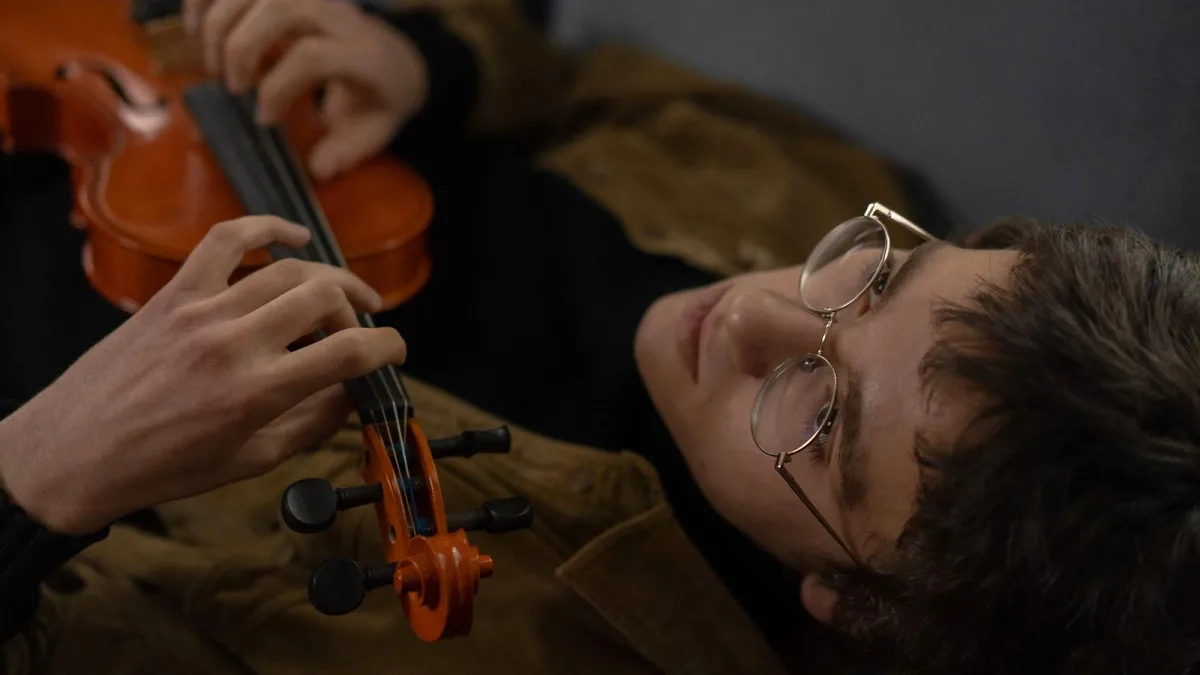
Most of the problems that slow violin players down — scratchy tone, poor intonation, a tense left hand — are the result of a small number of technique errors that compound over time. Catching them early, ideally with a teacher, prevents months of frustrating practice. This guide covers the most common mistakes and the corrections that make the most difference.
Too Much Bow Pressure
The most widespread error for beginners is pressing the bow into the string rather than drawing it across. This produces a scratchy, choked sound instead of the ringing tone the instrument is capable of. The correct technique is to let the natural weight of the bow arm do the work, combined with appropriate bow speed. More bow speed produces more volume without added pressure; more pressure without speed produces scratching. The test is to draw the bow across an open string with the arm relaxed and the bow moving at a consistent pace — the tone should improve immediately. Teachers address this in the first few lessons, but the habit of pressing often returns under performance pressure.
Incorrect Violin Bow Hold
A poor bow hold makes every other aspect of technique harder. The bow hold that most beginners revert to — thumb straight, fingers stiff, knuckles up — creates tension that transfers into the bow stroke and produces an uneven, forced tone. The correct violin bow hold has the thumb curved and slightly bent under the stick, the fingers draped over the top naturally, and the little finger curved on top of the stick. The whole grip should be relaxed enough that the bow feels almost balanced rather than gripped. If the fingers ache after ten minutes of practice, the hold is almost certainly too tight.
Not Rosining the Violin Bow
A bow without rosin will not produce sound — the hair slides across the string without gripping it. Beginners sometimes forget to rosin before playing or apply insufficient rosin after a break. Two to four slow strokes of rosin per session is the standard amount for a bow in regular use. A new bow or re-haired bow needs considerably more — approximately twenty strokes before the first full session. A bow that produces a wispy, insubstantial tone even with correct pressure and speed is almost always under-rosined. Note that over-rosining (too much powder on the hair) also causes problems: a rough, gritty tone and excessive dust on the violin strings and body.
Tuning the Violin Incorrectly
Playing the violin out of tune is uncomfortable to hear and ingrains bad pitch memory. A common error is tuning only approximately — getting close but not hitting the exact pitch — and then practising intonation on top of an already-sharp or flat open string. Always tune carefully before each session, using a chromatic tuner, and check tuning again mid-session if the room temperature has changed significantly. Peg box pegs that slip back after tuning (a common issue on inexpensive instruments in dry conditions) should be treated with peg compound rather than worked around by leaving the instrument perpetually out of tune.
Ignoring Left Hand Position on the Violin
Left hand thumb position — pressed too hard against the neck, or wrapped around it — is one of the hardest errors to correct once established. The thumb should rest lightly against the side of the neck, roughly opposite the first finger, with the palm not touching the neck. The wrist should be straight, not kinked outward or inward. When the thumb grips, the whole left hand tenses and finger movement on the violin slows — which directly affects both speed and intonation. A teacher usually identifies this immediately; self-taught players or those working without regular feedback often develop this grip and spend considerable time later trying to undo it.
Skipping Scales in Violin Practice
Pieces are more enjoyable to practise than scales, but scales and exercises are where violin technique is built. Scales cover all the positions, shifts and string crossings that eventually appear in pieces; practising them separately — at a steady tempo, with focus on intonation and bow distribution — means the technique is already in place when a piece demands it. A beginner who practises only pieces typically develops competency in the specific passages they have repeated but struggles with new repertoire. Ten minutes of scales before a practice session is the standard recommendation across string teaching. For more detail on how to progress systematically, see the beginner's guide and the setup guide.





Comments