


String Instruments Viola article
String Instruments Viola Explained: Features, Types and Tips
The viola is the alto voice of the violin family: larger than the violin, darker in tone, and defined by a centuries-old tension between acoustic ideals and physical playability.
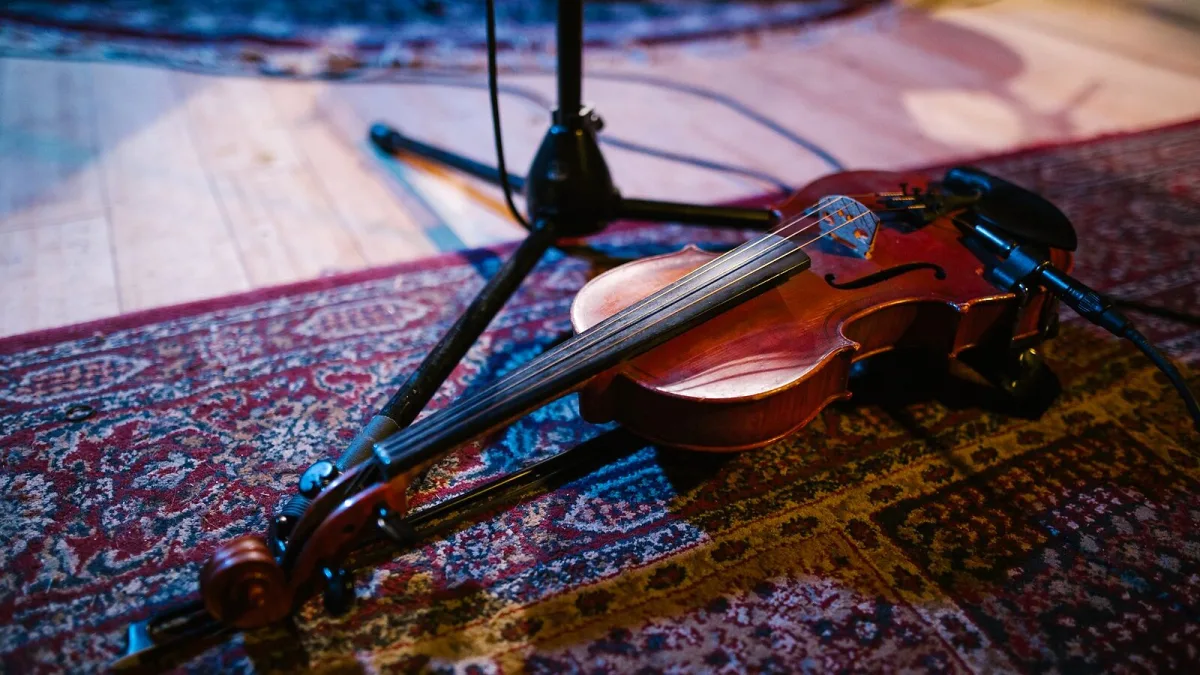
The viola occupies a singular position in the violin family — larger than the violin, smaller than the cello, tuned a perfect fifth below the violin's four strings, and producing a tone that is warmer, darker and more veiled than either neighbour. Understanding what a viola is, how it is built and what makes it different from the instruments around it is the right foundation for anyone approaching it seriously.
Tuning and Register
The viola's four open strings are tuned to C3, G3, D4 and A4 — a fifth below the violin, with the low C sitting an octave above the cello's C string. This placing gives the string instruments viola its characteristic middle-to-low voice: capable of dark, resonant low-register lines on the C string, inner harmonic movement on the G and D strings, and comparatively bright melody on the A. The range available to an accomplished player extends well above the open A, reaching several octaves through the positions.
Construction
The viola's construction follows the general principle of the violin family: a carved spruce top plate, maple back and ribs, an internal soundpost that couples vibration between top and back, a bass bar reinforcing the bass side of the top, and an ebony fingerboard without frets. The bridge transfers string vibration into the body. The bow is heavier than a violin bow to accommodate the thicker, more resistant strings.
What makes the viola architecturally distinct is the tension between acoustic ideals and physical practicality. An acoustically ideal viola body would be substantially larger than what most players can hold comfortably. This tension has never been fully resolved: instrument makers have pursued different solutions through history, and the viola still exists in body lengths ranging from approximately 37 to 43 cm, with no single standardised full size.
Size Variation
This absence of a standard is one of the most important characteristics of the string instruments viola as an instrument category. A violin has a universally accepted full-size body length; a viola's equivalent covers a range from roughly 38 to 43 cm depending on the player, the maker and the performance context. Orchestral violas typically fall between 15.5 and 17 inches. Lionel Tertis, the influential English violist, developed a 43 cm model designed to maximise low-register resonance while remaining playable — a solution that prioritised acoustic power over reach.
For players, this means that size selection is a genuine decision rather than a default. A larger instrument generally produces more resonance and projection on the C and G strings, but may cause shoulder tension and difficulty shifting. A smaller viola may be easier to play but can sacrifice some acoustic power.
The Viola in the Orchestra
In a symphony orchestra, the viola section typically provides inner harmonic movement: voice-leading between the violins above and the cellos below, countermelodies and rhythmic support. The section's distinctive timbre — often described as veiled or husky on the lower strings — is essential to the full string sound of any large ensemble.
The viola also has a significant solo repertoire. Composers including Berlioz, Brahms, Hindemith, Bartók and Walton wrote substantial works for the instrument, and violists such as William Primrose, Yuri Bashmet and Kim Kashkashian established the solo viola as a major concert presence in the twentieth and twenty-first centuries.
The Viola and the Viol: An Important Distinction
The terms "viola" and "viol" share historical roots but refer to entirely different instrument families. The viol, or viola da gamba, is a fretted Renaissance and Baroque instrument with sloped shoulders, a flat back, usually six or seven strings, and held between the legs. The string instruments viola belongs to the violin family; the viol does not. The confusion between the two terms is common enough that it is worth addressing directly.
Reading Viola Music
Viola players primarily read in alto clef, where middle C sits on the middle line of the staff. Treble clef appears in higher passages; tenor clef in some advanced repertoire. The need to read fluently in alto clef is one of the distinctive technical demands of the instrument. For a practical approach to buying, the buyer's guide covers what to verify before purchase. For an introduction to starting out, the beginner's guide is the practical starting point.






Comments