


Steinberg roundup
The Best Steinbergs for the Money
There's no single “best” Steinberg product — there's a best one for your job and budget. Here's how the range stacks up, tier by tier.

"Best" is a slippery word when a company makes half a dozen products for half a dozen different jobs, so let's be honest about what this actually is: a tier-by-tier round-up of which Steinberg product gives you the most for the money, depending on what you're trying to do. No invented benchmarks, no pretending one DAW magically "sounds better" than another — just a clear match between budget, use case and product.
Best Entry Point: Cubase Elements
If you're starting from nothing, Cubase Elements is the sensible first rung on the ladder. It carries the same core recording, MIDI and mixing engine as the higher tiers, just with a trimmed track count and a smaller instrument bundle. For anyone still working out whether music production is a hobby or something more serious, that's exactly the right amount of software to own — enough to make finished tracks, not so much that half the interface goes untouched. Cubasis, Steinberg's mobile DAW, is worth a mention here too if a laptop isn't in the picture yet; it covers similar ground on a tablet or phone.
Best All-Rounder: Cubase Artist
Once a hobby starts turning into a habit, Cubase Artist tends to be the Steinberg edition that actually gets used to its full extent. It adds a fuller set of bundled instruments and effects and a higher track count than Elements, without the console depth of Pro that most home producers never touch anyway. Musicians, songwriters and bedroom producers get the best return here — you're paying for headroom you'll genuinely grow into, rather than features aimed at a commercial studio.
Best for Serious Studio Work: Cubase Pro
Cubase Pro is the Steinberg edition that earns its price for people already working professionally — engineers running a busy studio, composers juggling large template projects, or anyone who needs the full mixing console, deepest automation and every bundled instrument Steinberg ships. It's overkill for a casual hobbyist, but for someone billing clients or delivering finished masters regularly, the extra capability pays for itself quickly rather than being a luxury.
Best for Film, TV and Game Audio: Nuendo
Nuendo shares Cubase's production core but is the Steinberg product built for a different audience entirely — post-production engineers working on dialogue, ADR, multichannel mixes and video-synced delivery. Its Analyzer Track for dialogue intelligibility and dedicated video-encoding support aren't things a music producer needs, but for anyone mixing for picture or games, Nuendo is the only sensible pick in the range; Cubase simply isn't built for that workflow.
Best for Composers and Notation: Dorico
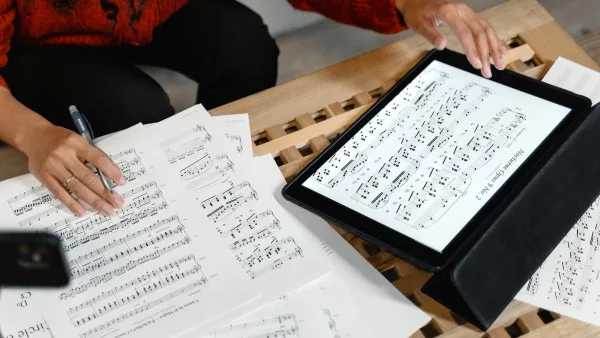
Dorico is the specialist choice for anyone whose end product is a printed, publishable score rather than an audio file. Its engraving, layout and playback tools go well beyond what any DAW's notation view can manage, which makes it the right spend specifically for composers, arrangers and educators — and a skippable one for everybody else.
Best for Mastering: WaveLab
WaveLab is aimed at the final stage of a project: detailed editing, metering and, in its newest version, a proper stereo and Dolby Atmos mastering workflow. It's worth the money once you're regularly finishing your own mixes or mastering for other people, but it's not something a producer still learning to mix needs to add early — get the mix right first.
Best Specialist Add-Ons
| Tool | Buy it when |
|---|---|
| HALion | You want to build and sculpt your own instrument sounds rather than rely on presets |
| Groove Agent | Drum programming is a big part of your workflow and stock kits feel limiting |
| SpectraLayers | You regularly deal with noisy recordings, hum or damaged audio that needs visual, frequency-based repair |
What About Mobile?
Cubasis deserves a proper mention rather than a footnote. It brings a genuinely usable slice of the Steinberg workflow to a tablet or phone, and for anyone who writes ideas on the move, it's arguably better value than any desktop tier — it costs a fraction of a full DAW and still exports projects you can finish properly later. It won't replace Cubase for serious production, but as a sketchpad it punches well above its size.
Which One Gives You the Most for Your Money?
For most readers, that's Cubase Artist — it's the edition that gets fully used rather than admired from a distance. Absolute beginners get better value starting with Elements or Cubasis and upgrading once they know what they're missing, which our beginner's guide covers in more depth. If your work is genuinely picture-based or notation-based, Nuendo or Dorico will always beat a "cheaper" Cubase tier that simply isn't built for the job. For the full decision process behind these picks, see our complete Steinberg buyer's guide, and check our common Steinberg mistakes piece before you commit to a tier.
The Bottom Line
There isn't a single "best" Steinberg product — there's a best one for your specific job and budget, and matching the two properly is what actually gets you value. Buy the tier that matches how you work today, not the one that flatters your ambitions, and the upgrade path is there whenever you genuinely outgrow it.




Comments