


Slate Digital article
Slate Digital for Beginners: A Complete Guide
The catalogue looks huge from the outside. Here's where to actually start with Slate Digital if mixing plug-ins are completely new to you.

New to mixing plug-ins and keep seeing Slate Digital mentioned everywhere? Same here, once. It can look intimidating from the outside — a huge catalogue, a lot of jargon, a subscription decision to make before you've even opened the software. Let's slow down and go through it in a way that actually makes sense on your first go.
What problem does it actually solve?
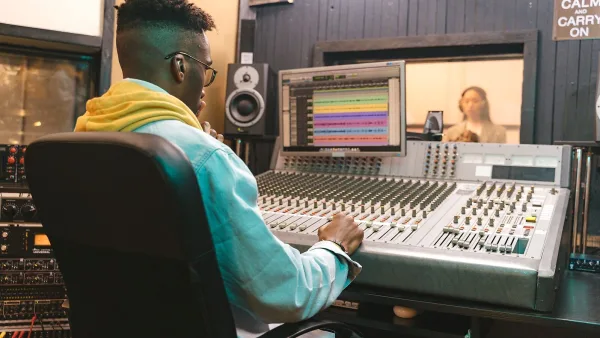
At the simplest level, Slate Digital makes software that emulates classic studio hardware — the compressors, EQs and tape machines that used to only exist as expensive physical boxes in professional studios. You get that character in a plug-in on your laptop instead. That's genuinely it, at the core: analogue-style character, made accessible.
Do you need to subscribe as a beginner?
Not necessarily, and definitely not straight away. The full catalogue runs on subscription now, but if you're still finding your feet with mixing itself, you don't need 150 plug-ins — you need to actually understand what two or three of them do. Learn on a small handful first, and decide about the bigger bundle once you know what you actually reach for.
Three plug-ins worth learning first
Rather than trying everything at once, start here:
- Fresh Air — a simple high-frequency enhancer. Easy to hear, easy to understand, and a gentle introduction to how a small amount of processing changes a sound. Use it sparingly at first; it's genuinely easy to overdo.
- Virtual Tape Machines — tape-style saturation and warmth. Great for learning how subtle harmonic colour changes a mix without you being able to point to one obvious "effect."
- Virtual Buss Compressors — put one across your whole mix at gentle settings and listen for "glue" rather than obvious squashing. This teaches you what bus compression actually does, which is a genuinely useful skill beyond just this one plug-in.
A term worth understanding: "modelling"
You'll see "modelled" a lot in Slate's marketing. It means the software is designed to recreate the sonic behaviour of a piece of hardware — a specific compressor, a tape machine, a console — rather than being a generic effect with the same name. It's a genuinely useful idea, but it's still software approximating hardware, not a perfect physical copy, so trust your ears over the name on the plug-in.
Comparing fairly (a beginner trap to avoid)
When you're trying a new plug-in, it's tempting to think anything that makes your track louder automatically sounds "better." It usually doesn't — it just sounds louder, and our ears are wired to prefer louder things in an A/B test. Match the volume before you judge, or you'll end up making decisions based on loudness rather than actual tone. This one habit will save you more headaches than any specific plug-in setting.
Microphone modelling, in simple terms
If you've heard about Slate's ML-1 or ML-2 microphone systems, here's the beginner version: it's one physical microphone that, through software, can sound like several different microphone types. Handy if you're building a home studio and can't afford five separate microphones — just know that where you place the mic and the room you're recording in still matter enormously, modelling or not.
Common early mistakes to sidestep
A few habits are worth avoiding from day one, and our full guide to common Slate Digital mistakes goes through them properly. The short version: don't judge plug-ins at mismatched volumes, don't stack every effect at once "just because you can," and don't assume a subscription tier automatically includes every tool you've read about.
Where to go from here
Once the basics click, our complete guide to Slate Digital covers the full catalogue and company background, and if you're ready to think seriously about a subscription, our buyer's guide walks through exactly what to weigh up.
The bottom line
Don't let the size of the catalogue put you off. Learn what two or three tools actually do to a sound, build good listening habits like matching volume before you compare, and the rest of the Slate Digital world will make a lot more sense when you're ready for it.



Comments