


Slate Digital article
Everything You Need to Know About Slate Digital
From Virtual Mix Rack to VIRTU assisted mastering — here's the honest rundown of what Slate Digital actually makes and how its subscription model works.
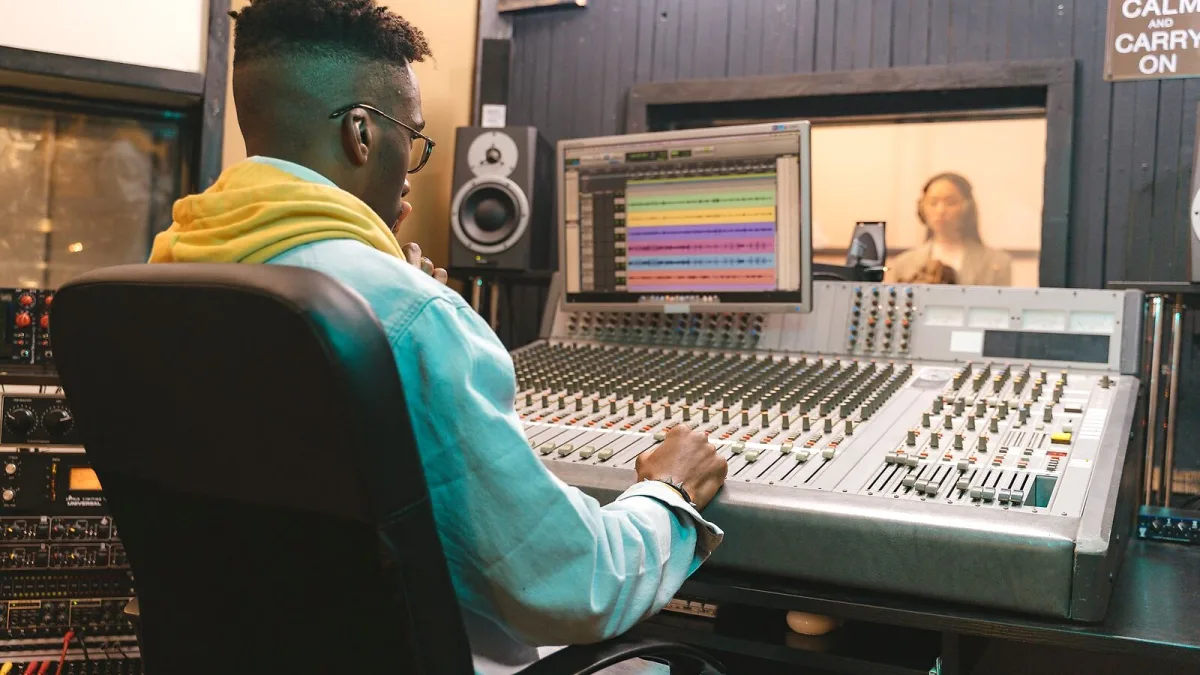
If you've spent any time in a home-studio Facebook group or watched a mixing tutorial in the last decade, you've heard the name Slate Digital come up. It's one of those companies that seems to touch every part of the mixing chain — plug-ins, mics, even a touchscreen control surface. Here's the honest rundown of what the company actually makes, how it got here, and where it's heading.
Who's behind it
The company was founded by audio engineer and entrepreneur Steven Slate, and the whole product line still carries his fingerprints: an obsession with recreating the character of classic analog hardware in software, and making that character genuinely accessible rather than locked behind boutique pricing. That "analog modelling for everyone" idea has run through the company since day one.
The core plug-ins worth knowing
A few products form the backbone of the catalogue:
- Virtual Mix Rack — a modular rack environment where you load modelled preamp, compression, EQ, saturation and bus-processing modules, arranged much like a physical outboard rack.
- Virtual Tape Machines — tape emulation for harmonic saturation, softened transients and that familiar analog rounding, popular on mix buses and individual tracks alike.
- Virtual Buss Compressors — a set of bus-compression models aimed at mix bus, drum bus and stem processing.
- Fresh Air — a simple high-frequency enhancement plug-in, genuinely popular on vocals and drums, though it's easy to overdo (more on that in our guide to common Slate Digital mistakes).
- FG-X 2 — the modernised mastering processor, sitting at the centre of Slate's mastering ecosystem.
Beyond plug-ins: mics and hardware
Its ML-1 and ML-2 systems pair a physical condenser microphone with software that models the response of other well-known microphones — the idea being one physical mic gives you a "locker" of different tonal options. In January 2026, MusicTech reported on the newer ML-2A, aimed specifically at stereo recording. It's a genuinely clever idea, though it's worth remembering that modelling can't fully replace the physical properties — placement, polar pattern and how a mic actually interacts with the room — of the microphone it's imitating.
There's also RAVEN, Slate's touchscreen control surface for hands-on control of your DAW, mixing and plug-in parameters, and ANA 2 Ultra, a synthesizer from Sonic Academy that was the company's first virtual instrument bundled into its subscription.
How the subscription model works
The firm has leaned hard into subscription access rather than one-off purchases. The current Complete Access Bundle is promoted as including more than 150 plug-ins from Slate, Solid State Logic and Harrison Audio, which Slate markets as representing over $15,000 in tools — worth noting that figure is the company's own valuation, not an independently audited one. Activation runs through iLok Cloud, a physical iLok 2/3 dongle, or Machine-ID licensing, with two activations typically included. If you're weighing up whether a subscription actually makes sense for you, our Slate Digital buyer's guide goes through the practical trade-offs in detail.
Recent developments worth knowing about
Two changes stand out from the last couple of years:
- VIRTU (October 2024) — a browser-based assisted-mastering service exclusive to All Access Pass subscribers, offering a handful of free mastering credits each month plus paid credits beyond that. It's an assisted tool, not a replacement for a mastering engineer in every context.
- Virtual Modules (from September 2025) — individual Virtual Mix Rack modules, starting with FG-Stress and the Virtual Console Collection, released as standalone plug-ins rather than requiring the full rack. Slate announced 36 modules on a staggered release schedule.
Compatibility, in brief
Before diving in, it's worth checking a few practical things against your own setup: operating system support, your DAW's compatibility, the plug-in format you need (VST3, AU or AAX), Apple Silicon support if you're on a newer Mac, and whether presets carry over cleanly between the rack format and the newer standalone modules. None of this is a dealbreaker — it's simply worth five minutes of checking before you commit to any subscription tier.
Who it actually suits
The catalogue covers vocal production, drum-bus shaping, mix-bus compression, tape coloration, mastering loudness and electronic-music production, which is why it appeals to home producers and professional engineers alike. If you're completely new to it, our beginner's guide is a gentler starting point, and if you want model-by-model recommendations by budget, see our pick of the best Slate Digital tools for the money.
The bottom line
Slate Digital has grown from a plug-in company into a genuinely broad production ecosystem — mixing, mastering, microphones and hardware control, increasingly wrapped into one subscription. Whether that's good value for you depends entirely on how much of the catalogue you'll actually use, which is exactly the question worth asking before signing up.




Comments