


Trance Music article
A Beginner's Guide to Trance Music
If trance music has ever left you somewhere between dancing and daydreaming, that's the point. Here's what you're actually hearing, explained simply.
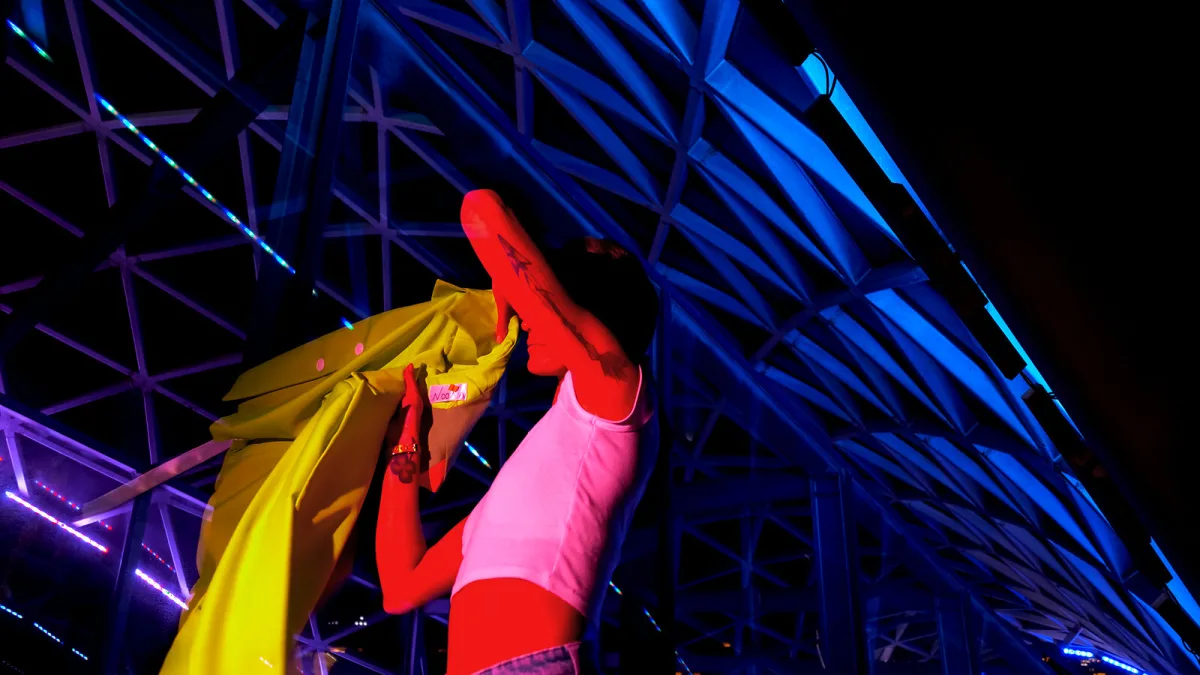
If someone's ever put trance music on and you've found yourself somewhere between dancing and daydreaming, that's not an accident — it's the whole point of the genre. This guide is here to help you understand what you're actually hearing: the steady pulse underneath, the melody that keeps circling back, and that moment where everything drops away before rushing back in. No prior knowledge needed.
What This Genre Actually Is
At its simplest, trance is a style of electronic dance music built on a steady four-on-the-floor beat, a repeating melodic pattern, and long, gradual development rather than sudden changes. It emerged in Europe in the late 1980s and early 1990s, growing out of techno, acid house and the atmospheric side of ambient music.
Three ideas explain most of what you'll hear:
- Rhythm: a consistent kick drum landing on every beat, giving the music its steady pulse.
- Repetition and development: a melody or arpeggio that evolves gradually, layer by layer, rather than jumping straight to the "best bit."
- Release: tension building toward a quiet breakdown, then an emotionally satisfying return of the beat and melody together.
How to Spot It While You're Listening
Whatever the subgenre, a few features of trance music tend to show up again and again:
- A kick drum on every beat, tightly locked to the bassline.
- A repeating melodic pattern, often played on a bright, layered synth sound.
- Gradual layering, with new elements added a little at a time.
- A breakdown — a section where the drums drop out and the atmosphere takes over.
- A climactic return where the full arrangement comes back at once.
- Long intros and outros, originally designed to make life easier for DJs mixing between records.
Not every track ticks every box. Some styles lean harder on melody, others on rhythm and texture, which is exactly why the genre splits into so many different subgenres.
Roughly How Fast Is It?
Tempo varies a fair bit depending on the style, and different sources draw the lines slightly differently, but a workable rough guide looks like this:
| Style | Typical tempo (BPM) |
|---|---|
| Progressive trance | Around 124–134 |
| Classic and vocal trance | Around 128–140 |
| Uplifting trance | Around 136–142 |
| Hard trance | Around 140–150 |
| Psytrance and Goa trance | Around 138–150 |
Treat these as rough neighbourhoods rather than strict rules — plenty of tracks sit right on the boundary between two styles.
A Very Brief History
Trance music took shape in the late 1980s and early 1990s, with Germany (Frankfurt especially) often pointed to as an important early home for the sound. It expanded hugely through the late 1990s and 2000s, when melodic and uplifting variants reached large club, radio and festival audiences worldwide. If that potted version leaves you wanting more, our full history of the genre goes into the story properly.
The Trance Family Tree
"Trance" isn't one single sound — it's a family of related styles, including classic trance, uplifting trance, progressive trance, vocal trance, acid trance, hard trance, tech trance, Goa trance and psytrance. Each has its own tempo, mood and typical sound design. Our guide to trance subgenres breaks down exactly how they differ from one another.
Who to Listen to First
Names that come up constantly once you start exploring the genre include Paul van Dyk, Tiësto, Armin van Buuren and Ferry Corsten from the genre's big commercial wave, alongside artists like Sasha and John Digweed on the more progressive side. Our guide to trance artists worth knowing is a good next stop, and if you'd rather ease in with a proper starter listening plan, our guide for newcomers lays one out step by step.
A Few Words You'll Hear a Lot
A handful of terms come up constantly once you start reading about trance music, and knowing them makes everything click faster:
- Breakdown: the section where the beat drops out and the atmosphere takes over.
- Build (or riser): the section that rebuilds tension before the main section returns.
- Arpeggio: a repeating melodic pattern, often played in fast, even notes.
- Supersaw: a wide, layered synth sound made from several detuned sawtooth waves, common in uplifting trance.
- DJ mix: a continuous set blending several tracks together, historically one of the main ways people first heard this music.
The Bottom Line
Trance music rewards a bit of patience — it's built to unfold rather than hit you all at once. Once you can hear the kick, the building layers, the breakdown and the climax as separate, deliberate moves, an entire genre that might have sounded repetitive suddenly makes a lot more sense.



Comments