


Synthwave article
The History of Synthwave
French bedrooms, a Sega arcade cabinet and one very stylish thriller: here is the real story of how synthwave came together.
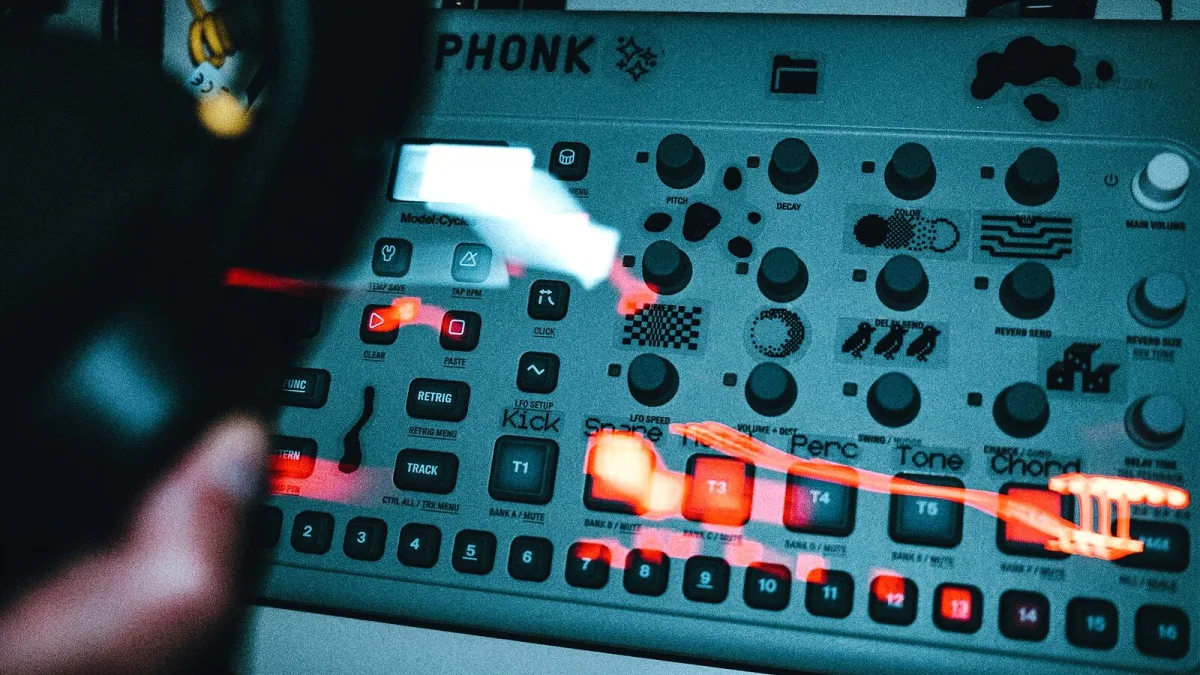
Every great sound has an origin story, and the one behind synthwave is a proper patchwork — French bedroom producers, half-remembered film scores, a Sega arcade cabinet, and one very stylish thriller that changed everything. Here's how it actually came together, told roughly in order.
The Ghosts in the Machine: What Came Before
Long before anyone used the word, the ingredients were already floating around. Vangelis's score for Blade Runner taught a generation what a synthesizer could do to a mood. John Carpenter, scoring his own low-budget horror and action films, built entire atmospheres from a handful of arpeggiated notes because that's all his budgets would stretch to. Tangerine Dream added sweeping, sequenced motion, while Italo disco and new wave supplied the pulse, the melodrama and the sheer pop instinct that would eventually give this sound its hooks.
The Bedroom Scene: Mid-to-Late 2000s
Synthwave itself didn't arrive with a manifesto. It grew, largely unnoticed by the mainstream, out of French electronic music circles and internet forums in the mid-to-late 2000s. David Grellier, recording as College, was closely tied to the Valerie collective, a loose network that gave the earliest wave of artists a shared identity before anyone outside it had heard of them. Kavinsky was building his own mythology around fast cars and neon nights, with early releases like his 2006 1986 EP and the track "Testarossa Autodrive" laying down a template that still gets copied today.
Borrowing a Name from an Arcade Cabinet
One of the genre's defining strands, outrun, took its name and much of its imagery from Out Run, Sega's 1986 arcade racer — sunset horizons, a Ferrari-style car, a soundtrack you could switch mid-drive. It's a lovely detail: an entire musical aesthetic borrowing its name and its colour palette from a coin-op cabinet most of its later fans never actually played.
The Night Drive Changed Synthwave
Every scene needs a breakthrough moment, and this one arrived in 2011 with Nicolas Winding Refn's film Drive. Kavinsky's "Nightcall" — co-produced with Daft Punk's Guy-Manuel de Homem-Christo and featuring Lovefoxxx — opened the film over a shot of neon-lit Los Angeles streets, and College and Electric Youth's "A Real Hero" landed later in the soundtrack. Neither song was written for the film, and synthwave had been quietly building for years beforehand, but Drive handed it a cinematic shop window that a decade of internet releases never could have managed alone.
Splitting Into Branches: The 2010s
Success brought diversity. Where the early sound had leaned cinematic and mostly instrumental, the 2010s saw it fork in several directions at once:
- Darksynth emerged through artists like Perturbator and Carpenter Brut, trading nostalgia for distortion, horror imagery and a genuinely aggressive edge.
- Dreamwave softened everything back down, favouring warmer pads and a more romantic, wistful mood.
- Vocal-led, song-focused work arrived through acts such as The Midnight, who folded in saxophone and pop songwriting rather than staying purely instrumental.
- Outrun's North American wing grew through artists like Lazerhawk and Miami Nights 1984, helped along by labels including Rosso Corsa Records.
By the middle of the decade, video games had become another major showcase, with Perturbator's contributions to Hotline Miami introducing the sound to an entirely different audience than Drive ever reached.
A Recognised Sound in the 2020s
These days, synthwave is thoroughly normalised — a recognisable ingredient in film, television, advertising and streaming playlists, sometimes worn loosely as a general "retro-futurist" aesthetic rather than a strict musical rulebook. The community that built it, though, is still very much active: independent labels, Bandcamp releases and a loyal, internet-native audience keep the genre developing rather than simply repeating its own greatest hits.
For a closer look at who actually built this history, our guide to the essential artists puts names and context to everything above, and our subgenre explainer unpacks outrun, dreamwave and darksynth in far more depth. If you'd rather start with the wider picture, our beginner's guide is the natural place to begin.



Comments