


Punk Rock article
A Beginner's Guide to Punk Rock
Punk rock explained without the jargon — what it is, where it came from, and what to listen for first.

Punk rock has a reputation for being loud, messy and a bit frightening from the outside — three chords, shouted vocals, and an attitude problem. Get past that reputation, though, and you find one of the most genuinely welcoming scenes in music: built by people with no money, no formal training and no patience for anyone telling them they couldn't do it. This is the plain-English version of what it actually is, where it came from, and what to listen for once you press play.
What Is Punk Rock?
At its simplest, punk rock is a stripped-back, high-energy style of rock music: short songs, simple chords, fast tempos and vocals that sound like they mean it. But it was never just a sound — it was also a set of values. Chief among them is DIY (do-it-yourself): the idea that you don't need a record deal, a rehearsal studio or years of lessons to start a band, book a gig, or press your own record. If you had an opinion and three chords, you were qualified.
Where It Came From, Briefly
It didn't appear out of nowhere. It grew out of raw 1960s garage rock, the noisy proto-punk of Detroit bands like the Stooges and MC5, and the glam and pub-rock scenes that came before it. The sound properly coalesced in the mid-1970s, first around New York's CBGB — a cramped Bowery club where the Ramones, Patti Smith and Television all cut their teeth — and then in London, where the Sex Pistols and the Clash turned it into a full-blown cultural story. Our history of punk rock covers that story properly, year by year; this piece is the short version for anyone who just wants the shape of it.
What It Actually Sounds Like
Strip away the differences between bands and a few habits show up again and again:
- Short songs — two or three minutes was normal, with no time wasted on long intros or extended solos.
- Power chords — a simple two-note guitar shape (just the root and the fifth) that sounds huge through distortion and is genuinely easy to learn.
- Fast, driving drums — a steady beat played at speed, built to push the song forward rather than show off.
- Direct vocals — shouted, sneered or barked more often than sung sweetly, with lyrics that got to the point fast.
None of that was a rulebook. Some bands, like Television, used the same raw energy to play long, intricate guitar lines; others, like the Ramones, made a career out of doing the opposite for twenty years. Attitude mattered more than any technical checklist.
The DIY Spirit
Punk rock's real innovation might not have been musical at all. Bands recorded on tiny budgets, pressed their own singles on independent labels, printed their own fanzines, and booked their own tours through a network of small clubs and sympathetic promoters. A famous fanzine diagram from the era put it bluntly: draw three chords, then "now form a band". That self-made infrastructure is why the sound could spread so fast on so little money, and it's a big part of why the scene still feels alive today — anyone can still start.
What You Actually Need to Play It
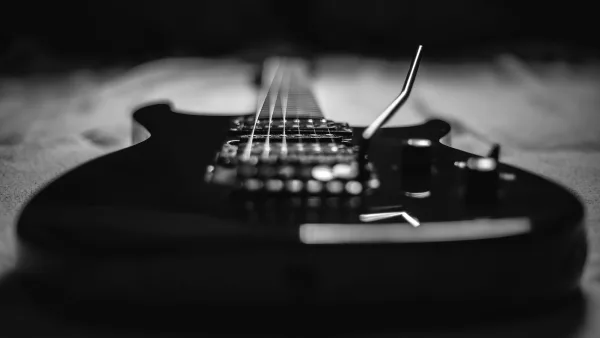
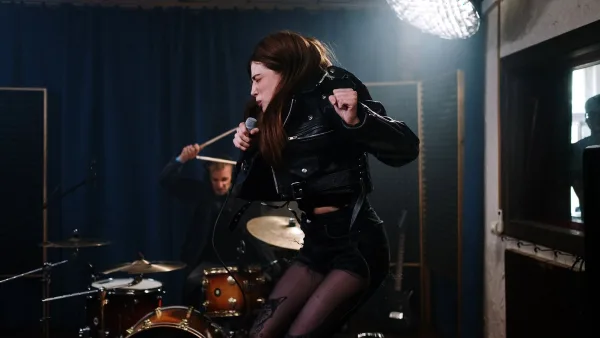
Part of the appeal is how little kit is involved. A typical line-up is nothing more exotic than electric guitar, electric bass, a drum kit and a vocalist — no orchestras, no synthesiser rigs, no years of theory required. On guitar, most of the work comes from power chords and steady downstrokes rather than anything technically demanding, and a small amp with a simple overdrive is genuinely enough to get the tone right. Bass tends to lock tightly with the kick drum rather than just doubling the guitar, and the drumming leans on a fast, driving backbeat — a steady snare hit on beats two and four — with short, purposeful fills rather than showy solos. None of it requires expensive gear, which is rather the point.
Punk Rock's Many Branches
Punk rock didn't stay one thing for long. Within a few years it had split into faster, heavier hardcore punk, the more experimental post-punk, politically driven anarcho-punk, and eventually the radio-friendly pop-punk that carried the sound into the 1990s and 2000s. Our guide to punk rock's subgenres breaks down exactly how those branches differ and which bands defined each one.
Names Worth Knowing
Certain names will keep coming up as you dig further in: the Ramones and Patti Smith from New York; the Sex Pistols, the Clash, the Damned and the Buzzcocks from Britain; Black Flag, Bad Brains and Dead Kennedys from the American hardcore scene; and Green Day, who dragged the sound into the mainstream in the 1990s. You don't need to memorise all of it on day one — most fans build this picture gradually, one record at a time, rather than reading a family tree first. Our guide to the best punk rock artists goes through all of them properly, and our essential albums guide tells you exactly which records to hear first.
Where This Leaves You
That's the shape of punk rock: fast, direct, deliberately unpolished, and built on the belief that anyone could pick up an instrument and say something that mattered. Understanding what it is and where it came from is one thing; actually knowing what to press play on is another job entirely. For that, our step-by-step listening path for newcomers tells you exactly what to hear first, second and third — and our guide to the essential songs is there if you'd rather start with individual tracks.




Comments