


Soundtrack article
Soundtrack Subgenres, Explained
"Soundtrack" isn't one thing. Here's what actually separates orchestral, electronic, hybrid, song-driven, game and musical scoring — no waffle.
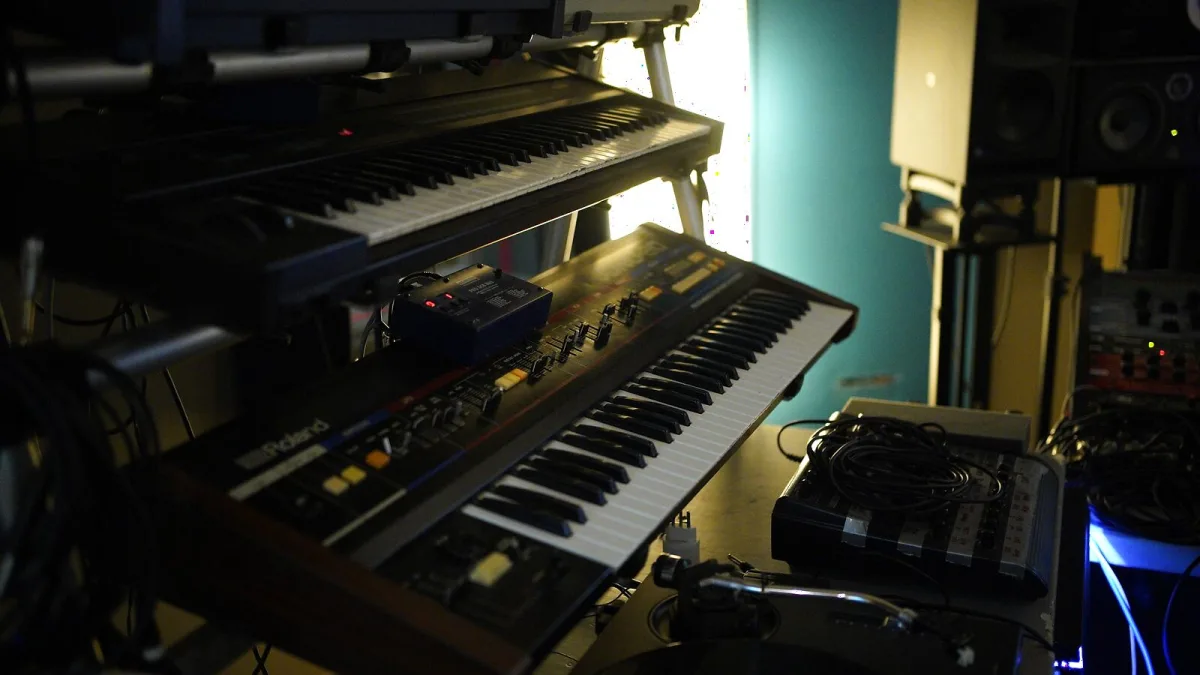
People talk about “soundtrack music” like it's one thing, and it really isn't. Underneath that single word sit several genuinely different ways of making music for the screen, each with its own tools and its own rules. No waffle here — here's what actually separates them, so you can say what you like without just calling all of it “film music” and leaving it there.
Orchestral Score
This is the sound most people picture first: strings, brass, woodwind and percussion, performed by a real or sampled orchestra and written to follow a scene's emotional shape beat by beat. It's the direct descendant of Hollywood's Golden Age studio composers, carrying real classical-composition technique — harmony, orchestration, thematic development — straight into the cinema. John Williams's work is the obvious reference point, but the tradition runs right back to composers like Max Steiner and Erich Wolfgang Korngold in the 1930s.
Electronic and Synth Score
Swap the orchestra for synthesisers and you get a completely different texture, but the same underlying job. Vangelis proved this approach could win an Academy Award with Chariots of Fire, and directors like John Carpenter built entire horror soundtracks on minimal electronic gear, often out of budget necessity as much as taste. A synth score tends to feel colder and more atmospheric than an orchestral one — useful for tension, alienation or anything set in the future.
Hybrid Orchestral-Electronic Score
Most big-budget soundtrack work today doesn't pick a side between the two above — it blends them. Hans Zimmer more or less built a career on this hybrid style, layering electronic textures and processed sound design underneath a real orchestra on films like Inception and Dune. It's arguably the dominant subgenre in modern film music, precisely because it can move between intimate and enormous without changing tools.
Song-Driven or Compiled Soundtrack
Rather than original composition, this subgenre is built from existing songs, licensed and sequenced to do a job a score can't: place you precisely in a time, a place or a character's head. Trainspotting and Pulp Fiction both lean on this approach, and Guardians of the Galaxy turned it into a genuine storytelling device by making the mixtape part of the plot itself. This is a music supervisor's territory more than a composer's.
Video Game Soundtrack
Game music has to solve a problem film music never faces: a player, not a director, controls the pacing. Composers such as Nobuo Uematsu, known for the Final Fantasy series, and Koji Kondo, whose themes for Super Mario Bros. and The Legend of Zelda are instantly recognisable, write music built to loop, layer and adapt in real time rather than follow a fixed sequence of images. It's a genuinely distinct discipline, not simply film scoring with a joypad attached.
Film Musical Soundtrack
A separate subgenre again: music adapted from, or written in the style of, stage musical theatre, built around full songs performed by the cast rather than underscore. The Sound of Music and West Side Story both sit here, carrying a Broadway-honed songwriting tradition straight onto the screen.
Television and Streaming Score
Long-form television has its own version of this job, and it's not simply a shorter film score. A composer writing for a returning series has to build themes flexible enough to survive dozens of episodes and multiple seasons, often working to tighter turnaround times than a single film ever demands. Streaming has only increased the volume of this work, without really changing the underlying craft.
| Subgenre | Core tool | Best suited to |
|---|---|---|
| Orchestral score | Live or sampled orchestra | Epic, emotional storytelling |
| Electronic/synth score | Synthesisers | Tension, atmosphere, futurism |
| Hybrid score | Orchestra plus electronics | Modern blockbusters |
| Song-driven soundtrack | Licensed or curated songs | Time, place and character |
| Video game soundtrack | Adaptive, looping composition | Interactive pacing |
| Film musical | Full performed songs | Stage-to-screen storytelling |
| TV/streaming score | Recurring themes | Long-running series |
None of these categories are hard walls — a single soundtrack can move between two or three of them inside one film, and that's exactly what makes today's scores so hard to pin down with one word. If you want to hear how these subgenres actually developed one after another, our history of soundtrack music lays the whole sequence out properly.
The Bottom Line
“Soundtrack” was always too broad a word to do justice to what's actually going on underneath it — orchestral, electronic, hybrid, song-driven, game-adaptive and musical-theatre approaches are all doing genuinely different jobs, even when they end up filed under the same shelf label. Work out which of these six pulls you in hardest, and our guide to the best soundtrack artists to know will point you towards the right names to follow next.



Comments