


Soundtrack article
A Beginner's Guide to Soundtrack
Score, source music, underscore — the words can sound technical, but the ideas behind them are simple once someone walks you through them slowly.
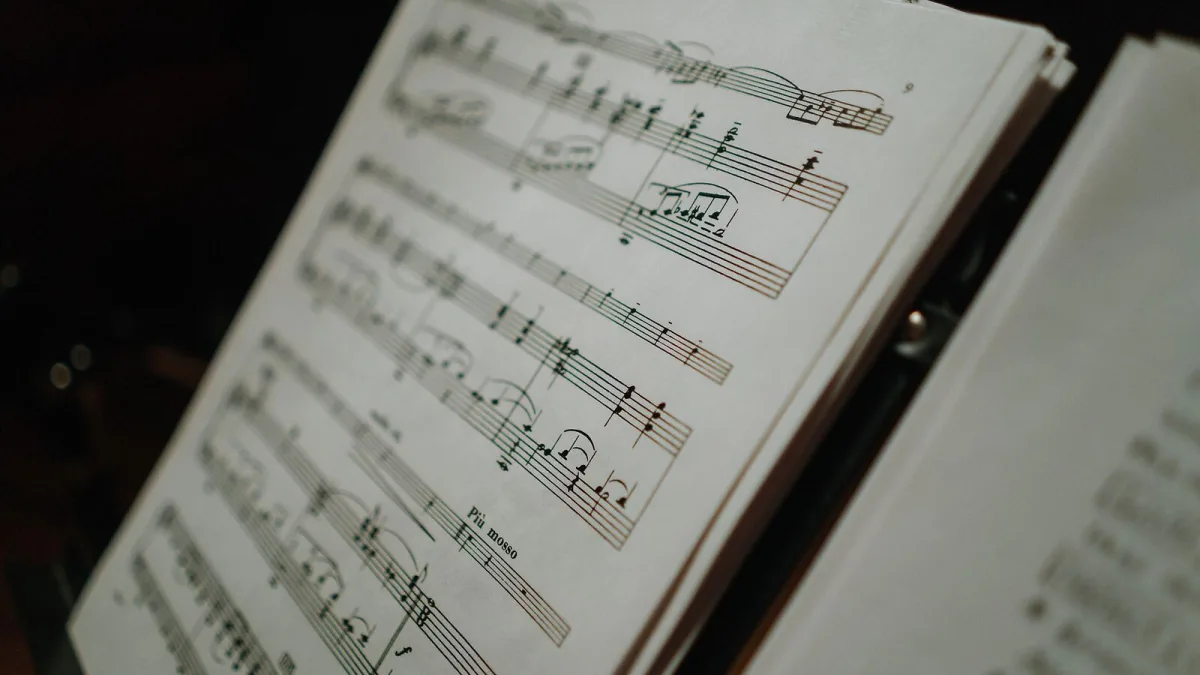
If a friend has ever asked you to recommend a good soundtrack and you've gone slightly blank, you're not alone — it's a word that gets used loosely, and that vagueness is exactly what trips beginners up. Let's slow down and take it step by step: what the word actually covers, how one gets made, and how to start listening to it properly rather than letting it wash past you as “just the music in the background.”
What “Soundtrack” Actually Means
In everyday conversation, a soundtrack is simply the music attached to a film, television programme or game. Used precisely, though, the term covers several related but distinct things, and knowing them will save you a lot of confusion later on:
- Score — original music written specifically for the production, shaped around its characters and story.
- Source music — music that exists inside the story world itself, such as a song playing on a car radio or a band performing on screen.
- Underscore — music placed quietly beneath dialogue or action, supporting a scene without demanding attention.
- Soundtrack album — the commercially released record, which may contain the score, the songs used on screen, or a mixture of both.
Get comfortable with those four words and half the confusion around this genre disappears immediately.
Score or Songs? The Two Basic Approaches
Almost every soundtrack leans towards one of two broad approaches, and it's the first thing worth learning to hear.
| Approach | What it sounds like | What it's doing |
|---|---|---|
| Original score | Purpose-written instrumental music, often orchestral or electronic | Follows the emotional shape of individual scenes |
| Song-based compilation | A curated run of existing or newly recorded songs | Sets a time, place, mood or character through familiar recordings |
Plenty of productions do both at once — an orchestral score for the dramatic scenes, licensed songs over a montage or party sequence. Once you start listening for which one you're hearing, a soundtrack stops feeling like undifferentiated noise and starts sounding like a set of deliberate choices.
Who Actually Makes One
A soundtrack is rarely one person's work. A composer writes the original material, but they're usually responding closely to a director's intentions, while a music supervisor handles the separate job of selecting and licensing any pre-existing songs. Behind the composer sit an orchestrator, who expands sketches into full arrangements, and a music editor, who keeps everything precisely synchronised to picture. It's a genuinely collaborative craft, closer to architecture than to songwriting alone.
A Very Short History Lesson
You don't need the full timeline to enjoy this genre, but a little context helps. Purpose-written film music goes back further than most people assume — composer Camille Saint-Saëns wrote a score for the 1908 French film L'Assassinat du Duc de Guise, years before synchronised sound existed. Once Hollywood's studio orchestras took over in the 1930s, the lush, sweeping style we now think of as “classic” film music was born, and it has been reshaped by every decade since — through song-driven soundtracks, synthesiser scores and today's hybrid productions. If that period genuinely interests you, our full history piece walks through it properly, decade by decade.
Why You Can't Just Use Any Song You Like
This trips up a lot of newcomers who try composing their own: streaming or buying a song does not give you permission to put it in a film. Several separate rights sit behind almost every recording — the composition itself, the specific recording of it, and a synchronisation licence covering its use alongside picture. That's precisely why a music supervisor's job exists: clearing songs properly is a genuinely technical, contract-heavy task, not a quick download.
It also explains why a soundtrack album sometimes differs slightly from what you heard in the cinema. Rights, running time and editorial choices can all change between the final cut and the commercial release, so don't be surprised if a favourite cue turns up in a slightly different version, or not at all, on the album.
How to Start Listening Properly
A few habits make a real difference once you're ready to explore further:
- Watch the scene the music was written for at least once — a cue almost always makes more sense with its picture than without it.
- Notice the silences. A composer choosing not to write music under a scene is just as deliberate as choosing to.
- Listen for a repeated musical idea, or motif, tied to a character or place — spotting it return, changed, is one of the genre's small pleasures.
- Try one score-based example and one song-based one back to back, so the difference actually lands.
If you'd rather follow a ready-made path than work this out alone, our companion piece on where to start sets out exactly that route, and our breakdown of the different subgenres is useful once you know which style you actually prefer.
The Bottom Line
A soundtrack is simply what supports a story through sound, but it repays close attention: notice whether you're hearing a score or a song, watch for the moments music deliberately stays silent, and don't be afraid to follow one composer or one film's music all the way through before moving on. Once those basics are second nature, our guides to the best artists to know and essential albums are the natural next step.





Comments