


Glitch article
The History of Glitch
From a Japanese sound artist's damaged CDs to a German label's compilation series — the real, contested, occasionally accidental story of how glitch got its name.
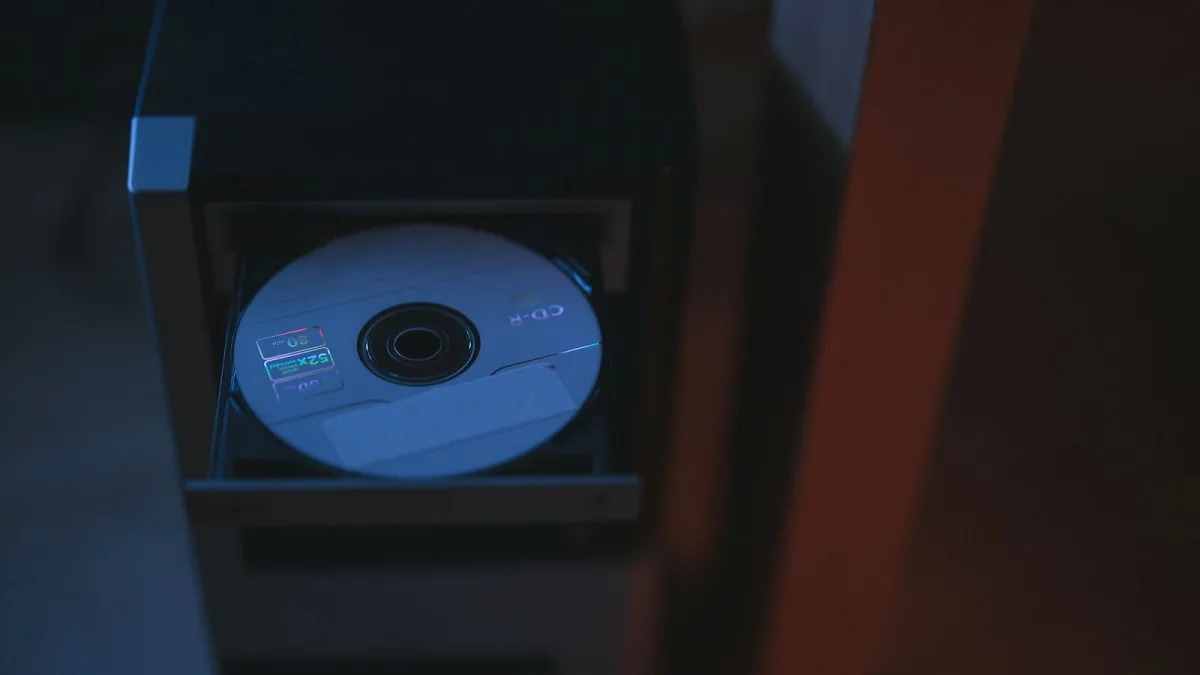
Every genre likes to pretend it arrived fully formed, but glitch has one of the messier, more interesting origin stories in electronic music — part Japanese sound art, part accident, part a German label with an eye for a good compilation title. Here's how a decades-long habit of treating digital errors as material became one of the most distinctive sounds to come out of the 1990s underground.
Before it had a name: damaged CDs and tape errors
Long before anyone typed the word into a press release, composers were already manipulating tape splices and playback errors as a deliberate technique. The most important early figure, though, worked with a newer format entirely. Japanese sound artist Yasunao Tone began experimenting with modified and damaged compact discs soon after the CD itself arrived in the early 1980s, treating unstable, skipping playback as a performance tool rather than a fault to be fixed. It's a strange thing to consider now, given how thoroughly we associate CDs with clean, “perfect” sound — Tone got there first by doing precisely the opposite.
1993–94: Oval and the first proper releases
The scene most people now point to as the genre's true beginning belongs to the German project Oval, led by Markus Popp. Their 1993 record Wohnton is sometimes described as the first true release in this style, built from damaged and interrupted CD playback turned into musical structure. It's a contested claim — historians differ on exactly which record deserves the “first” tag — but 1994's Systemisch is the one more commonly treated as the genre's landmark statement, and the project followed it with 94diskont soon after.
The same year, 1994, gave the sound its name almost by accident. Warp Records duo Autechre released the album Amber, which included a track simply titled “Glitch.” It's frequently cited as one of the earliest uses of the word in an electronic-music context — though, tellingly, the track itself is fairly restrained compared with what the term came to describe.
The IDM connection
None of this happened in isolation. Autechre were part of a wider circle now filed under IDM (intelligent dance music), where algorithmic composition, unconventional rhythm and computer-based production were already the norm. That shared toolkit — sequencers, samplers and a willingness to break the usual rules of dance music — gave the emerging sound a ready-made audience of listeners who already valued strangeness over polish.
Mille Plateaux and the Clicks & Cuts era
If Oval and Autechre supplied the raw material, the German label Mille Plateaux gave it an institutional home. Its Clicks & Cuts compilation series, beginning in 2000, gathered a scattered international movement of like-minded producers under one banner and effectively codified the style for a wider audience. Ryoji Ikeda, Alva Noto and Pole all moved in overlapping circles during this period, each bringing a slightly different emphasis — Ikeda's mathematical precision, Alva Noto's fusion of sound and visual art, Pole's dub-inflected crackle.
| Period | What happened |
|---|---|
| Early 1980s | Yasunao Tone begins manipulating damaged CDs |
| 1993–94 | Oval's Wohnton and Systemisch; Autechre's “Glitch” on Amber |
| Mid-1990s | Alva Noto's early releases; Pole's degraded dub textures emerge |
| 2000 onwards | Mille Plateaux's Clicks & Cuts series consolidates the scene |
| 2001–05 | Fennesz's Endless Summer and Ryoji Ikeda's Dataplex broaden the palette |
| 2000s onward | Physical CD manipulation gives way to software emulation |
A word that means several different things
Part of what makes this history slippery is that the word “glitch” itself never settled down. Ask five people what it covers and you'll likely get five different, defensible answers. It can mean the specific 1990s genre described here, a general glitch effect used across all sorts of electronic music, a broader “post-digital” aesthetic in art and design, or one of the newer glitch-influenced song styles that came later. None of those uses is wrong exactly — they're just different scales of the same idea, which is why an honest history of glitch has to admit where its edges blur rather than pretend the term is tidier than it is.
From damaged discs to software
The technique changed more than the aesthetic. Where the first wave of glitch artists depended on physically scratching discs, overloading equipment or exploiting sampler errors, producers through the 2000s increasingly reproduced the same effects in software: audio slicing, buffer manipulation, granular synthesis and bit reduction. The failure became reproducible and controllable, but the underlying idea — foreground the error, don't hide it — never changed.
Where its influence lives now
Nothing this useful stays contained. The vocabulary — stutters, digital clipping, abrupt edits — has since spread into glitch hop, ambient, experimental hip-hop and, more recently, hyperpop and glitchcore, where the same techniques get folded into far more song-oriented structures. Our piece on glitch subgenres, explained maps out exactly how those newer strands relate to the original 1990s sound. It's less a single unified movement today than a set of techniques quietly at work inside other genres' songs.
The bottom line
What began as a Japanese sound artist's fascination with a broken CD, and a German duo's arch choice of song title, grew into the genuine compositional language we now call glitch — one that a whole generation of producers picked up and ran with. If you want to hear the story rather than just read it, our rundown of essential albums and our guide to the best artists to know are the natural next stops.




Comments