


Glitch roundup
The Best Glitch Artists to Know
No padding, no filler names. Here's the honest rundown of who actually built glitch, from the pioneer nobody credits enough to the ones still pushing it forward.
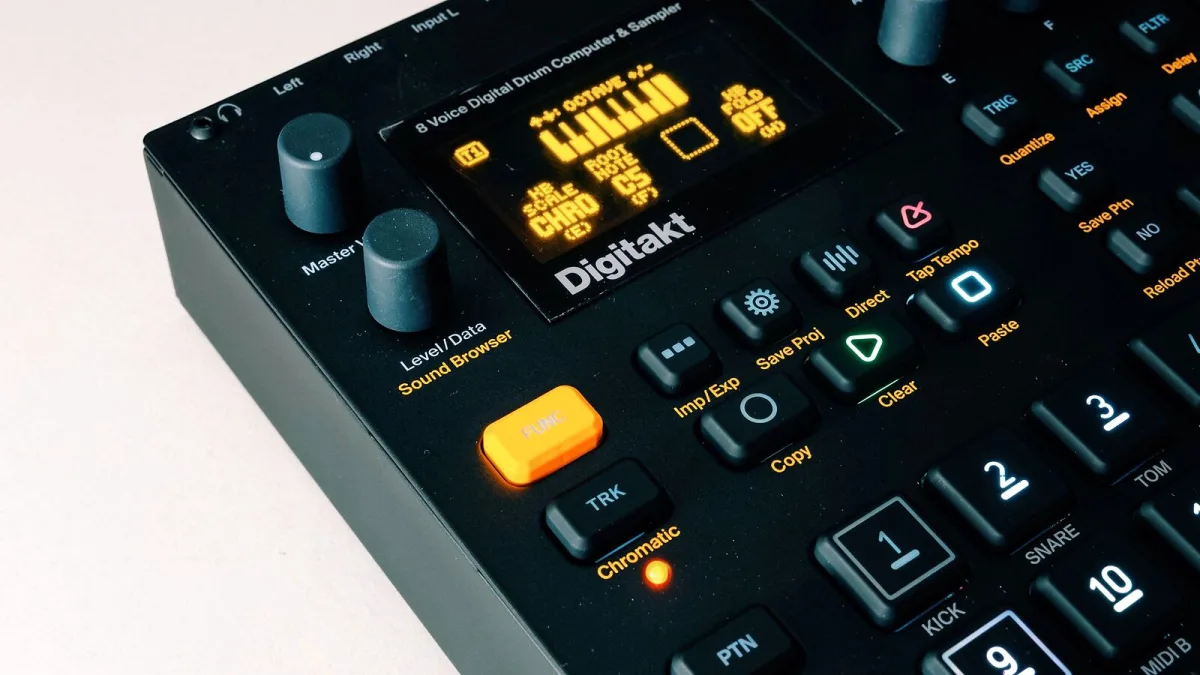
I come from a scene built on loud guitars and straight talking, so when I first sat with glitch I expected to feel completely out of place. I didn't. Underneath the clicks and stutters there's the same thing that makes any good band worth hearing — people with a clear idea, committing to it fully. Here's the honest rundown of who actually built this genre, no padding, no filler names to hit a round number.
The one who got there before anyone had a name for it
Yasunao Tone is the name serious heads bring up first, and they're right to. This Japanese sound artist started manipulating modified and damaged compact discs soon after the format itself launched in the early 1980s, treating unstable playback as a genuine performance tool rather than a fault. Everyone else on this list came after him, whether they knew it or not.
The project that made it a genre
Oval, essentially the work of Markus Popp, is where the story properly starts. Their 1993 record Wohnton is sometimes called the first true release of the style, and while that claim gets argued over, nobody disputes that 1994's Systemisch is a landmark. Oval's method — building tracks out of damaged, interrupted CD playback — is about as pure a statement of what glitch is trying to do as you'll find. If you want the full list of records worth your time, our guide to essential glitch albums covers Oval's run in proper detail.
The duo who accidentally named it
Autechre don't need an introduction from me if you know your Warp Records history, but here's the relevant bit: their 1994 album Amber included a track called, simply, “Glitch.” It's one of the earliest uses of the word in electronic music, even though the track itself is fairly tame by later standards. What matters more is the group's whole approach — algorithmic, rhythmically unconventional, built for headphones rather than dancefloors — which gave the wider movement a serious chunk of its DNA. Our history of glitch goes into exactly how that IDM connection worked.
The precision crowd
A handful of artists took the idea somewhere colder and more exact. Ryoji Ikeda builds mathematically organised, data-derived sound — his 2005 record Dataplex is a good reference point for how far the aesthetic can go towards pure structure. Alva Noto, the alias of Carsten Nicolai, works in a similar territory of precise clicks, pulses and digital tones, and his early Noto recordings from the mid-1990s are a proper starting point for anyone curious. Both artists treat the digital error less as noise and more as material to be organised with real rigour.
The textural end
Not everyone here is chasing precision. Fennesz, the Austrian artist Christian Fennesz, fractures guitar recordings and buries them under digital distortion to make something closer to ambient than dance music — his 2001 album Endless Summer is widely treated as a landmark and remains the easiest on-ramp for a newcomer. Pole, the project of Stefan Betke, sits somewhere near dub, wrapping degraded, crackling textures around a heavier low end.
The ones who kept it moving
A few more names carry real weight. Taylor Deupree is a key figure in the closely related world of microsound, working in the same orbit as the Mille Plateaux label. Kid606 pushed things towards a rougher, more aggressive edge, fragmenting rhythm with far less patience than the ambient camp. Between them, this group covers the genre's full range — from Tone's earliest experiments to the more song-adjacent territory the sound has since spread into, which our piece on glitch subgenres, explained maps out properly.
The collaboration worth knowing too
One more pairing deserves a mention, because it shows how far this vocabulary can travel: Alva Noto's collaborations with the pianist Ryuichi Sakamoto set precise, glitch-derived clicks and pulses against sparse, unhurried piano. It's proof this isn't a genre that only works loud or dense — the same glitch techniques hold up perfectly well in something quiet, patient and genuinely moving.
Where each name actually fits
| Artist | What they're known for |
|---|---|
| Yasunao Tone | Manipulated-CD pioneer, pre-dates the genre's name |
| Oval (Markus Popp) | Foundational damaged-playback compositions |
| Autechre | Named the sound almost by accident; IDM crossover |
| Ryoji Ikeda | Mathematical, data-driven precision |
| Alva Noto (Carsten Nicolai) | Precise clicks and pulses; sound-and-visual-art crossover |
| Fennesz | Fractured guitar, ambient-leaning entry point |
| Pole (Stefan Betke) | Dub-influenced crackle and low end |
| Taylor Deupree | Microsound crossover figure |
| Kid606 | Rougher, more aggressive fragmentation |
The bottom line
None of these names got there by accident. Whether they're chasing mathematical precision, dub warmth or straight-up noise, every glitch artist here treated a digital fault as raw material worth building something out of — and that's a harder, more deliberate act than it sounds. If you're new to all this, don't start with the coldest end of the list. Our newcomer's listening path tells you exactly which order to work through them in.



Comments