


Ebm article
Ebm Subgenres, Explained
Nicola cuts through the confusion around EBM's family of subgenres, no waffle, with a quick-reference table for when the labels get too blurry.
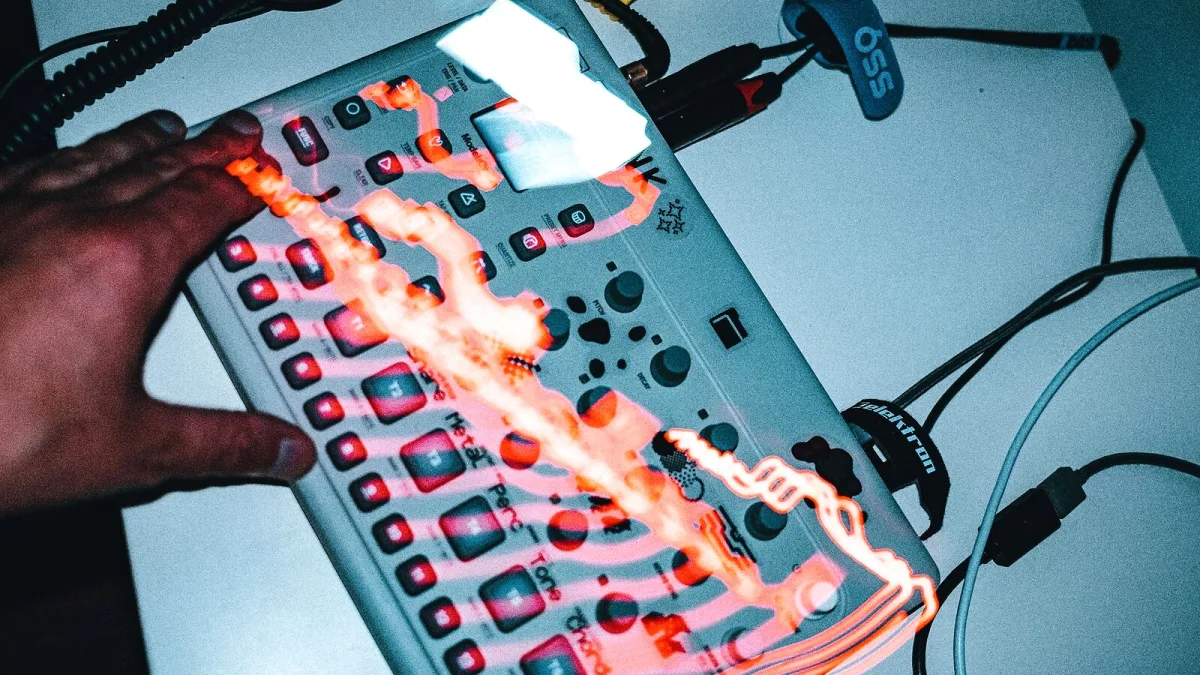
Right, let's cut through the confusion. EBM has spawned a pile of subgenre labels over the decades, and half the fun (or the headache, depending on your patience) is that nobody entirely agrees where one ends and the next begins. Here's the honest breakdown, no waffle, so you can actually tell your dark electro from your futurepop next time it comes up.
Old-School EBM
This is the original template, and it's worth naming properly before we get to the branches. Rigid drum-machine rhythm, a repeating sequenced bassline, shouted vocals, sparse arrangements. DAF, Front 242 and Nitzer Ebb all fall squarely into this camp. If someone says "classic EBM," this is what they mean.
Electro-Industrial
Take the old-school template and pile on more layers, more samples, more studio atmosphere. That's electro-industrial in a nutshell. It's generally darker and more textured than classic EBM, built more in the studio than for a stripped-down live set. Front Line Assembly and Skinny Puppy are the names most associated with pushing things in this direction.
Dark Electro and Aggrotech
These two get lumped together a lot, and honestly the boundary between them is genuinely blurry. Dark electro leans into heavier distortion and horror-adjacent imagery. Aggrotech, sometimes called harsh EBM, pushes the vocals and beats to an even more extreme, distorted, club-pounding place. Acts like Combichrist and Hocico get filed here regularly, though even that classification isn't universally agreed. If a track sounds like it's actively trying to hurt your speakers, you're probably in this territory.
Futurepop
The gentlest branch on this tree, and the one I'd genuinely recommend if the harsher stuff feels like too much on a first listen. Futurepop keeps the sequenced, rhythmic backbone of EBM but bolts on brighter synth-pop melody and trance-influenced production. VNV Nation and Covenant are the two names that come up constantly here. It's still recognisably descended from the same source, just with the edges sanded down considerably.
New Beat
A specifically Belgian development, and slightly the odd one out on this list because it's arguably as much its own dance-music movement as an EBM offshoot. New beat slows things down, gets heavier in the low end, and pulls in influences from acid house and Hi-NRG. It grew up alongside EBM in the same Belgian club scene rather than strictly branching off it, which is exactly the kind of messy genre history that makes clean family trees impossible.
Where the Labels Blur Together in Practice
Here's the bit nobody likes to admit: plenty of bands drift between two or three of these boxes across a single career, sometimes across a single album. An act might start out squarely old-school, get denser and more layered a few years in, and end up closer to futurepop by the time they're on their fourth record. Record shops, streaming platforms and fan forums all tag things slightly differently, and none of them are wrong exactly — they're just applying the same fuzzy vocabulary from a different angle. Don't let that inconsistency put you off. It's genuinely normal, and it happens across most genres that have been around this long.
The Quick-Reference Table
| Subgenre | What Sets It Apart | Names to Know |
|---|---|---|
| Old-school (classic) | Minimal, sparse, rigid rhythm | DAF, Front 242, Nitzer Ebb |
| Electro-industrial | Denser, more layered, atmospheric | Front Line Assembly, Skinny Puppy |
| Dark electro / aggrotech | Harsher, more distorted, extreme | Combichrist, Hocico |
| Futurepop | Brighter melody, trance influence | VNV Nation, Covenant |
| New beat | Slower, heavier, acid house/Hi-NRG influence | Belgian club scene, late 1980s |
Why None of This Is Set in Stone
I'll be straight with you: there's no governing body handing out these labels, and plenty of artists and fans classify the same record differently depending on who you ask. Tempo alone won't reliably sort one subgenre from another either — there's no universally agreed BPM range that separates EBM from its offshoots. Treat these categories as useful shorthand rather than strict scientific fact, and you won't get caught out arguing about it in a group chat.
If you're still getting your bearings with the core genre before worrying about its branches, our beginner's guide to EBM is the place to start, and our history of the genre explains exactly how these branches split off from the original sound in the first place.
The Bottom Line
Old-school EBM is the trunk; electro-industrial, dark electro, aggrotech, futurepop and new beat are the branches, and they all grew out of the same root system in slightly different directions. Learn the trunk first, then explore the branches at your own pace — and don't stress too hard about the exact boundaries, because even the people making this music can't fully agree on them.






Comments