


Darkwave article
A Beginner's Guide to Darkwave
Darkwave is music built on post-punk foundations, synthesiser textures, and an interior kind of darkness. Here is everything a new listener needs to understand it.
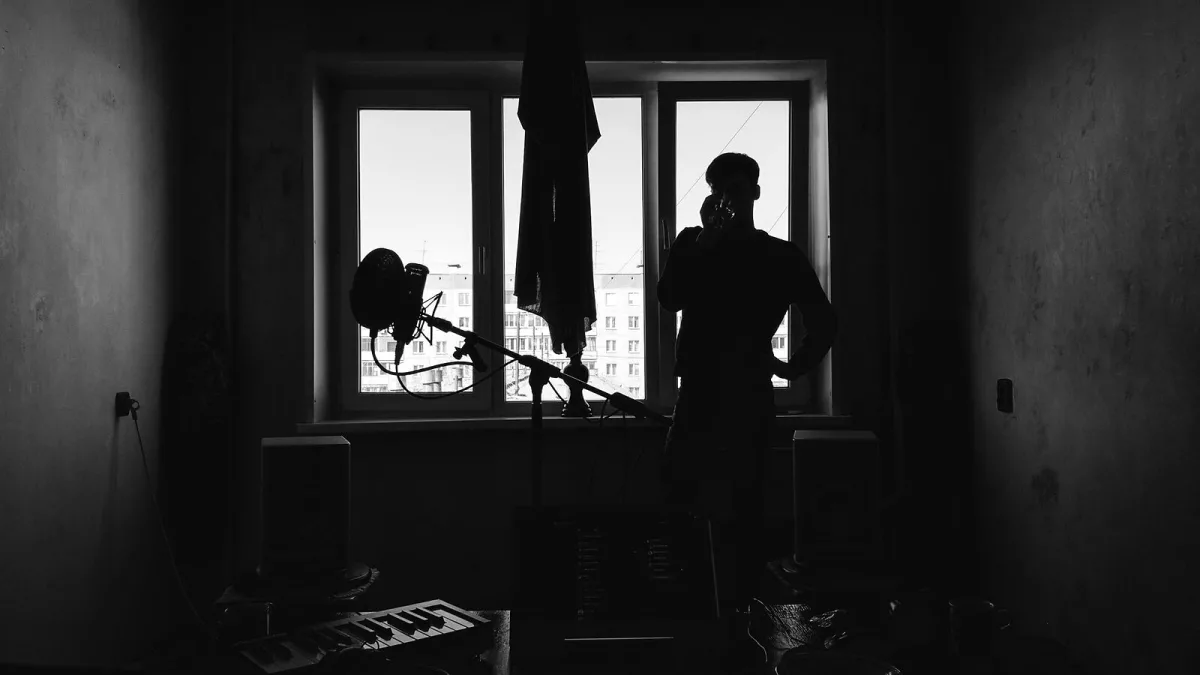
Darkwave is one of those genre labels that resists easy definition — which is exactly why it keeps attracting devoted listeners. At its core, it is music built from the same post-punk impulse that produced Joy Division and Siouxsie and the Banshees, filtered through synthesisers, drum machines, and an aesthetic that owes as much to Gothic literature as to rock. This guide explains what it actually is, where it came from, and how to find your way into it.
What Is Darkwave?
Darkwave is a broad genre of alternative and underground music that combines the rhythmic and sonic energy of post-punk with synthesiser-based textures, introspective or melancholic themes, and an often atmospheric or cinematic quality. The term emerged in the late 1980s and early 1990s — the American independent label Projekt Records played a significant role in popularising it as a category — though the music it describes had been developing since the late 1970s.
What distinguishes darkwave from gothic rock, which it closely overlaps with, is a greater emphasis on electronic production: synthesiser pads, programmed drum patterns, and processed vocals. The darkness in this genre tends to be interior and atmospheric rather than theatrical. It is more likely to sound like a solitary late-night experience than a Halloween set piece.
Where Did Darkwave Come From?
The roots lie firmly in post-punk Britain. As punk's initial energy dissipated in the late 1970s, bands began reaching for more complex emotional and sonic territory. Joy Division, Siouxsie and the Banshees, and Bauhaus explored themes of isolation, dread, and loss over angular guitar lines and minimal, echoing production. These artists are not typically placed within the genre — Joy Division belong to post-punk, Bauhaus to gothic rock — but they created the emotional and musical vocabulary that the genre inherited.
The British independent label 4AD became a crucial home for what would later be called ethereal wave — the melodic, atmospheric wing of the genre. Dead Can Dance, Clan of Xymox, Cocteau Twins, and This Mortal Coil all released key work on 4AD in the early to mid 1980s. Across the Channel, the German-speaking countries developed their own parallel current: Neue Deutsche Welle (new German wave) fed into a distinctly European scene, with bands such as Deine Lakaien and Xmal Deutschland producing music that shared the genre's emotional palette but with a continental coldness.
The United States also contributed, particularly through the Californian death rock scene — Christian Death, 45 Grave — which fused Gothic imagery with post-punk energy. By the 1990s, Projekt Records in the US had become a dedicated home for atmospheric American underground music, releasing artists who leaned into the neoclassical and electronic possibilities of the sound.
The Defining Characteristics
The genre is easier to recognise than to define in abstract. Some common threads:
- Synthesisers as primary texture: Pads, arpeggios, and sequenced bass lines are typical. The synthesis is often warm but melancholic — nothing shiny or bright.
- Programmed or minimal live percussion: Drum machines or sparse live drumming, often providing a metronomic foundation rather than a driving beat.
- Introspective or poetic lyrics: Themes of longing, loss, spiritual searching, mortality, and isolation. Not nihilistic — often beautiful in a sorrowful way.
- Atmospheric vocals: Often breathy, soaring, or processed. Female lead vocals are common in the ethereal wing; male baritone voices in other corners of the genre.
- Minor keys and modal harmonies: This music rarely sounds cheerful. The harmonic language is deliberately weighted toward melancholy.
- Reverb and echo: Spatial production is characteristic — sounds ring and decay, creating a sense of distance or depth.
The Main Branches
The genre's breadth means it splits into distinct sub-styles. Ethereal wave is the melodic, feminine-vocal branch — Cocteau Twins and Dead Can Dance are the defining examples. Coldwave developed primarily in France and is more minimal and austere than the 4AD sound. Neoclassical darkwave incorporates orchestral instrumentation, chamber music textures, and song structures closer to classical than rock. Electro-goth and connections to early electronic body music (EBM) represent the harsher, industrial-influenced edge.
Key Entry Points
If you are coming to this music for the first time, a few recordings do the most to illustrate what the genre is about:
- Clan of Xymox (Clan of Xymox, 1985) — the self-titled debut on 4AD is a masterclass in brooding, synthesiser-driven post-punk.
- First and Last and Always (The Sisters of Mercy, 1985) — gothic rock with close aesthetic ties to the genre; elegant, dark, and influential.
- Dead Can Dance (Dead Can Dance, 1984) — the debut that introduced one of the genre's most singular acts.
- It'll End in Tears (This Mortal Coil, 1984) — the 4AD collective project at its most ethereal and heart-breaking.
For a deeper look at the genre's development over time, the history of darkwave traces the full arc. For recommendations by artist, the best darkwave artists to know is a solid starting list. And if the genre's internal distinctions interest you, darkwave subgenres explained maps the whole terrain.
Why the Genre Endures
This music has never been mainstream, which is part of the point. It occupies a permanent space in underground culture, consistently attracting listeners drawn to music that takes emotional seriousness as a given. The genre experienced significant revival interest in the 2000s and 2010s, with new artists drawing on its vocabulary while adding contemporary production approaches. For listeners willing to spend time with music that rewards patience and attention, darkwave offers a remarkably rich body of work.




Comments