


Breakcore article
The History of Breakcore
No single artist or record started it. Here's how several 1990s scenes across the UK, Berlin and Australia arrived at breakcore from different directions.
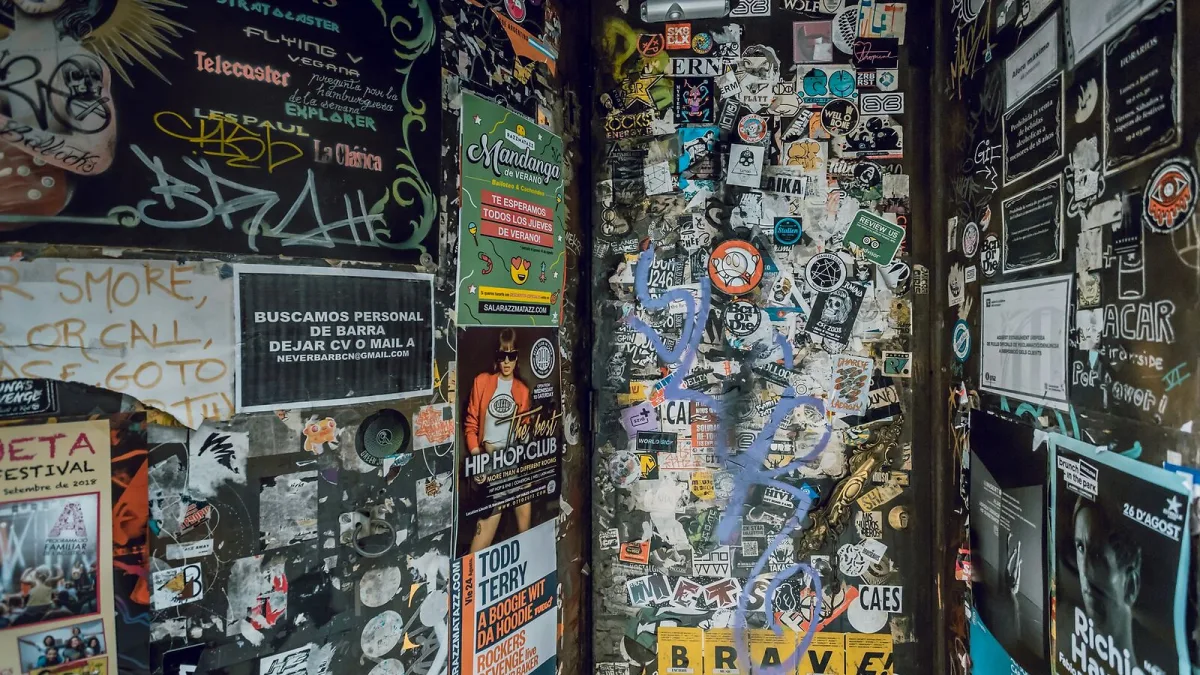
Every genre history wants a tidy origin story: one artist, one record, one year. Breakcore refuses to offer one. It's a history of several scenes discovering the same idea independently — that a sampled drum break could be pulled apart rather than played straight — and slowly recognising each other's work across countries that barely spoke to one another at the time. Here's how that actually unfolded.
The Breakbeat Vocabulary: Early 1990s Jungle
The raw material comes first. UK jungle and drum and bass, developing out of rave culture in the early 1990s, established the sampled funk break as the backbone of a whole musical culture — fast, syncopated, built for bass weight and forward motion. Producers leaned heavily on a small pool of breaks, most famously the Amen break, a drum passage sampled from The Winstons' 1969 recording "Amen, Brother." Jungle treated that material as a groove to be looped and varied. The scenes that became breakcore treated it as something to take apart.
Berlin's Digital Hardcore, Mid-1990s
In parallel, Berlin's digital hardcore scene was fusing punk, industrial noise and programmed breakbeats into something confrontational and explicitly political. Alec Empire, alongside Atari Teenage Riot, became the scene's most visible figures, and Empire founded Digital Hardcore Recordings in 1994 as a home for that sound. It's frequently discussed as an important precursor to breakcore — some accounts even describe Empire's 1996 album The Destroyer as an early or "first" breakcore record, though that claim isn't settled and is best treated as one strand of a contested history rather than a fact. What is clear is that digital hardcore's aggression and DIY, anti-industry attitude fed directly into what came next.
London's Ambush Records and the UK Underground
Back in the UK, a scene formed around Ambush Records and the figure of DJ Scud, pushing jungle's chopped breaks toward greater extremity and noise. This corner of the story is closely tied to DIY parties, warehouse events and small independent releases rather than any commercial infrastructure — the culture spread through word of mouth, tape trading and a small circuit of clubs rather than mainstream press.
Australia's Bloody Fist and the Noise Contingent
On the other side of the world, Australia's Bloody Fist Records and acts like Nasenbluten were building an equally aggressive hybrid of hardcore, noise and breakbeat that arrived at a similar destination from a different direction. That the same basic idea — break the break down and turn up the distortion — surfaced in London, Berlin and Australia within a few years of each other is a large part of why no single "inventor" of the genre holds up to scrutiny.
Venetian Snares and the Turn Toward Complexity
By the 2000s, the genre's centre of gravity shifted toward more compositionally intricate work, with Venetian Snares becoming one of its most influential figures — known for elaborate breakbeat programming, abrupt structural turns and unusual meters that pushed the technique well past its noisier origins. Planet Mu, a label already important in experimental electronic music more broadly, became a significant home for this more structurally ambitious strand, helping it reach an audience well beyond the original warehouse-party scenes. For a closer look at the people behind this shift, our guide to key breakcore artists covers Venetian Snares and the rest of the cast in more depth.
A History Without a Single Author
It's worth being honest about how contested parts of this story remain. Genre boundaries are argued over even by specialists, published BPM ranges vary wildly, and claims about "the first" breakcore release rest on thin evidence rather than settled consensus. Artists like Aphex Twin and Squarepusher are often labelled breakcore by listeners despite catalogues that sit mostly in IDM, jungle and drum and bass — a reminder that genre assignment in this corner of music is often made track by track, not artist by artist.
Where the Story Sits Today
The scenes, labels and DIY ethic that built this history are still largely intact, even as the internet has broadened who encounters the sound and how. It's worth noting that some newer online usage of the word describes fast, heavily edited electronic music quite loosely, which doesn't always share the hardcore, industrial and jungle lineage traced here — a separate cultural development rather than a replacement for it. If you'd rather explore the sound itself than its timeline, our beginner's guide to breakcore is the place to start, and our piece on its subgenres picks up several threads mentioned here in more detail.




Comments