


Boogie article
A Beginner's Guide to Boogie
One pattern, one form, four weeks — here's the reassuring, no-nonsense route into playing boogie for the very first time.
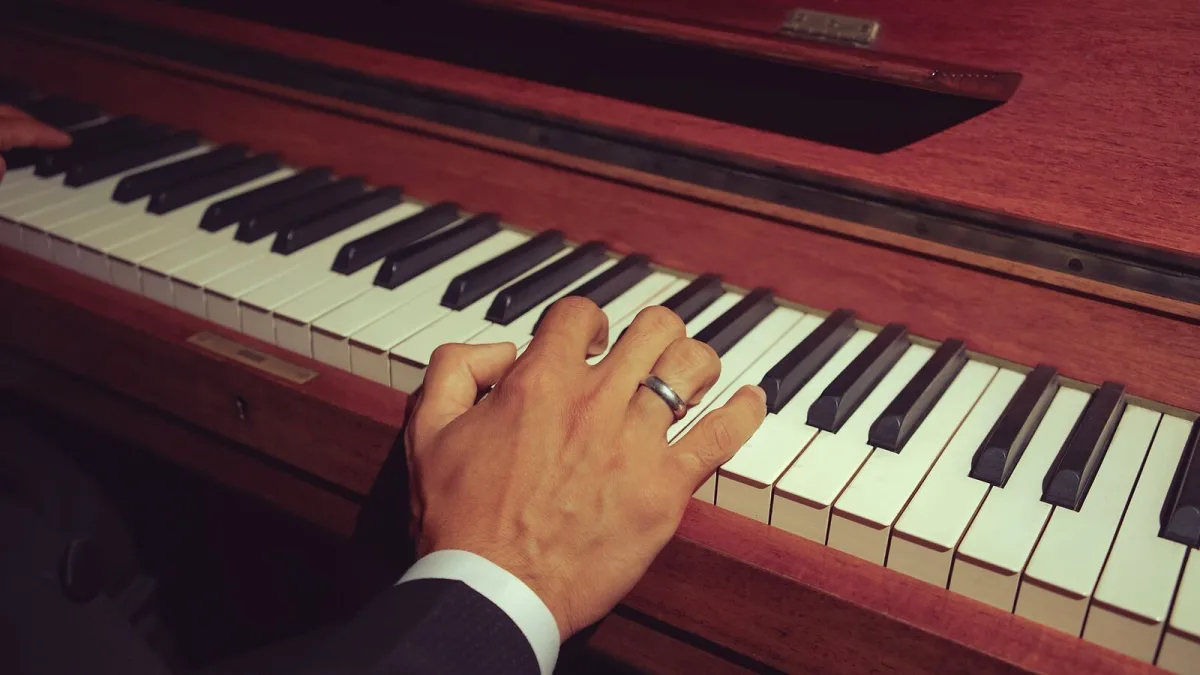
If a driving, rolling left hand is what drew you to boogie in the first place, you're closer to playing it than you think. This guide breaks the style down into the one pattern that matters most, a practice plan you can actually stick to, and the handful of recordings worth learning from. No grade exams, no fear of the "wrong" note — just a steady groove and a bit of patience.
What Is Boogie, Exactly?
At its heart, boogie — properly boogie-woogie — is a blues piano style built on a repeating bass figure in the left hand, known as an ostinato, under improvised, syncopated phrases in the right. It grew out of African American barrelhouse and honky-tonk playing in the late nineteenth and early twentieth centuries, and by the late 1930s and 1940s it was a genuine commercial force, feeding into jump blues, rhythm and blues and eventually rock 'n' roll. The same rolling feel later found its way onto guitar, where it became the backbone of country boogie and boogie rock.
The One Pattern That Unlocks Everything
Forget trying to learn a whole song on day one. The entire style hinges on getting one left-hand pattern locked in and even. Pick a simple bass figure — alternating the root and fifth, or a repeating eighth-note shape outlining root, third, fifth and sixth — and play it on its own, slowly, until it stops feeling like an exercise. Consistency matters far more than speed at this stage. A metronome is your best friend here, not your enemy.
Fitting It Into Twelve Bars
Once that pattern feels natural, the next building block is the twelve-bar blues form, which underpins almost all traditional boogie-woogie. In the key of C, it runs roughly: four bars of C, two of F, two back on C, then G, F, C and a final G to turn the progression round again. Keep your left hand rolling through every chord change without stopping — that unbroken pulse is what gives the style its momentum.
- Bars 1–4: home chord (C)
- Bars 5–6: move up a fourth (F)
- Bars 7–8: back home (C)
- Bars 9–12: G – F – C – G (the turnaround)
Getting the Groove Right
A common beginner mistake is playing it too straight. This style almost always wants a swung or shuffled eighth note, not a rigid, robotic one — think "doo-dah, doo-dah" rather than two equal notes. For the right hand, start small: two- or three-note motifs drawn from the blues scale, played with space between them. You don't need to fill every gap. Silence is part of the groove, not a mistake to fix.
Your Four-Week Plan to Get Playing
Rather than trying everything at once, work through it in stages. This is roughly the order most beginners find least frustrating:
- Week 1 – Pulse: play a single left-hand bass pattern with a metronome, slowly, and record yourself to check the tempo doesn't drift.
- Week 2 – Form: learn the twelve-bar progression and practise changing chords without breaking the groove.
- Week 3 – Vocabulary: add short right-hand blues phrases, leaving deliberate space between them.
- Week 4 – Performance: play along to a recording, nudge the tempo up gradually, and try the same pattern in a second key.
If you'd like the fuller backstory behind why this form took shape the way it did, our history of boogie piece covers the decades that shaped it.
No Piano at Home? Try Guitar
Everything above adapts happily to guitar. Alternate a moving bass note on the low strings with clipped chord fragments higher up, lean on dominant seventh shapes, and add hammer-ons and pull-offs for the syncopation a piano gets from its right hand. E and A blues positions are the friendliest places to start, and a touch of palm muting tightens things up nicely if you're aiming for a rockier sound.
The Gear You Actually Need
You genuinely don't need much to begin:
- Any piano or weighted digital keyboard, or an electric guitar with a clean-ish tone
- A metronome (a phone app is fine)
- Something to record yourself on, so you can hear what's actually happening versus what you think is happening
- A sustain pedal used sparingly, if you're on piano — too much blurs the bass pattern you've worked so hard to make clear
There's no need to chase expensive gear before the basics feel comfortable. Time at the keys or the fretboard matters far more than the price tag.
Five Recordings Worth Your Time
Learning by ear is one of the quickest routes into this style. Start with a short, focused listening list:
- Pinetop Smith – "Pine Top's Boogie Woogie" (1928)
- Cow Cow Davenport – "Cow Cow Blues"
- Albert Ammons – "Boogie Woogie Stomp"
- Meade "Lux" Lewis – "Honky Tonk Train Blues"
- Pete Johnson & Big Joe Turner – "Roll 'Em Pete"
For more on the people behind these records, our roundup of the best boogie artists to know goes into more depth on each of them. And once the twelve-bar basics feel settled, it's worth knowing how the style branches out — our guide to boogie subgenres explains how the piano original relates to country boogie, boogie rock and beyond.
You're Ready to Begin
Nobody plays this convincingly on their first sitting, and that's fine — the whole point of the style is repetition until it feels like second nature. Get the one pattern solid, keep the pulse honest, and let the right hand fill in slowly over the coming weeks. That's genuinely all it takes to start sounding like you know what you're doing.






Comments