


Grime article
Essential Grime Albums Explained
Full albums, not playlists, are how this genre actually makes sense. Here are the five essential grime records and exactly why each one matters.
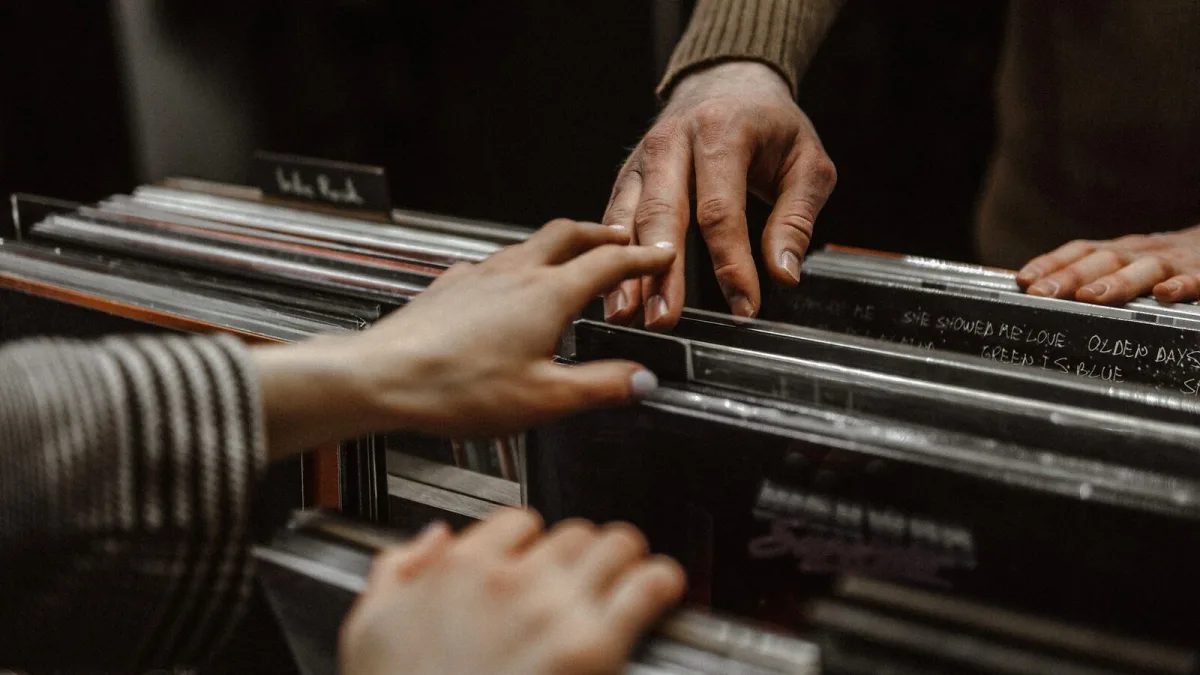
Forget playlists for a minute. If you actually want to understand this genre, you sit down with full albums — records built as complete statements, not just a run of loosies. These five are the ones that matter, in the order they landed, and why each one earns its place. Between them, they cover grime's entire arc: a pirate-radio sound turning into a Mercury Prize winner, a decade of quieter years, and a full-blown second wave that eventually reached UK number one.
Boy in da Corner — Dizzee Rascal (2003)
This is where the story properly starts. Dizzee Rascal was a teenager from Bow when he turned a raw, pirate-radio sound into a complete album — minimal, jagged production, surreal lyrical detours and an autobiographical honesty that nobody else was writing like at the time. It won the Mercury Prize that year, and it's still the benchmark for what a first-wave record could sound like. Start with “I Luv U” and “Fix Up, Look Sharp” if you want the fast version. More than two decades on, it's still the record most often cited as the moment grime proved it could sustain a full album rather than just a radio set or a mixtape.
Treddin' on Thin Ice — Wiley (2004)
Wiley's debut is the clearest album-length showcase of the icy “Eskibeat” sound he'd been building on pirate radio for years — cold synths, sparse drums, plenty of space left for the MC. As the producer widely nicknamed the “Godfather of Grime”, he used this record to put his own production template on record, permanently. “Eskimo” and “Wot Do U Call It?” are the tracks to know.
Home Sweet Home — Kano (2004)
Released the same year, Kano's debut proved the format didn't have to choose between lyrical sharpness and street storytelling — it could do both at once. “Ps & Qs” remains one of the most quoted verses from the era, and the whole album holds up as a masterclass in rapid, detailed writing rather than shock value.
Konnichiwa — Skepta (2016)
Over a decade after the first wave, Skepta's Konnichiwa announced the genre's full-scale return, going on to win that year's Mercury Prize — the same award Dizzee Rascal had picked up thirteen years earlier. It stripped things back to DJ-and-MC basics after years of more commercial production, and it did so on a genuinely international stage, with Skepta's Boy Better Know collective suddenly headlining far beyond London.
Gang Signs & Prayer — Stormzy (2017)
Stormzy's debut became the first album from this scene to top the UK Albums Chart, and it did it while widening the sound considerably — gospel, R&B and pop sitting comfortably alongside the harder grime tracks. It's proof of how far the genre could travel commercially without losing its MC-led core entirely.
The Five, at a Glance
| Album | Artist | Year | Why it matters |
|---|---|---|---|
| Boy in da Corner | Dizzee Rascal | 2003 | The Mercury Prize-winning first-wave landmark |
| Treddin' on Thin Ice | Wiley | 2004 | The definitive Eskibeat blueprint on record |
| Home Sweet Home | Kano | 2004 | Lyrical precision meets street storytelling |
| Konnichiwa | Skepta | 2016 | A second Mercury Prize and a global second wave |
| Gang Signs & Prayer | Stormzy | 2017 | The first UK number one album from the scene |
Chronological or by Mood?
You can approach these five either way. Play them in release order and you'll hear grime's entire timeline, from pirate-radio austerity to arena-ready polish, in a single afternoon. Prefer to shuffle by mood instead? Reach for Treddin' on Thin Ice when you want the coldest, most stripped-back version of grime, and Gang Signs & Prayer when you want to hear how far it eventually stretched without breaking.
Where to Go After These Five
Once you know these records, the rest of the genre opens up fast. Our guide to the best grime artists to know fills in the people behind each album, and our history of grime puts them in proper chronological order — useful if you want to understand exactly why thirteen years separate Dizzee Rascal's Mercury win from Skepta's. If you'd rather work track by track than album by album, our list of essential grime songs is the shorter route in.
The Bottom Line
Five albums, fourteen years, two Mercury Prizes and a UK number one between them — that's not a bad case for taking any genre seriously. Start with Boy in da Corner, work through to Gang Signs & Prayer, and you'll have heard the genre's entire arc from pirate radio to arena stages.






Comments